RingOver
Languages:
Deutsch
English
Español
Français
Italiana
Portuguese
Localization:
World

What is Ringover used for?
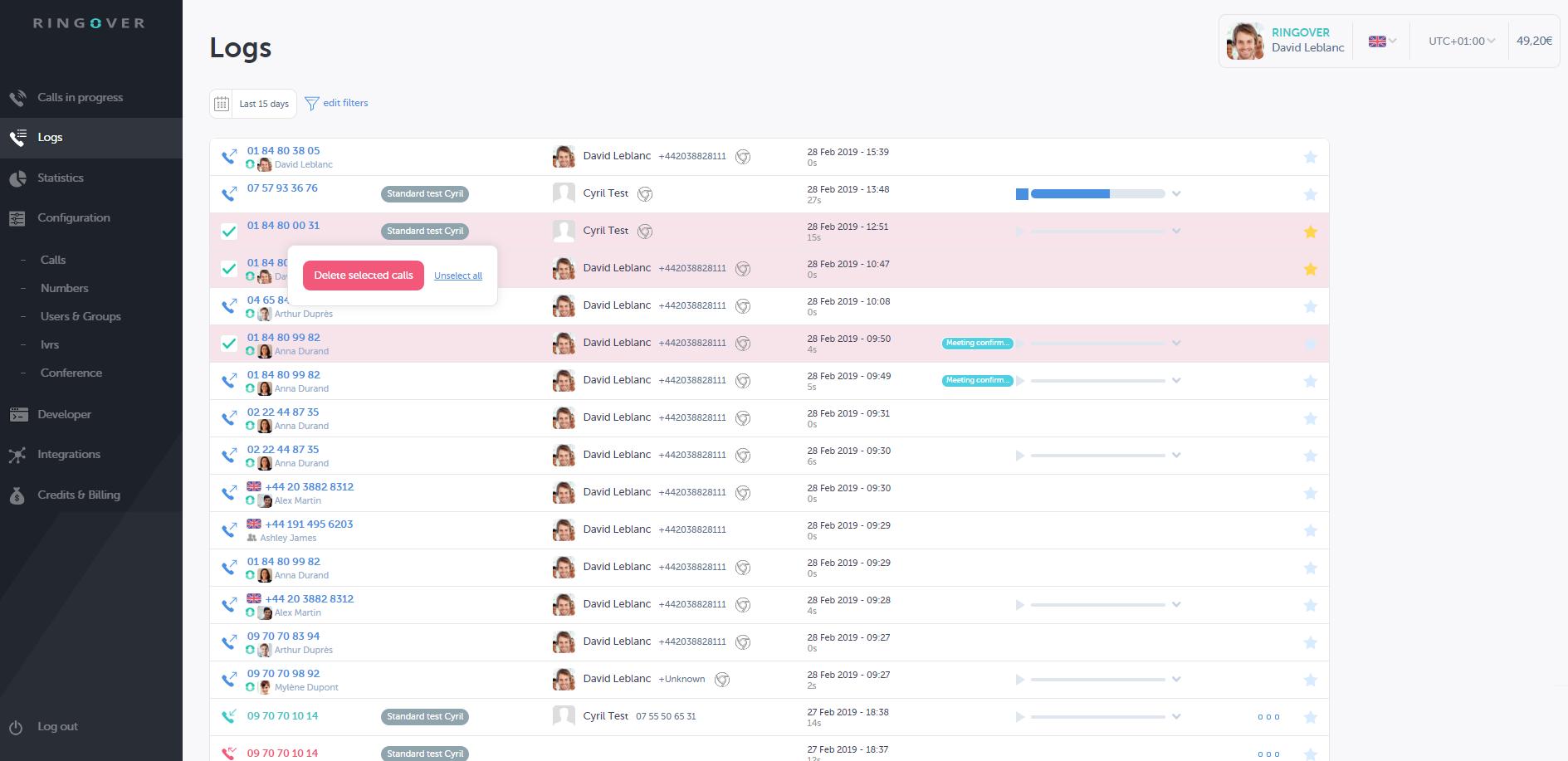
Ringover is a cloud communication platform that combines business calling with messaging and workflow tools so teams can handle customer conversations from one place. It’s built for sales, support, and operations teams that need reliable voice quality, fast outbound calling, and a clean way to track every interaction. Instead of juggling desk phones, personal mobiles, and separate inboxes, Ringover centralizes calls and multichannel messages, then adds AI features that turn conversations into usable data (summaries, transcripts, highlights). The big idea: fewer missed calls, less manual logging, and better visibility into what’s happening across the team—whether everyone is in one office or spread across countries and time zones.
Which key features define Ringover?
-
Cloud business phone system with flexible call handling (forwarding, routing, queues) for individuals and teams.
-
Shared call features for coaching and quality control (listening modes, real-time assistance during calls).
-
Call recording and searchable conversation history to keep context and reduce “repeat your story” moments.
-
AI-powered transcription and conversation insights to surface what was discussed and what to do next.
-
Automated call summaries and key points to speed up follow-ups and reduce admin work.
-
Omnichannel messaging inbox to manage conversations beyond voice (popular chat channels plus email-style workflows).
-
Click-to-call and CTI-style workflow inside connected tools so calls start where the customer record lives.
-
CRM/helpdesk integrations to sync activities, attach call data, and keep pipelines/support tickets clean.
-
Dialer options for outbound-heavy teams (power/auto dialing style features to increase call volume efficiently).
-
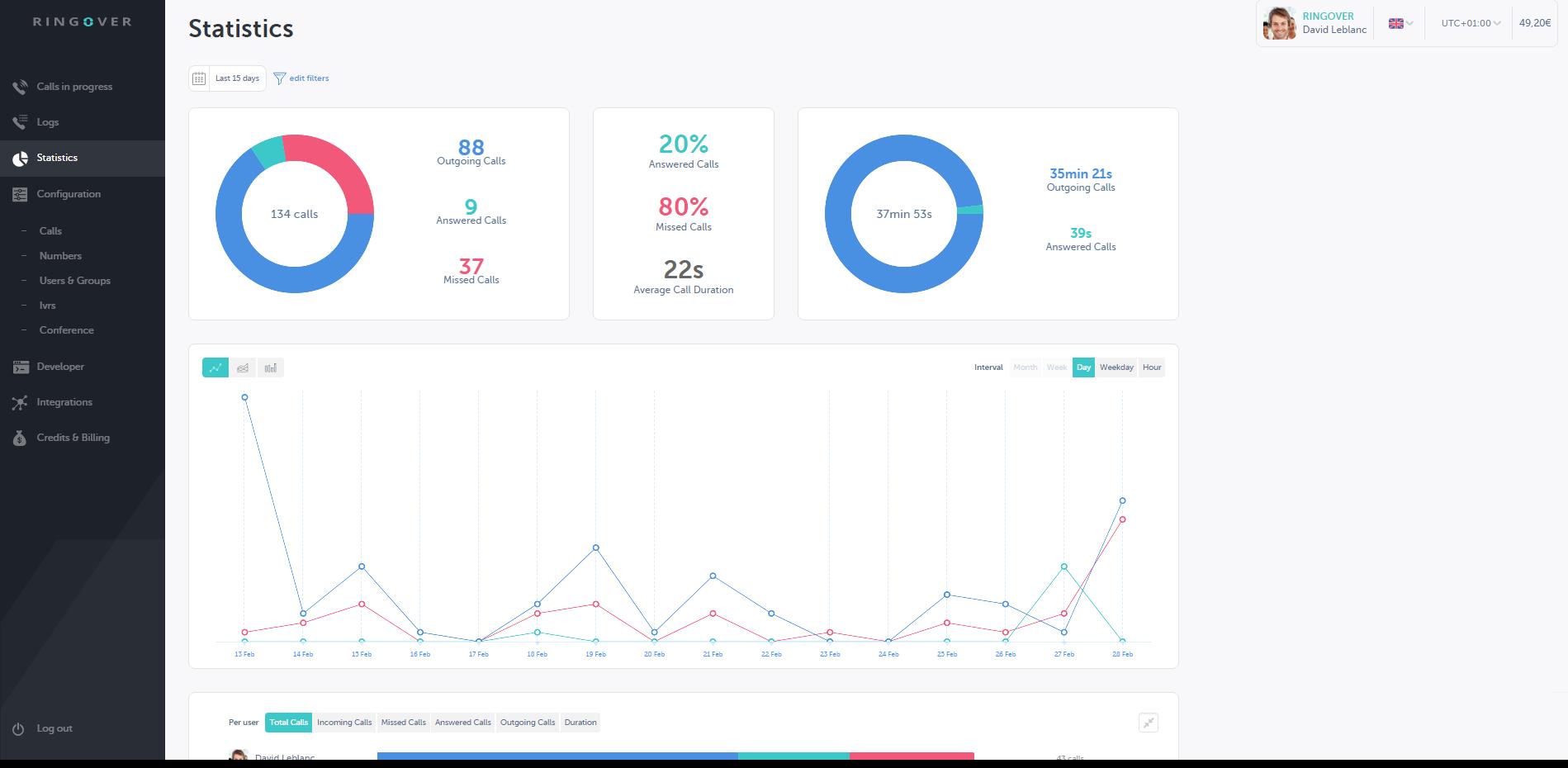
Reporting and analytics to track activity, outcomes, response times, and team performance trends.
-
Add-on style modules for expanding capabilities (advanced analytics, dialing, omnichannel, AI automations).
-
AI voice agent option for automating inbound call handling when teams need 24/7 coverage.
Who benefits most from using Ringover?
-
Sales teams that live on outbound calls and need higher volume without losing tracking and follow-up discipline.
-
Support and customer success teams that need consistent handling, recordings, and fast access to context.
-
Recruiting teams coordinating high-frequency calls and needing every interaction logged automatically.
-
SMBs scaling from “everyone uses personal phones” to a real business number setup with visibility.
-
Multi-location teams that want one communications layer instead of local phone chaos.
What are the most common use cases?
-
SDR/BDR outbound campaigns with a dialer workflow, call outcomes tracking, and fast next-step follow-ups.
-
Contact center-style inbound management: route calls by topic/team, reduce wait time, keep coverage consistent.
-
Quality and training loops: review recordings, compare talk tracks, spot patterns that win or lose deals.
-
Omnichannel customer handling: keep messages and calls aligned so customers don’t get fragmented replies.
-
Operations visibility: understand peak times, missed-call causes, and which processes leak revenue.
What benefits can teams expect after rollout?
Ringover typically reduces manual work around calls: less copy-pasting notes, fewer forgotten follow-ups, and fewer “where’s the context?” internal messages. Teams also gain control over customer experience—consistent routing, faster answers, and cleaner handoffs. The AI layer changes the game when used properly: it turns raw conversations into structured insight that can drive coaching, better scripts, and faster issue resolution. Add integrations, and the communication layer stops being a standalone tool and becomes part of the revenue/support machine.
What is the user experience like day to day?
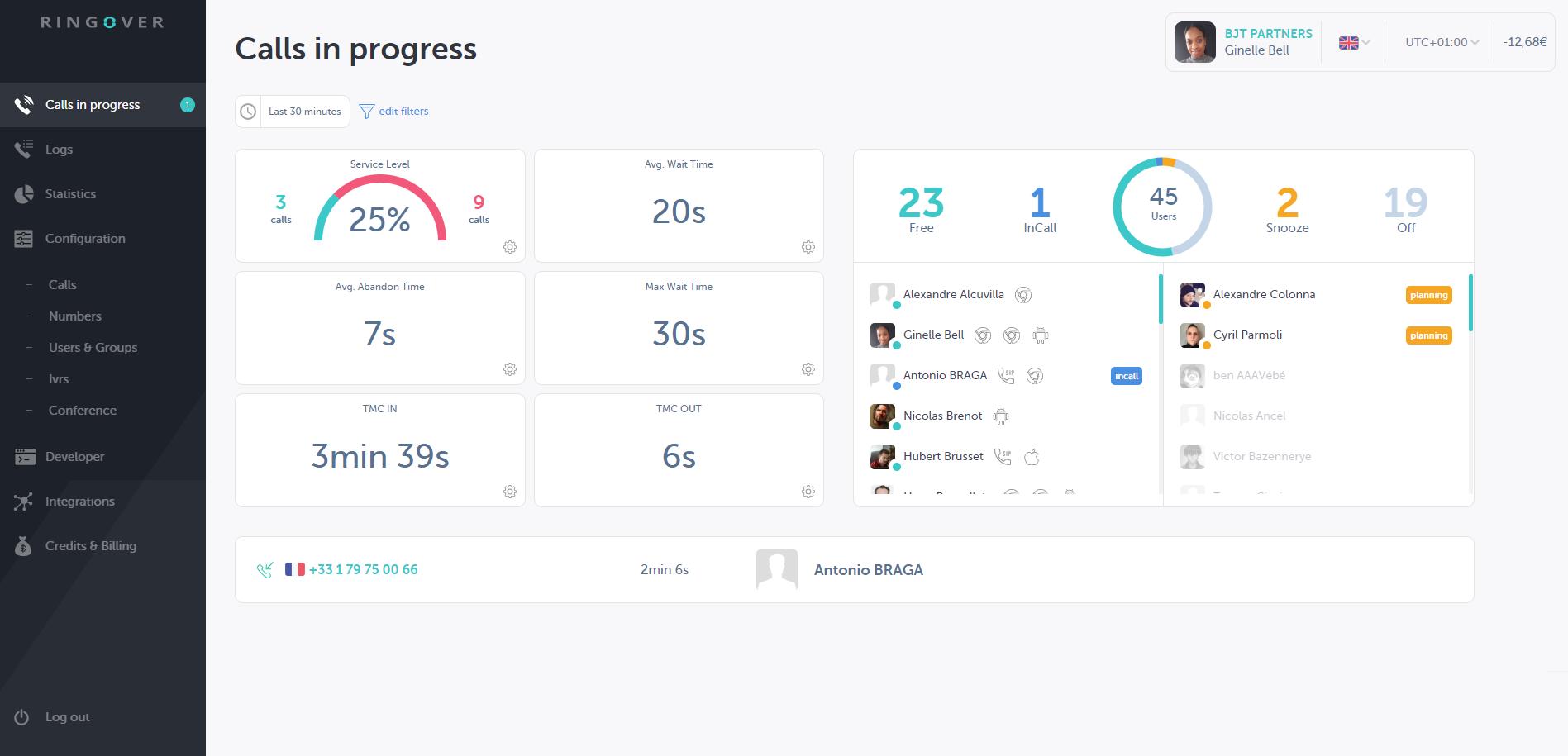
The experience is designed to be “open one workspace and go.” Calls, messages, history, and team activity sit in a single interface, while integrations push key details into CRMs/helpdesks so records stay current without extra effort. For managers, the value is visibility: activity tracking, analytics, and coaching-friendly tooling. For reps, the value is speed: fewer tabs, faster calling, cleaner follow-ups, and less administrative drag.
2026-10-22 14:14:07: RingOver: AI-Powered Video Meetings That Help You Close More Deals Youtube
2026-10-16 09:02:05: Customized Empower - Tailored AI to optimize the analysis and monitoring of your calls Youtube
2026-09-30 15:50:22: Empower: Stay updated with the latest news. Youtube
2026-09-28 13:40:08: AIRO: Turn every call into an opportunity with a RingOver voice agent available 24/7. Youtube
2026-09-08 09:19:06: Webinar - First steps with RingOver Youtube
2026-07-28 13:54:10: AIRO Coach: Agent Assist & Real-Time AI Sales Coaching Youtube
2026-07-27 13:43:01: PITCHROOM RINGOVER Youtube
2026-07-17 17:20:21: Licence to Close Youtube
2026-07-17 16:22:48: RingOver × Odoo Integration: Transform Calls, SMS... Into CRM Data Youtube
2026-07-06 10:28:31: Zoho x RingOver 2 Youtube
2022-08-29 22:07:57: I came across it while looking up a reference from: https://t.co/MZoxy5VPE5Twitter
2022-08-29 22:06:13: Discovering this site has made me a little happier: https://t.co/eZHmY64U5ATwitter
2022-07-11 07:57:32: "economics of space and time" #craiyon ... I guess "space and time" is doing most of the work here. https://t.co/Y2G9yCT4PZTwitter
2022-07-03 09:49:46: Prompt "am i sentient" yields some ... interesting images from #craiyon. https://t.co/BY52M1wDxkTwitter
2022-06-22 11:45:39: Just messing around: "baseball player hits ball so hard that the ball explodes into a supernova" #craiyon https://t.co/lqKc0Y3NebTwitter
2022-04-12 17:13:12: Found a note from a friend who passed away years ago:
Can't come to visit you the way I'd like to do
so have yourself a cup of tea as you read this line from me.Twitter
2022-03-29 06:55:10: Credit: Disco Diffusion v3.1Twitter
2022-03-29 06:54:14: "We discover a beautiful universe full of hope by greg rutkowski and thomas kinkade, trending on artstation." https://t.co/bQ16YKn77QTwitter
2022-02-10 17:06:21: Putting away the dishes this morning took 6 minutes 25 seconds, but I was daydreaming for part of that time.Twitter
2021-03-14 20:22:31: I like "Feed two birds with one scone" and "Bring home the bagels", but the others don't quite have the same ring to them. https://t.co/aKT0lYxjUBTwitter
RingOver Alternatives



RingOver Integrations