Act!
Languages:
Deutsch
English
Français
Localization:
World
What is Act! CRM and who is it for?
Act! CRM is a customer relationship management platform designed for small and mid-sized businesses that need a more organized way to manage contacts, sales activity, follow-ups, and customer communication. It is built for teams that want to keep customer data, tasks, appointments, and outreach in one place instead of scattering them across spreadsheets, inboxes, and disconnected tools.
The platform is often a fit for companies that rely on relationship-driven sales and repeat customer interactions. Rather than focusing only on raw pipeline tracking, Act! CRM is positioned as a practical business system for managing day-to-day customer engagement. It supports sales processes, contact organization, and marketing activity in a way that helps businesses stay more consistent and responsive.
For companies that want structure without moving into a very heavy enterprise stack, Act! CRM can serve as a middle ground. It is especially relevant for businesses that value visibility into customer history, scheduled actions, and communication performance.
What key features does Act! CRM include?
- Contact Management
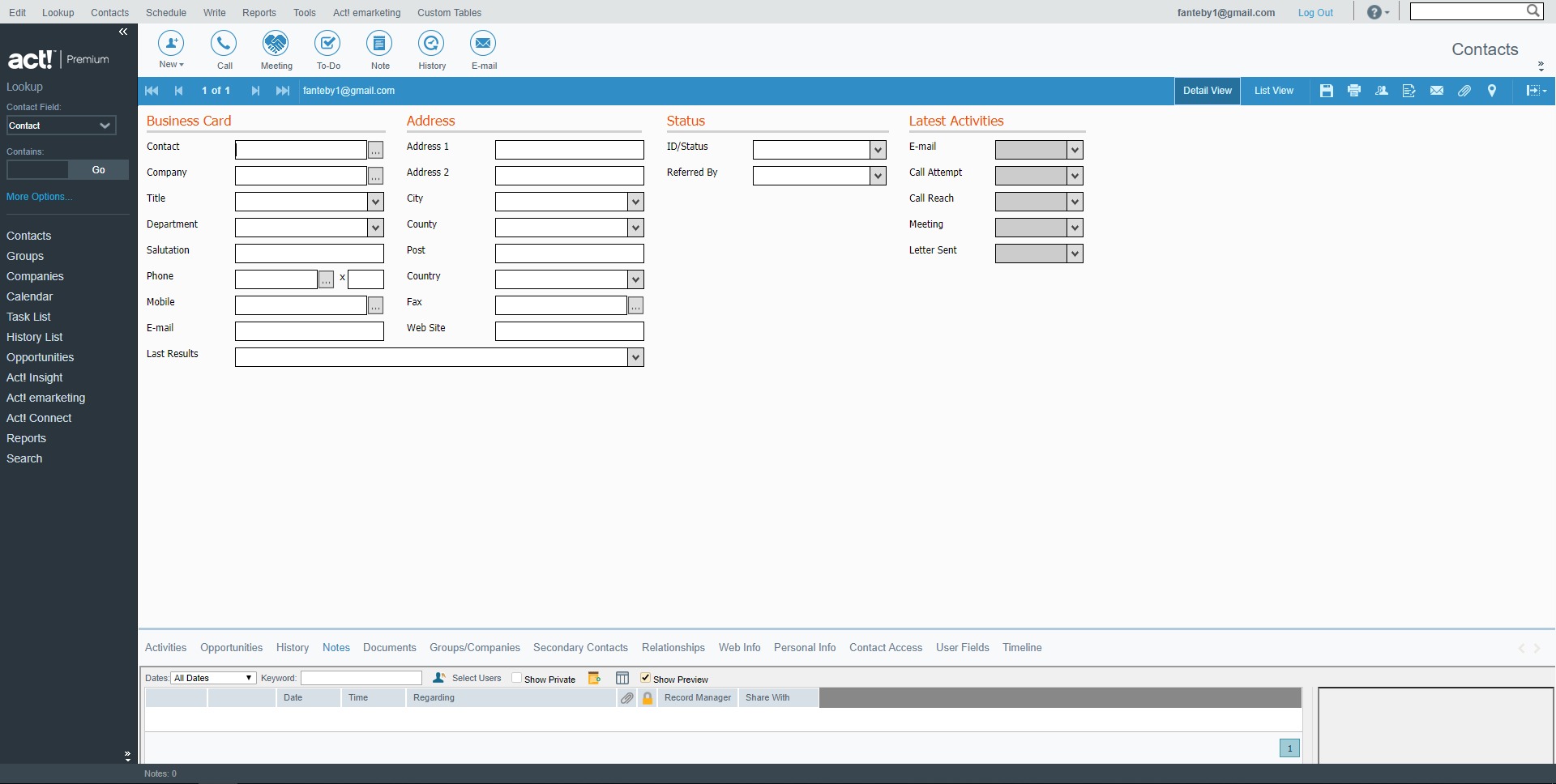
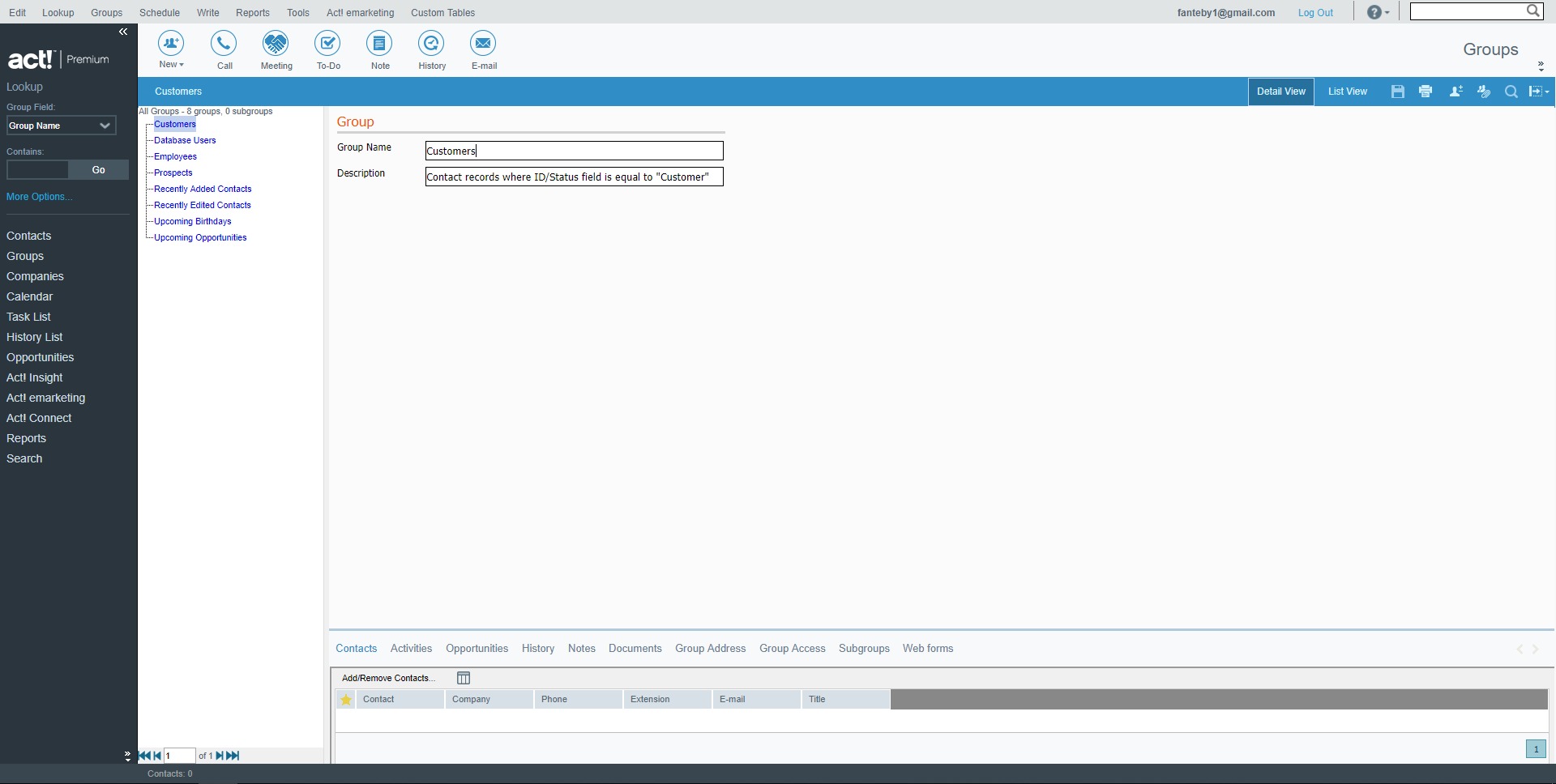
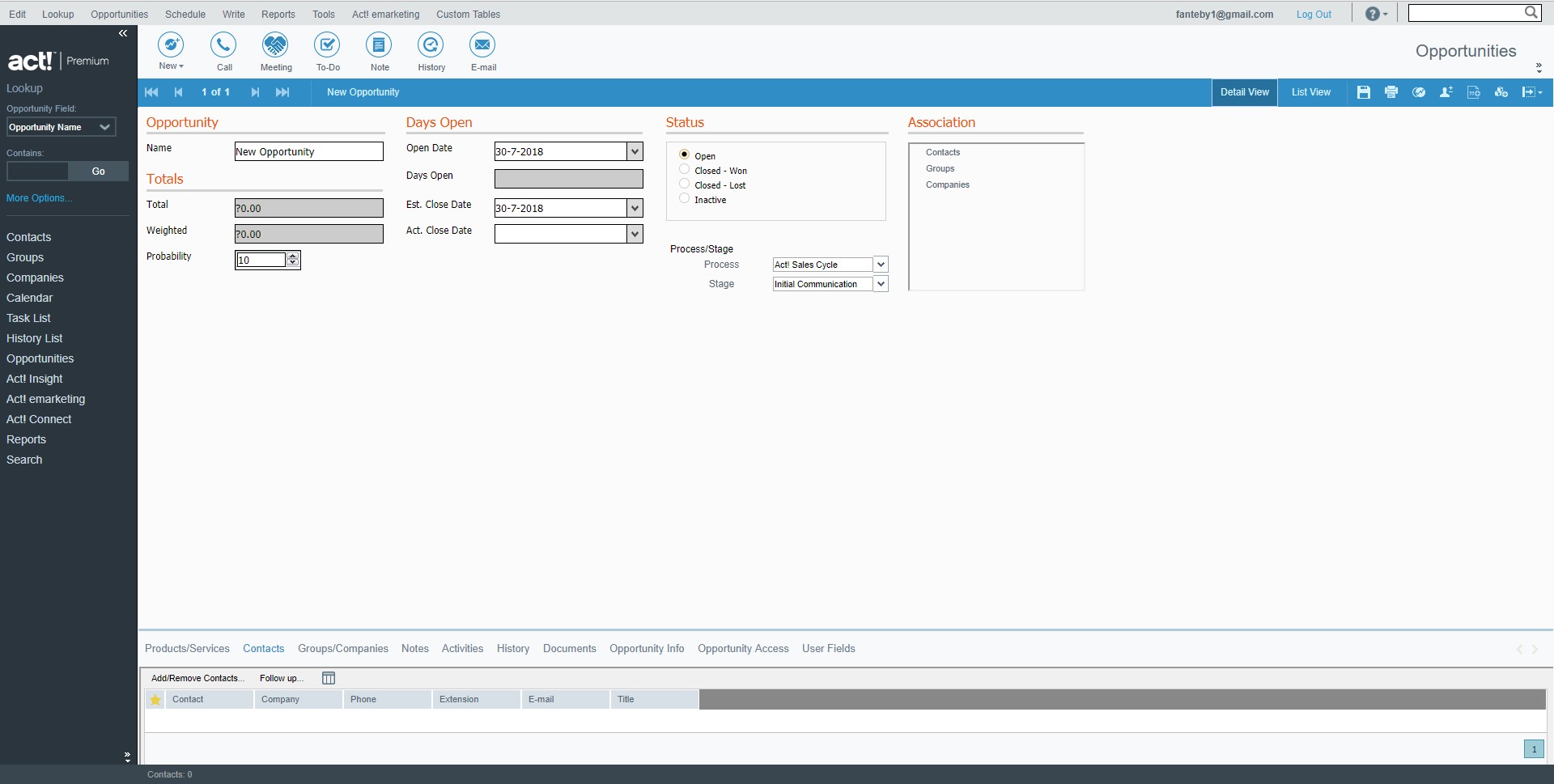
Act! CRM helps store and organize customer, prospect, and lead information in a centralized system. Teams can keep notes, communication history, contact details, and account context together, making it easier to understand each relationship. - Sales Pipeline Tracking
The platform supports opportunity and pipeline management, helping businesses monitor deals as they move through different stages. This gives teams a clearer picture of what is active, what needs attention, and where revenue opportunities may be developing. - Task and Calendar Management
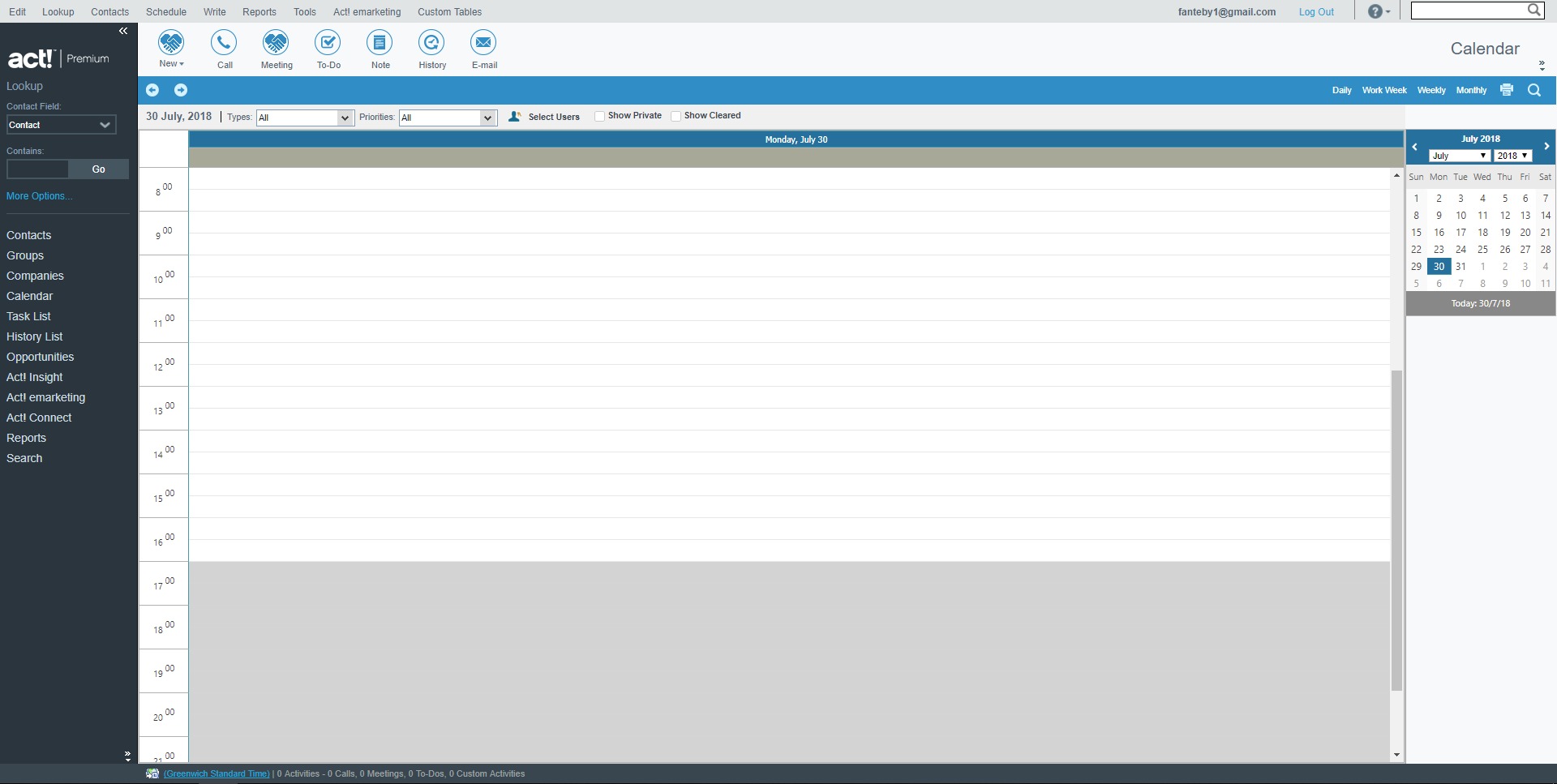
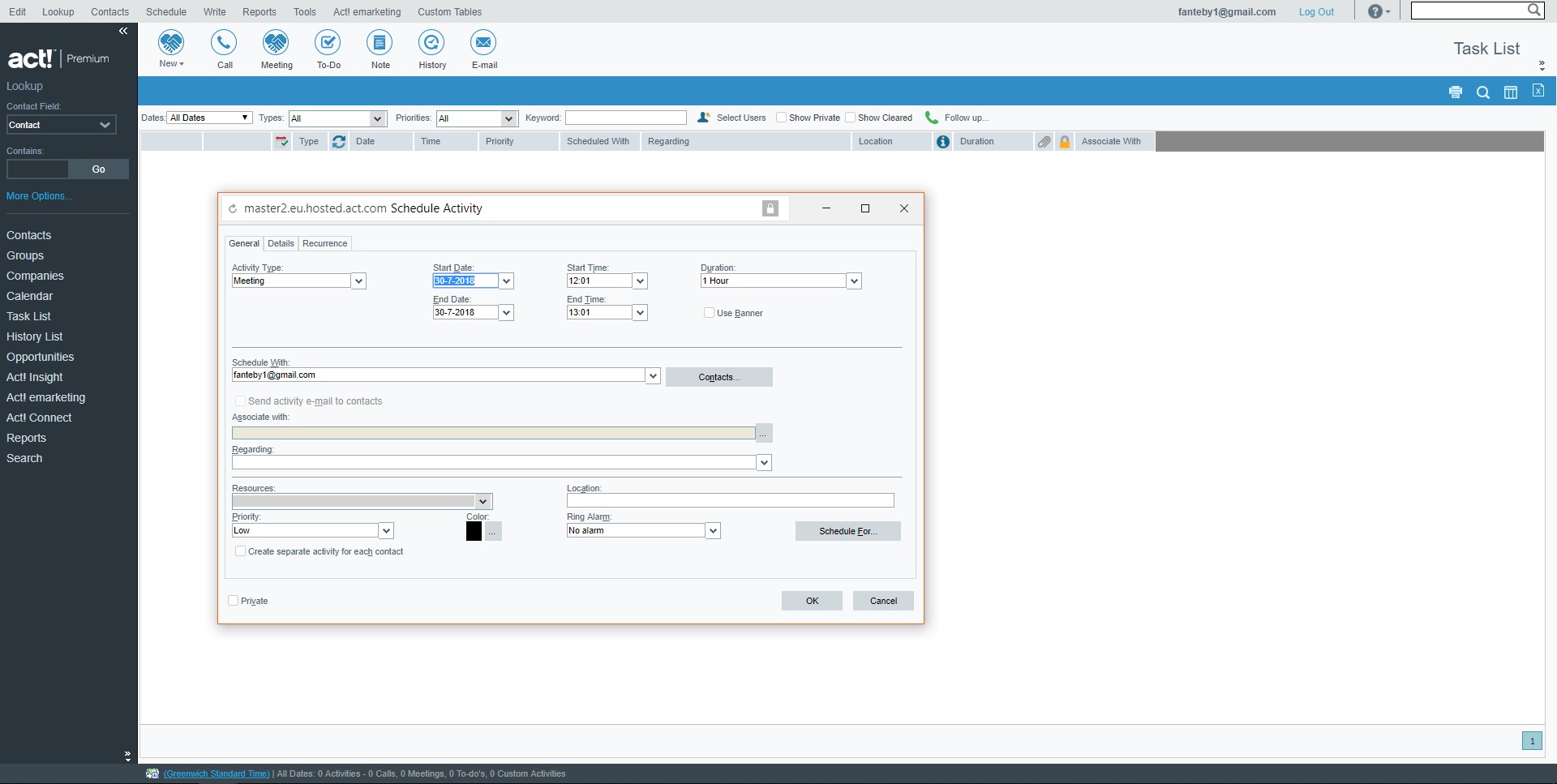
Act! CRM includes scheduling and activity tools that help users manage calls, meetings, reminders, and follow-up actions. This reduces the risk of missed deadlines and helps maintain momentum in customer communication. - Email Marketing and Automation
A notable part of the platform is its ability to support email campaigns and automated marketing workflows. Businesses can use it to stay in touch with leads and customers more systematically instead of relying only on manual outreach. - Reporting and Visibility
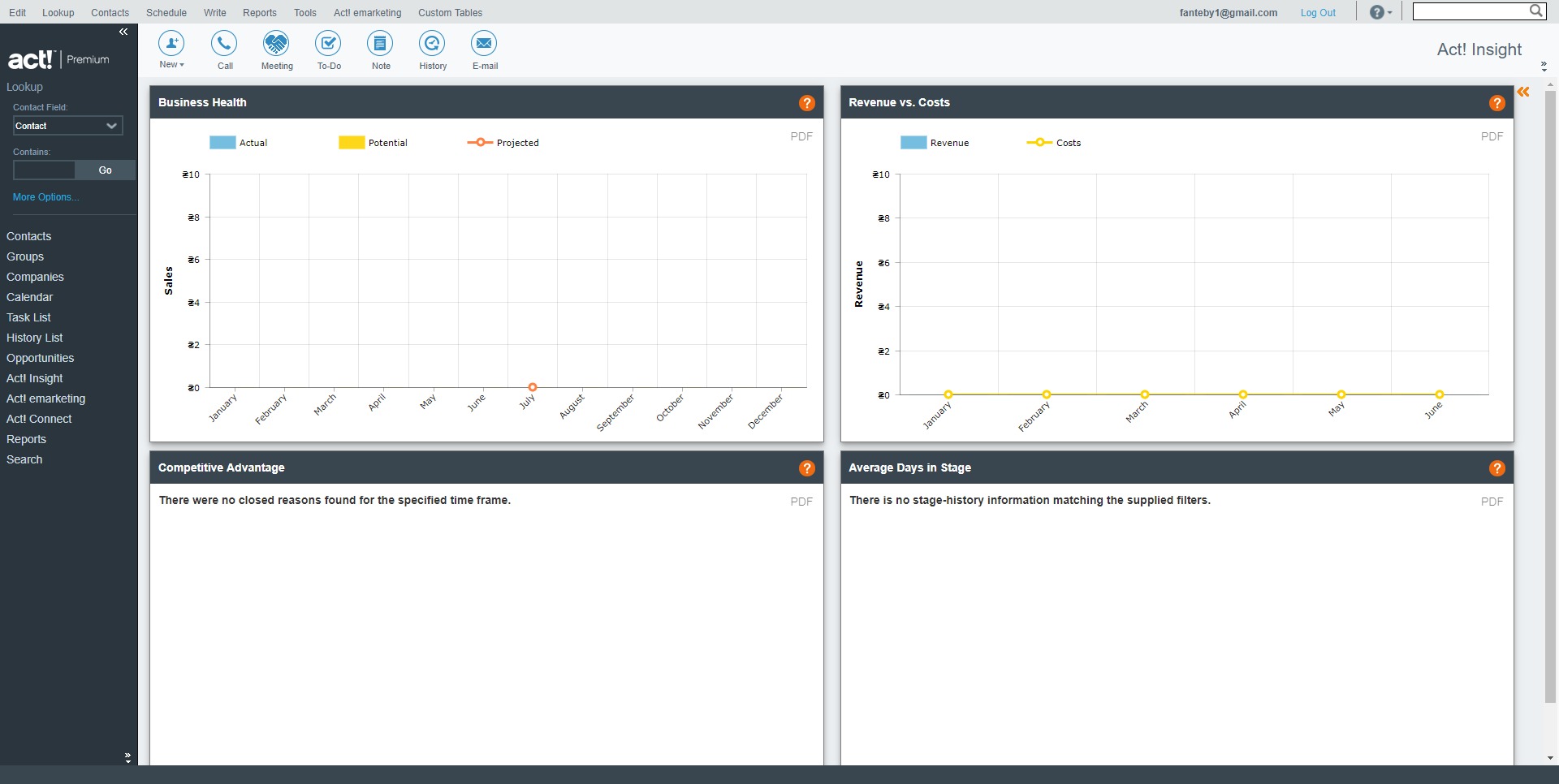
The system provides reporting features that help teams understand sales activity, customer engagement, and overall workflow performance. This makes it easier to identify patterns and improve decision-making. - Integration-Oriented Workflow
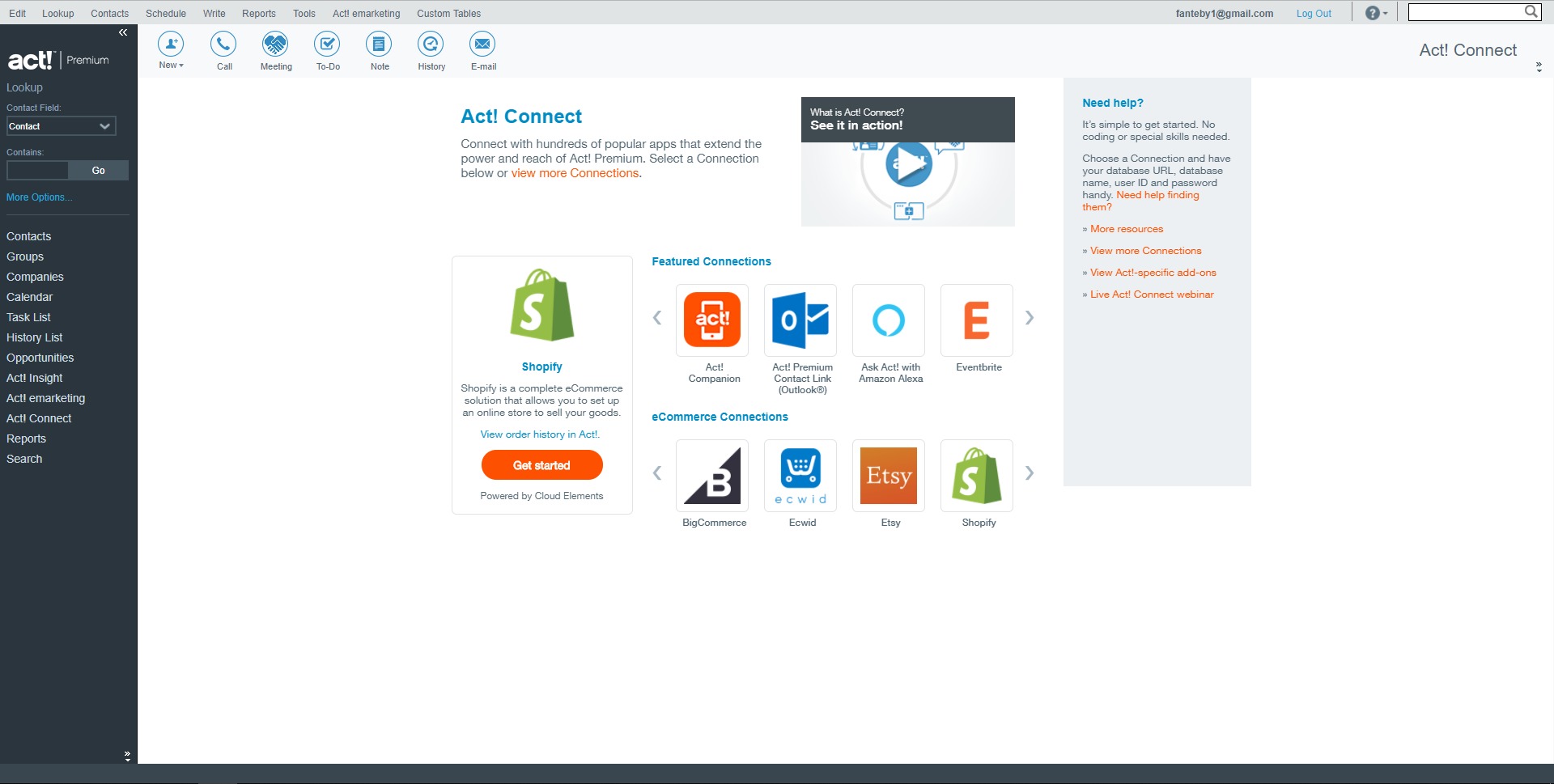
Act! CRM is designed to support business operations that depend on connected tools and recurring communication. That makes it useful for teams trying to reduce friction between customer records, scheduling, and marketing actions.
In what situations is Act! CRM most useful?
- Managing relationship-based sales
Act! CRM works well for businesses where sales depend on trust, repeated touchpoints, and personal follow-up rather than fast one-click transactions. - Replacing scattered customer data
Companies that currently manage leads and customer notes across inboxes, documents, and spreadsheets can use Act! CRM to create a more structured workflow. - Improving follow-up discipline
Teams that struggle with missed callbacks, forgotten appointments, or inconsistent outreach can benefit from its task and scheduling tools. - Combining CRM and marketing activity
Businesses that want both contact management and email campaign support inside one ecosystem may find Act! CRM especially practical. - Supporting small teams with limited operational overhead
It is useful for organizations that need clearer processes without adopting a complex enterprise platform that requires heavy customization and administration.
What benefits does Act! CRM offer to businesses?
Act! CRM helps create order around customer relationships. The main benefit is operational clarity: teams can see who a customer is, what has happened, what needs to happen next, and where each opportunity stands. That kind of visibility can improve consistency across sales and service activity.
Another benefit is better time control. When tasks, reminders, and customer notes are managed in one system, it becomes easier to prioritize work and reduce manual chaos. This is especially useful for growing businesses where a small number of people handle many responsibilities at once.
Act! CRM can also help businesses communicate more effectively. With customer data and outreach tools working together, it becomes easier to maintain regular contact, support lead nurturing, and avoid cold gaps in communication. In practical terms, that can strengthen customer retention and improve conversion potential.
What is the user experience like with Act! CRM?
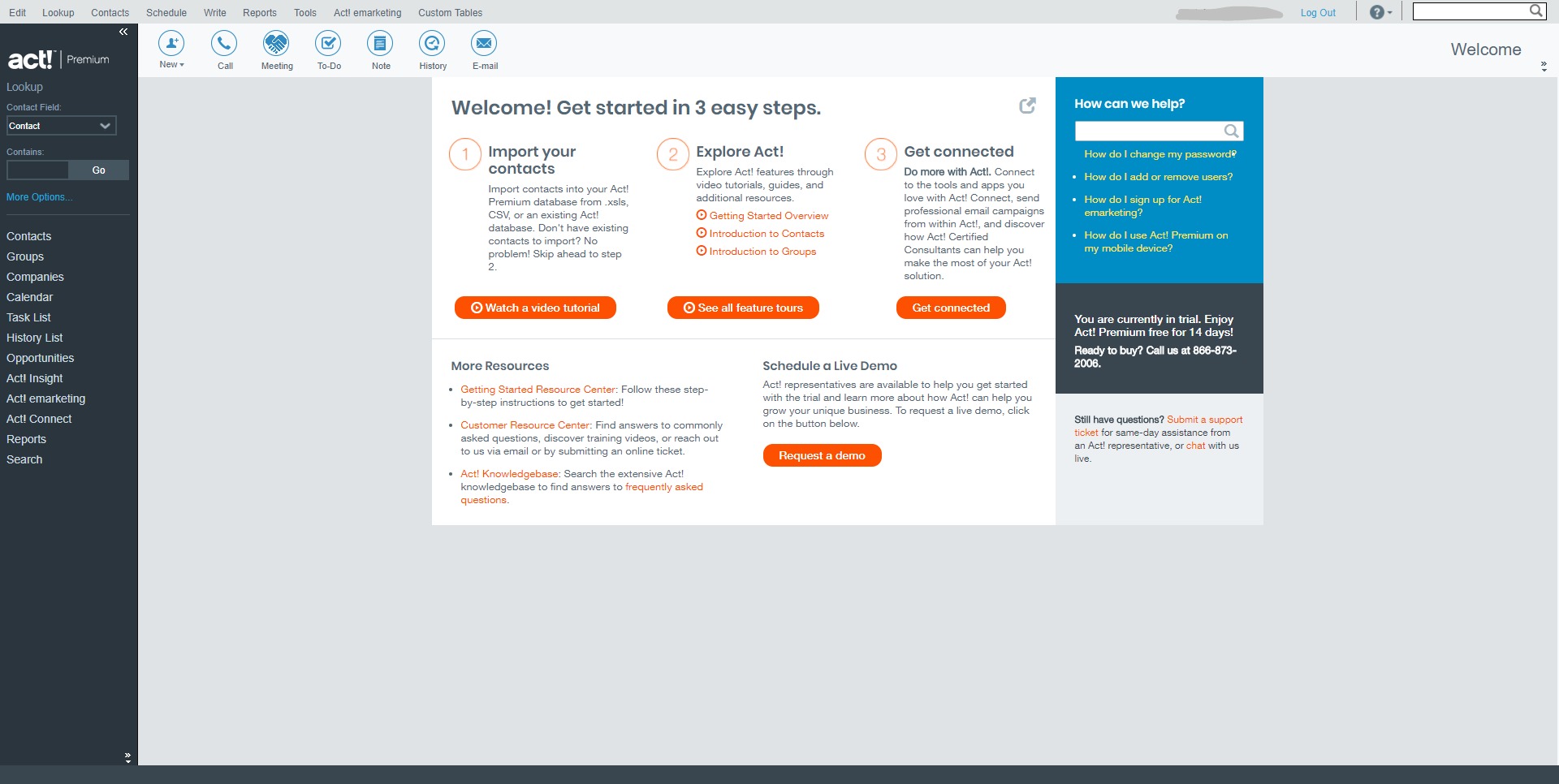
The user experience of Act! CRM is centered on structure, visibility, and routine execution. It is built to support day-to-day business work rather than only high-level reporting. Users typically interact with contact records, activity schedules, deal tracking, and communication tools as part of a connected workflow.
For businesses that want a CRM platform with a practical, relationship-focused approach, Act! CRM offers an experience that is more operational than flashy. It is suited to teams that need a dependable system for managing customer interactions, sales activity, and ongoing communication without unnecessary complexity.
2026-09-01 14:09:47: The 1-hour rule that wins more leads ⏱️ #Shorts What Is Relationship Management Software Youtube
2026-08-06 13:06:26: Meet Act! Advantage Youtube
2026-07-06 13:34:51: Meet Act! Advantage Youtube
2026-05-21 15:53:18: My Top 5 Horror Movies as a Salesperson Youtube
2026-05-15 16:01:01: The All-in-One CRM Solution for Growing Businesses | Act! Advantage Youtube
2026-05-13 18:11:05: Stop Chasing Invoices | Get Paid Faster with Act! Payments Youtube
2026-03-12 20:00:33: Act! Advantage Training | Productivity Accelerators Deep Dive Youtube
2026-03-12 18:15:05: Act! CRM Training | Custom Tables for Expanded Data Management Youtube
2026-03-12 13:01:14: Act! Integrations Training | Extending Act! with Zapier Youtube
2026-03-12 12:00:24: Act! Product Update | What’s New in Act! Advantage Youtube
2023-04-03 18:30:00: A CRM & marketing automation platform can be the smartest business investment for your startup. Why? Check out our latest blog for a deep dive into its many applications and benefits for startups. https://t.co/dUP5vRrqP7 #startup #business #entrepreneur https://t.co/PhBtBsRW8GTwitter
2023-04-01 18:30:00: Act! celebrates its 36th year! You might say we're the OG of CRM. Our customers would say our unparalleled #CRM and #SMB know-how empowers their growth. #Thanks to the thousands of #customers that have been with us for the journey! https://t.co/MM6UXtXACF
#anniversary https://t.co/uRXxAoYpbgTwitter
2023-03-31 18:29:59: Do you want to learn how small businesses use CRM today? Read this article to learn how the best CRM for small business can help you manage customers and increase revenue. https://t.co/sFXWhkGpTC
#CRM #SMBs https://t.co/Pybteis7LaTwitter
2023-03-30 18:30:00: Touchpoints are integral to sales processes. But which touchpoints should you choose, and when should you use them? Learn all about them in our latest blog, where we explore the what, how, and when of sales touchpoints. https://t.co/4qFaFLGlhJ
#sales https://t.co/YvGBpZSSjPTwitter
2023-03-29 18:30:01: Will hybrid work replace remote work? Or does it hit the sweet spot by bringing together the best of remote and on-site work? Explore answers to these questions in our latest blog. https://t.co/H6uoSoFHhn
#hybridworking #futureofwork https://t.co/CPmKJwFfa4Twitter
2023-03-27 18:30:01: A global recession seems likely in 2023. Check out our latest blog post for effective strategies to build a resilient and recession-proof small business that’ll survive every crisis. https://t.co/o1MxbGkmJt https://t.co/NQAdsdG9cLTwitter
2023-03-23 16:00:02: Don't let inflation cut into your profits. Read this article to learn how CRM and marketing automation can help you retain your customers, even during an economic downturn. https://t.co/7RtT2AjGAj
#CRM #software https://t.co/lPddGo9ebjTwitter
2023-03-21 16:58:01: Are you wondering what new technology you need to implement this year? Read this post on 6 of the top SMB technology trends of 2023. https://t.co/ZZutcNOT6O
#SMB #technology #tech #innovation #cybersecurity https://t.co/vpOO84mTpOTwitter
2023-03-20 17:30:01: Are you struggling to generate relevant and high-quality sales leads for your small business? In this article, we've shared proven lead-generation strategies to help you. https://t.co/I53IF5wsi9
#sales https://t.co/gXhdFzrzaaTwitter
2023-03-17 17:30:00: Are you ready to grow your financial services business? Tips and techniques in this guide will help you leverage the power of email marketing to grow your client base. https://t.co/G9uGdrEUMj
#financialadvisor #finance #insurance https://t.co/90jcyRfULHTwitter
Act! Alternatives




Act! Reviews & Demos
Act! Integrations