Hygger
Languages:
English
Localization:
World

What is Hygger and who uses it?
Hygger is a product management and Agile planning platform that helps teams turn ideas into structured, prioritized work and ship them in a predictable way. It is built for product managers, tech leads, and cross-functional teams who need to manage feature requests, roadmaps, and development tasks in one place.
Instead of separating strategy and execution into different tools, Hygger connects the full flow: capturing ideas, scoring them with prioritization frameworks, planning a roadmap, and delivering work through Kanban or Scrum boards. This makes it easier to see why a feature was chosen, how it is progressing, and what impact it is having across the product. Hygger Product Management and Agile Planning keeps teams aligned on what matters and cuts down on status meetings and scattered spreadsheets.
What are the key features of Hygger?
-
Backlog with prioritization frameworks
Hygger lets teams collect ideas and features in a structured backlog and evaluate them with frameworks such as Value/Effort, ICE, RICE, or custom scoring models. Each item can be scored, compared, and ranked, making prioritization transparent and repeatable instead of emotional or political. -
Roadmap planning boards
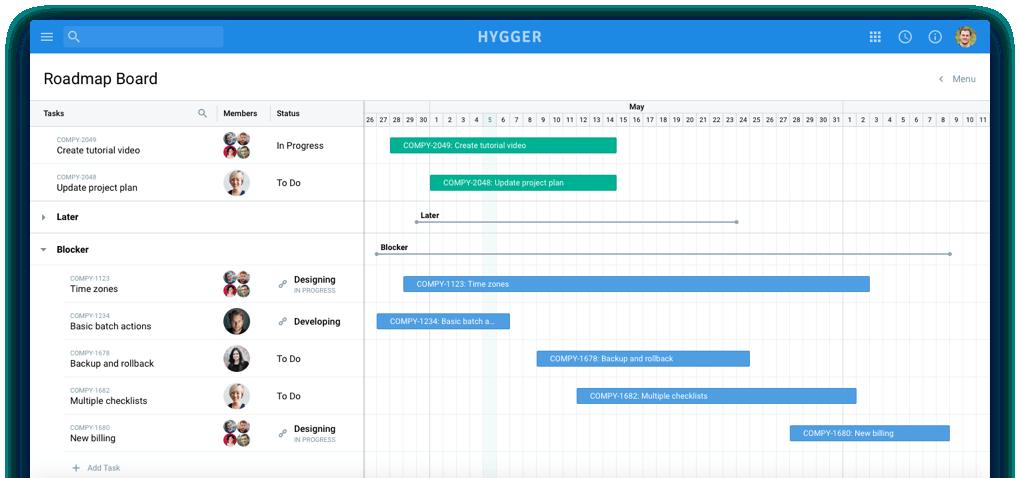
Roadmaps in Hygger are visual, board-based, and linked to real tasks. Teams can plan themes, releases, and initiatives, then connect them to execution boards so that roadmap items always reflect actual progress instead of becoming static slides. -
Kanban and Scrum boards
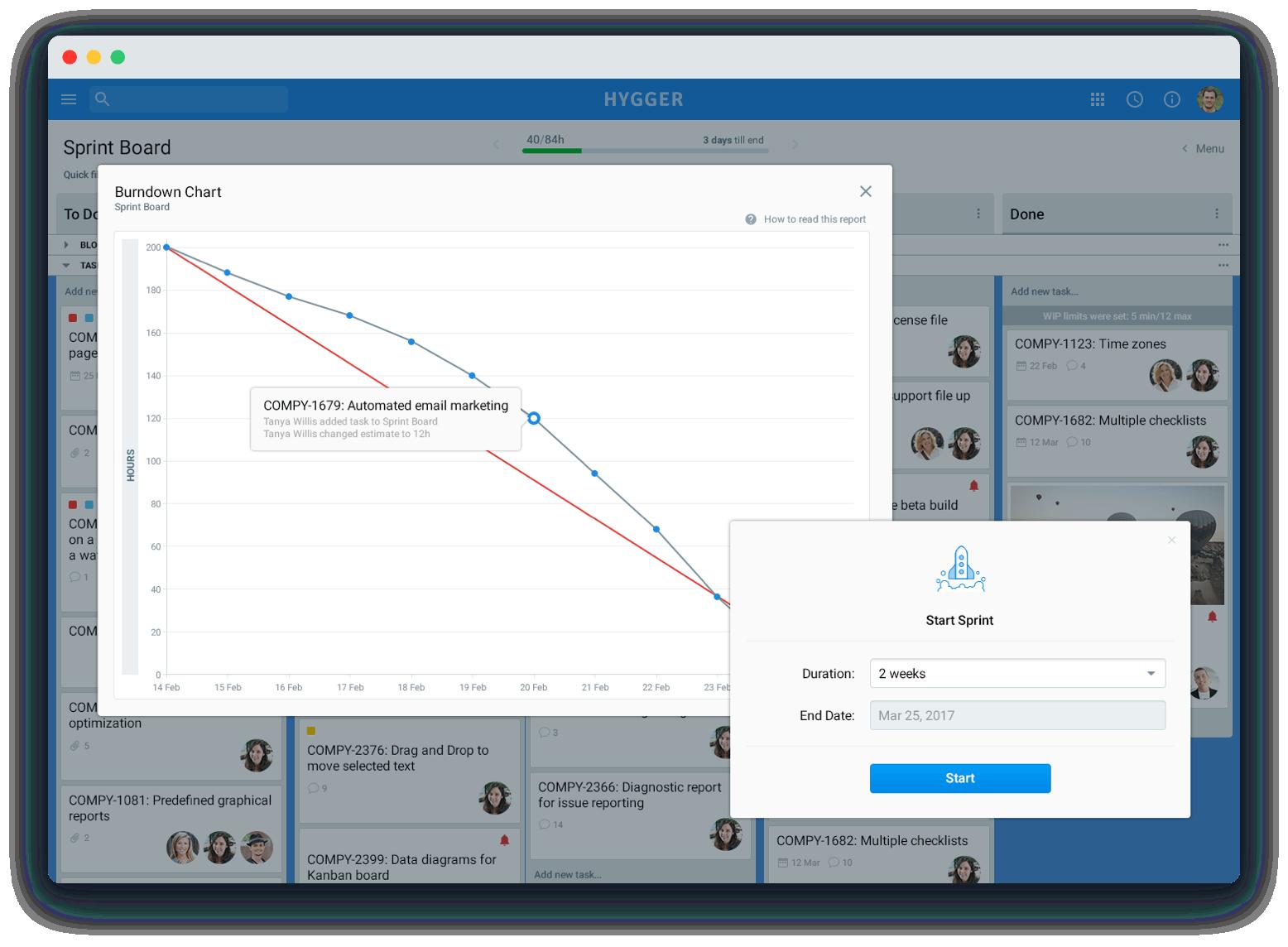
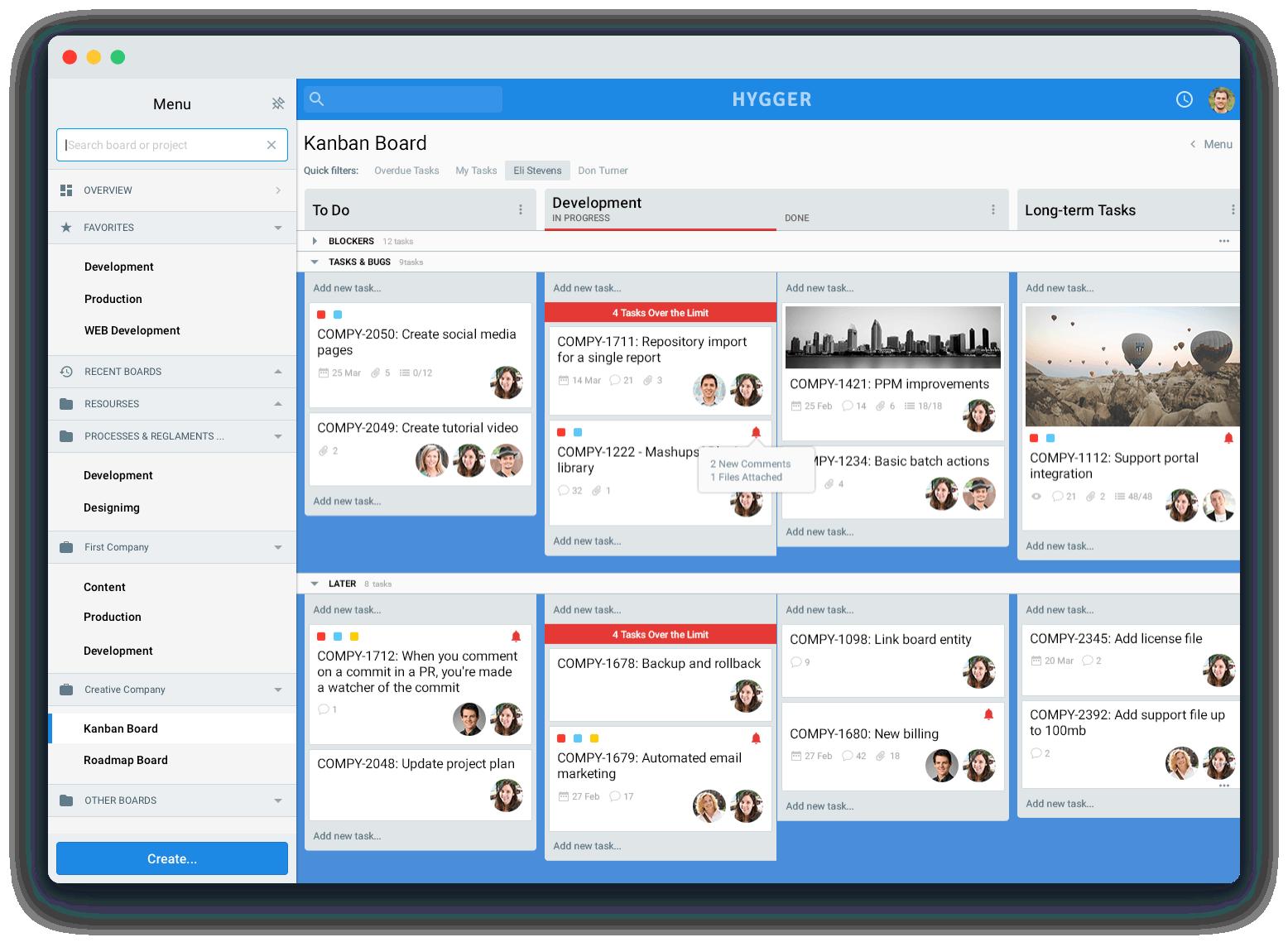
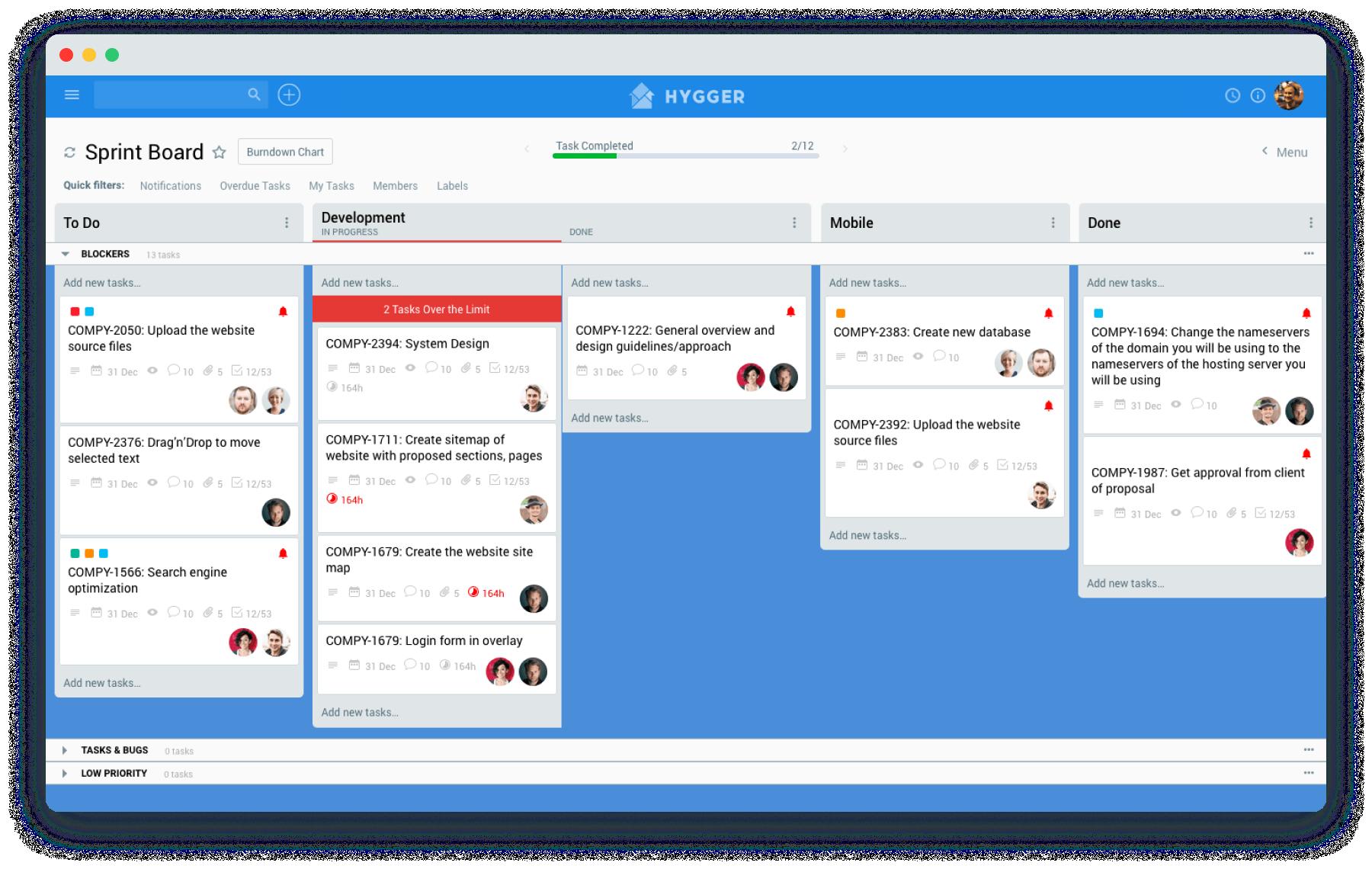
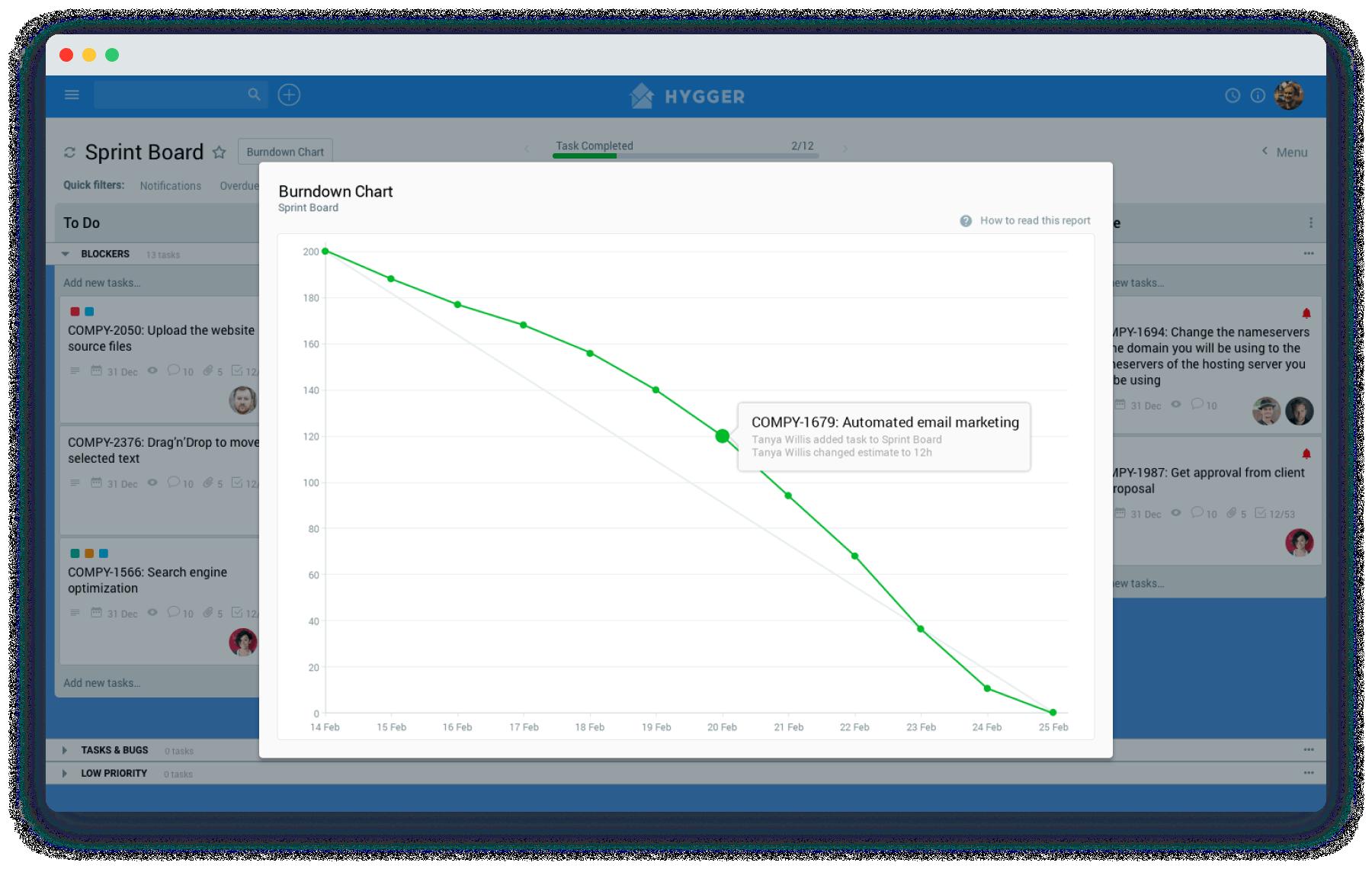
Hygger supports both Kanban and Scrum. Kanban boards include WIP limits, swimlanes, and flexible column structures for continuous flow. Scrum boards support sprints, story points, and progress tracking for teams that prefer time-boxed iterations. -
Task hierarchy and dependencies
Features can be broken down into tasks, subtasks, and checklists. Dependencies and relationships help teams see what must be done first and avoid blocking work at the last moment. -
Time tracking and reporting
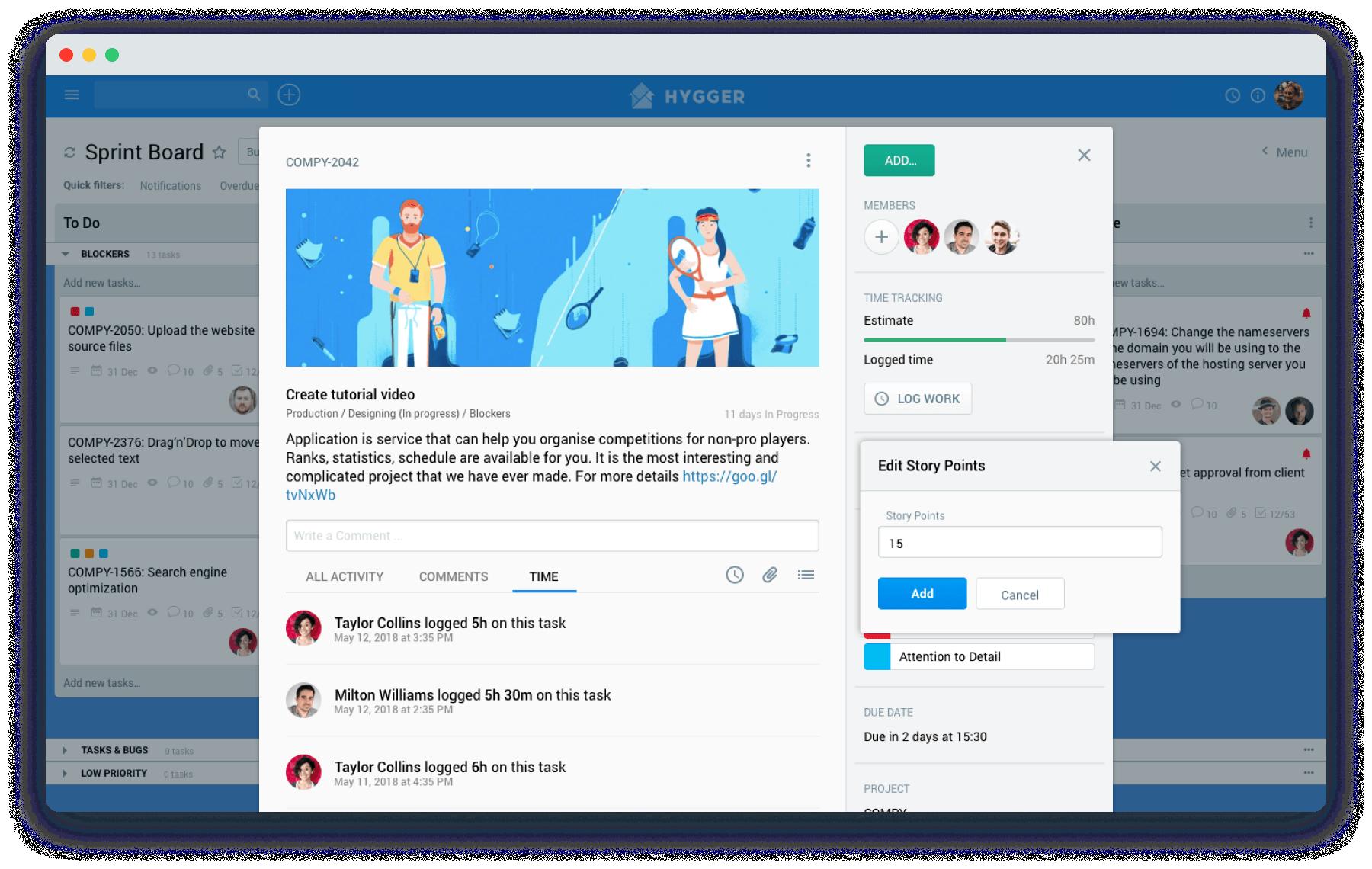
Built-in time tracking lets team members log hours spent on tasks, while reports help managers understand capacity, bottlenecks, and trends in delivery. This data supports better forecasting and realistic planning. -
Collaboration tools
Comments, mentions, attachments, labels, and collections keep discussions around each task in one place. This reduces scattered chat logs and makes it easy for new team members to understand context quickly.
What are the typical use cases for Hygger?
-
Product feature prioritization
Product managers use Hygger to collect customer feedback, stakeholder requests, and internal ideas into one backlog. Using scoring models, they identify high-impact features and push them into development boards with full traceability back to the original idea. -
Roadmap and release planning
Leadership teams use Hygger roadmaps to plan quarterly or yearly objectives. Each lane or column can represent a theme, release, or team, giving a clear picture of what will be worked on and when, without losing the link to day-to-day tasks. -
Agile software development
Engineering teams run their daily work on Hygger’s Kanban or Scrum boards. Tasks move from “To Do” to “Done,” while WIP limits and visual cues help keep the flow healthy and prevent overload. -
Cross-functional campaign management
Marketing, product, and sales teams can coordinate product launches or campaigns, using one shared board for tasks, content preparation, and deadlines. Everyone sees progress without chasing status updates. -
Portfolio and multi-team coordination
Organizations with several products or squads can manage multiple boards, link work items, and view high-level progress across the portfolio. This gives management a consolidated view without forcing teams into a single rigid process.
What benefits does Hygger bring to teams?
Hygger brings structure to decision-making and execution. Instead of choosing features based on opinions, teams rely on scoring frameworks that balance effort and impact. This leads to more strategic backlogs and fewer “nice-to-have” distractions.
By connecting backlog, roadmap, and delivery boards, Hygger reduces manual updating and duplicated work. Progress rolls up automatically, which cuts down meetings and reporting overhead. Teams spend more time building and less time maintaining status spreadsheets.
Time tracking and analytics create a feedback loop: teams see where time goes, which tasks constantly slip, and where the process gets stuck. This supports continuous improvement and more accurate planning over time.
Overall, Hygger helps organizations deliver faster, align stakeholders around clear priorities, and maintain a transparent, measurable product development process.
How do users typically experience Hygger day to day?
On a daily basis, most users live inside boards: backlog, Kanban, or sprint. Product managers add new ideas to the backlog, score them, and prepare the next batch of work. Developers, designers, and other specialists pull tasks from prioritized columns, update statuses, and log time as they work.
Roadmaps act as a living view of direction rather than a static document. Stakeholders check the roadmap and linked tasks to understand how initiatives are progressing, instead of requesting one-off slide decks.
The interface focuses on clarity: swimlanes, labels, and score fields give quick cues about priority and status. Collaboration happens directly inside tasks, so conversations stay attached to the work rather than getting lost in chat history.
For teams implementing Hygger Product Management and Agile Planning, the experience is one of gradual alignment: over time, everyone knows what matters, where each feature stands, and how today’s tasks connect to the bigger product strategy.
Hygger Alternatives




Hygger Integrations