BigTime
Languages:
English
Localization:
World

What is BigTime Professional Services Automation Platform?
BigTime is a professional services automation platform built for firms that sell expertise and bill by the hour. It connects project scoping, resource planning, time and expense tracking, invoicing, and analytics in one environment, so teams can see exactly how work turns into revenue. The platform is designed for consulting, accounting, architecture, engineering, IT services, and other project-based organizations that need more than a basic time tracker or accounting add-on.
BigTime helps firms estimate work accurately, staff projects with the right people, capture billable time without friction, and turn it into invoices that match client expectations and contracts. Real-time dashboards show utilization, margins, backlog, and pipeline health, giving leadership a clear picture of performance and cash flow. Instead of juggling spreadsheets and disconnected apps, firms can run their entire delivery lifecycle from one place and scale operations without losing control of profit and capacity.
What are the key features of BigTime?
-
Project scoping and estimating
BigTime lets teams build structured estimates using roles, rates, and timelines, then convert approved estimates directly into projects. This reduces rework, keeps pricing aligned with scope, and protects profit margins from the start. -
Resource management and capacity planning
Managers can see who is available, which skills are needed, and how staffing decisions affect utilization. Schedulers can balance workloads, avoid burnout, and assign the right people to the right projects at the right time. -
Time and expense tracking
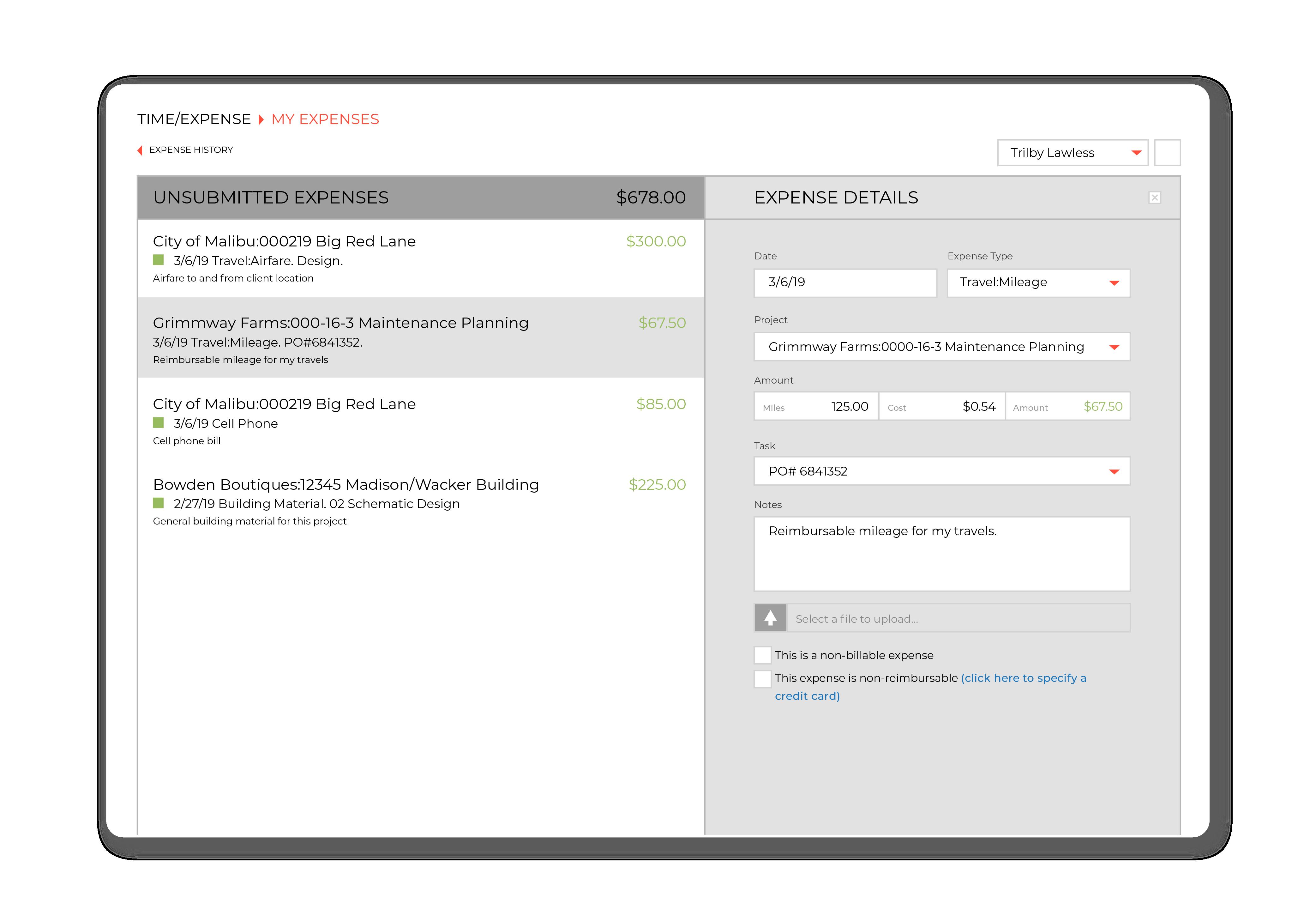
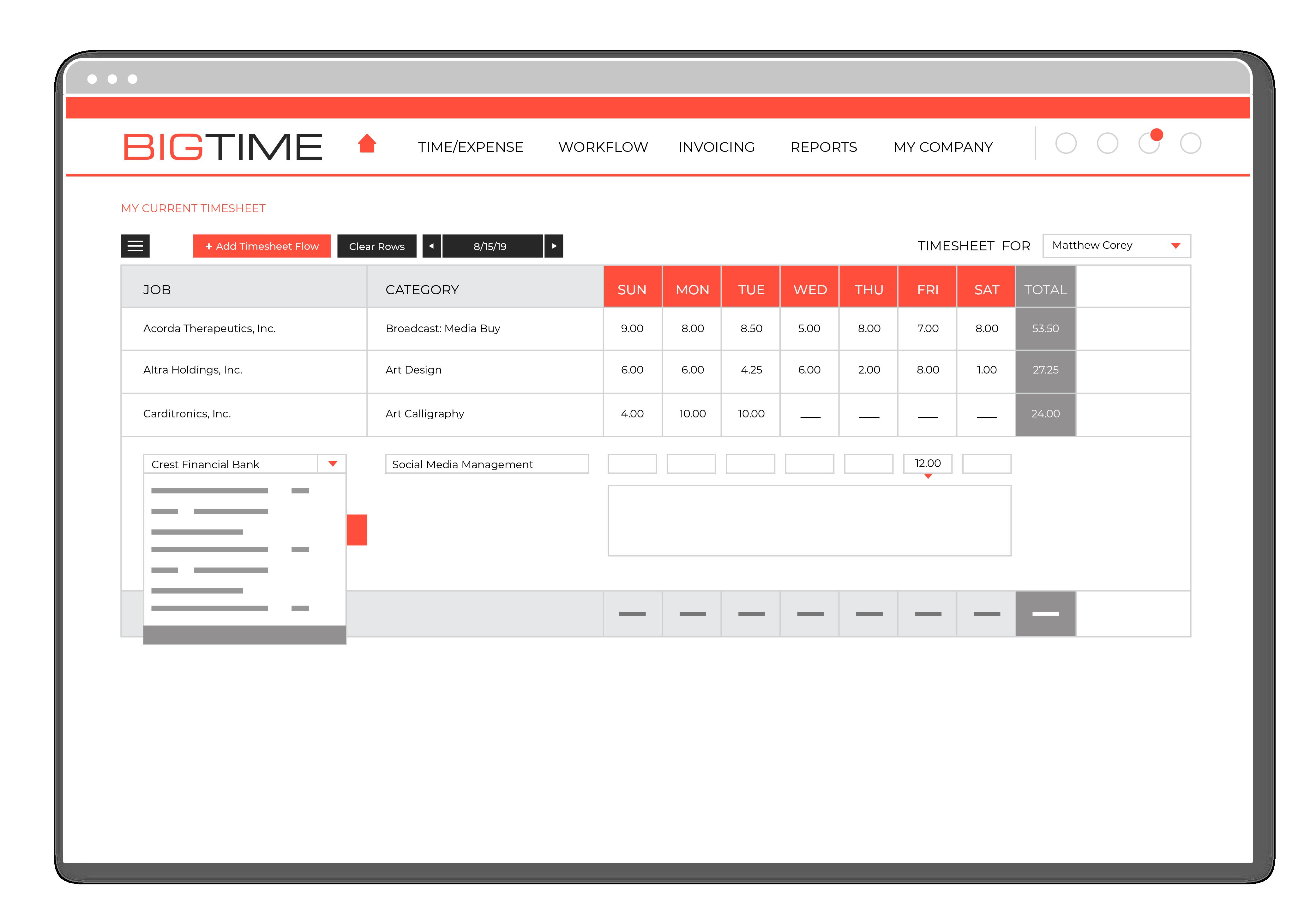
Consultants log hours and expenses via web or mobile with intuitive timesheets, templates, and reminders. All entries are tied to specific projects and tasks, reducing errors and preventing unbilled work. -
Billing, invoicing, and revenue recognition
BigTime supports time-and-materials, fixed-fee, and hybrid billing models. Invoices can be generated from approved time and costs, aligned with milestones or retainers, and exported to connected accounting systems. -
Financial and operational analytics
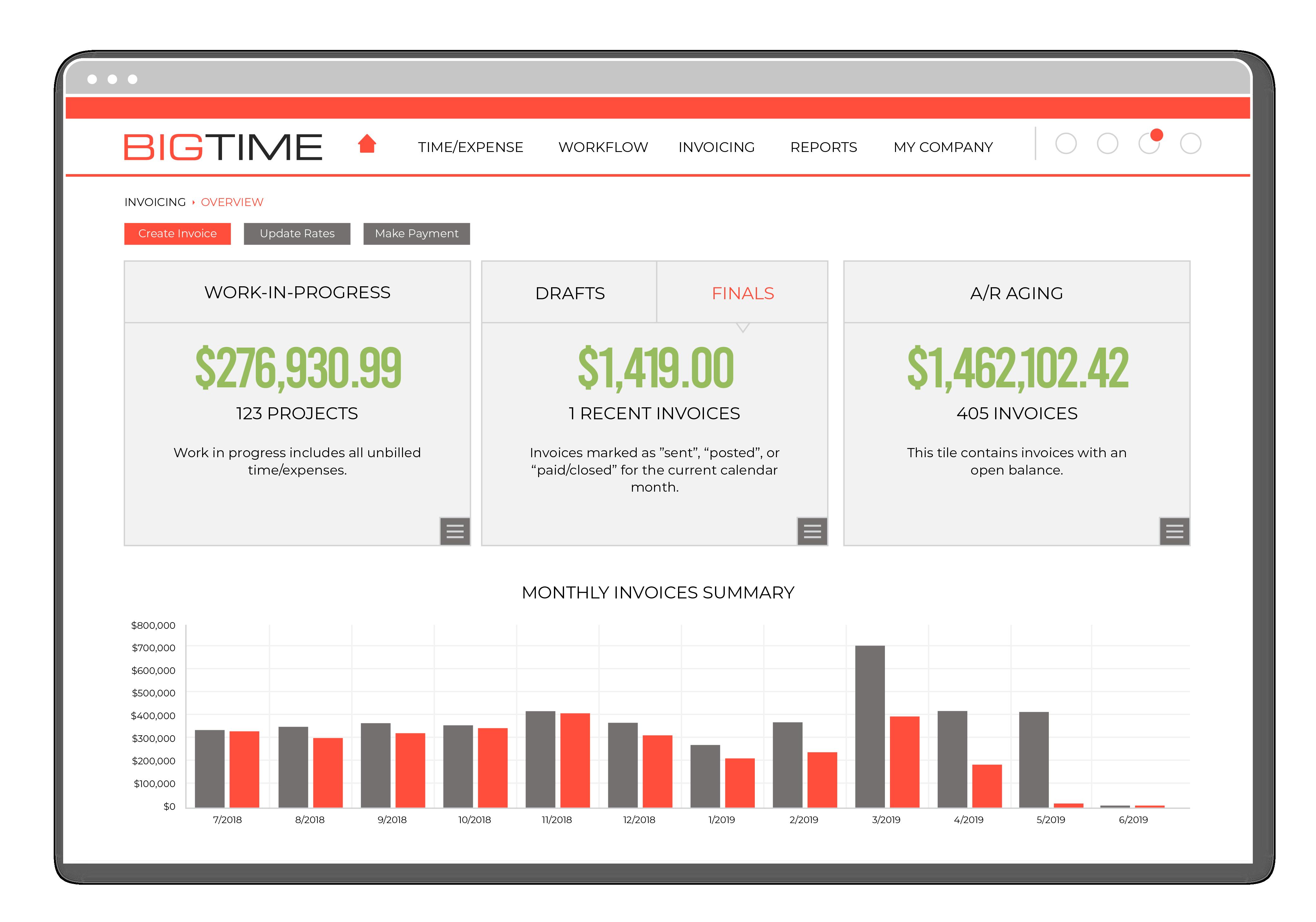
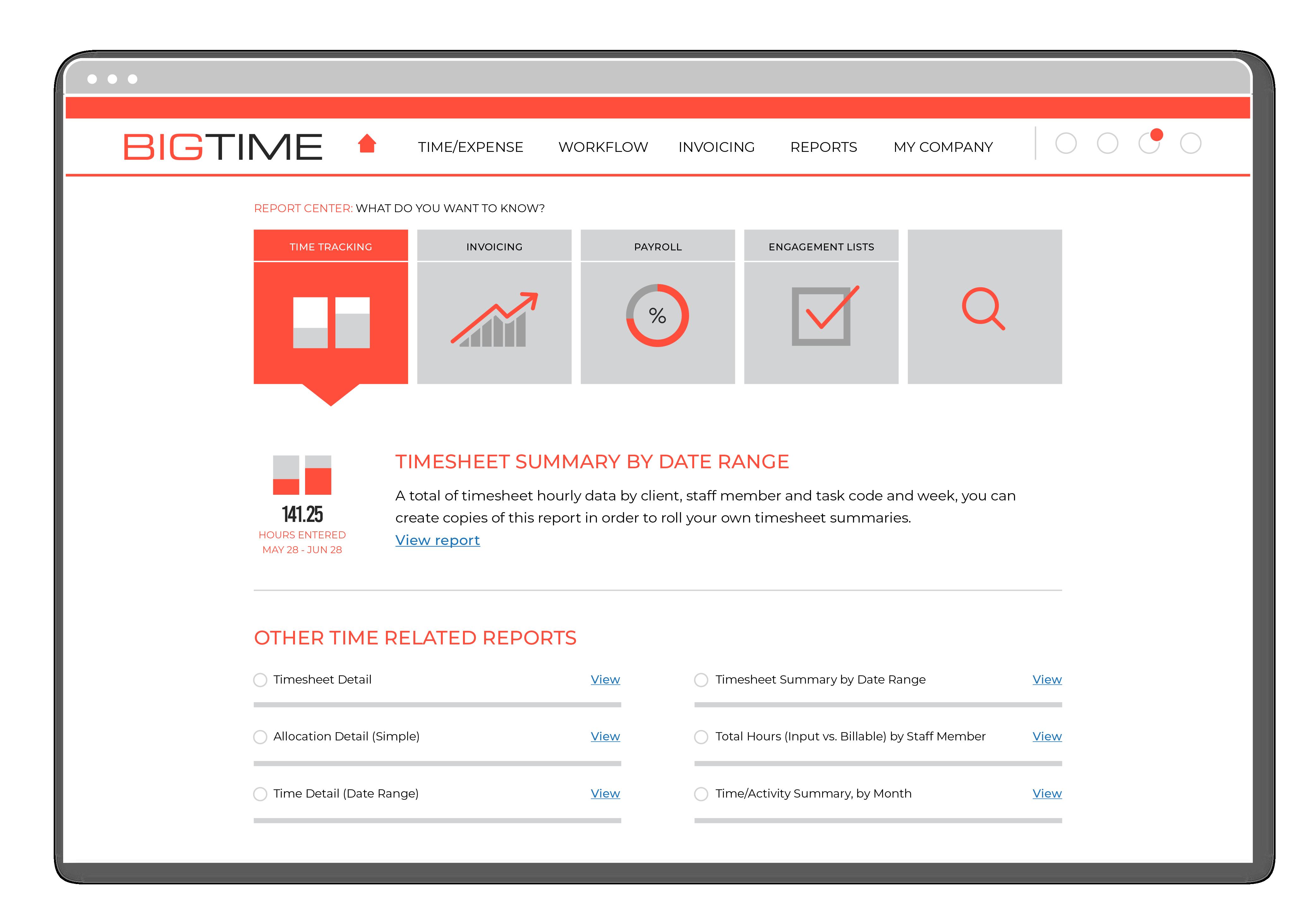
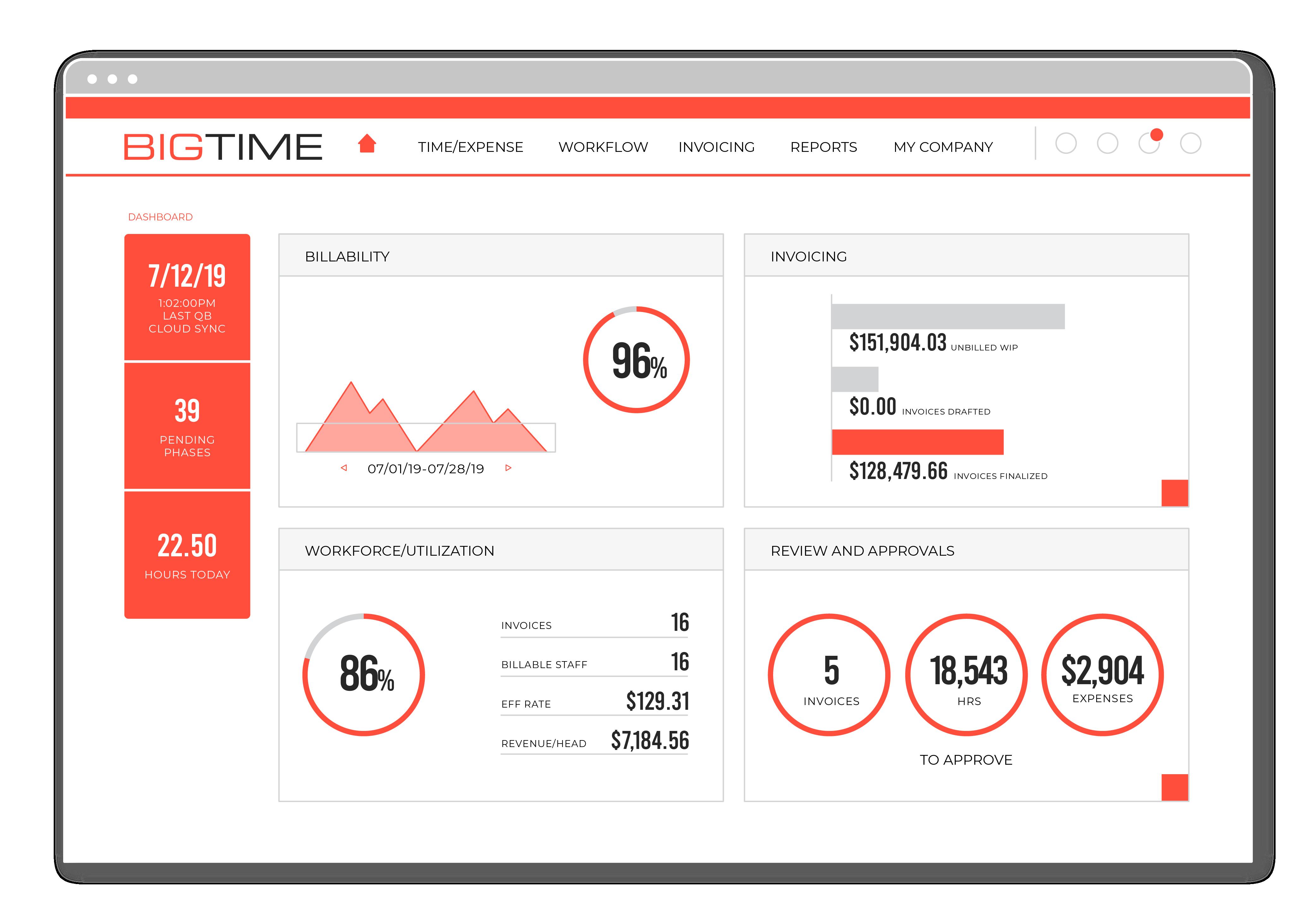
Built-in dashboards and reports reveal utilization, write-offs, effective rates, project profitability, and pipeline trends. Leaders can spot problems early, compare performance across teams, and forecast revenue with more confidence. -
Integrations with core business tools
BigTime integrates with popular accounting, CRM, and collaboration platforms, syncing clients, projects, and financial data. This minimizes double entry and keeps systems aligned without forcing a complete stack replacement.
When is BigTime used in real projects?
-
Mid-sized consulting or advisory firms
Firms that manage dozens or hundreds of concurrent projects use BigTime to standardize scoping, track time consistently across teams, and create predictable invoicing cycles. -
Architecture, engineering, and construction-related practices
Project-based organizations with complex phases and mixed billing models use BigTime to manage budgets, assign resources, and monitor profitability from concept through delivery. -
IT services, software implementation, and managed services providers
These teams rely on BigTime to coordinate project work, retainers, and support contracts, ensuring that billable hours are captured accurately and aligned with SLAs. -
Accounting and financial services firms
Practices that juggle recurring engagements, seasonal spikes, and advisory projects use BigTime to keep workload visible, manage deadlines, and ensure that staff time turns into billable revenue.
What benefits does BigTime provide to service firms?
BigTime reduces revenue leakage by making time capture easy and tying every hour to a project and rate. It protects margins by aligning estimates, budgets, and actuals, so overruns can be spotted and managed early, not after the fact.
Leaders gain visibility into utilization and capacity, which supports better hiring decisions and more realistic project commitments. Finance and operations teams spend less time reconciling data between tools, because billing, project data, and time entries are already connected.
Overall, the platform helps firms grow without losing grip on profitability, enables more accurate forecasting, and supports healthier, more sustainable workloads for staff.
What is the user experience like in BigTime?
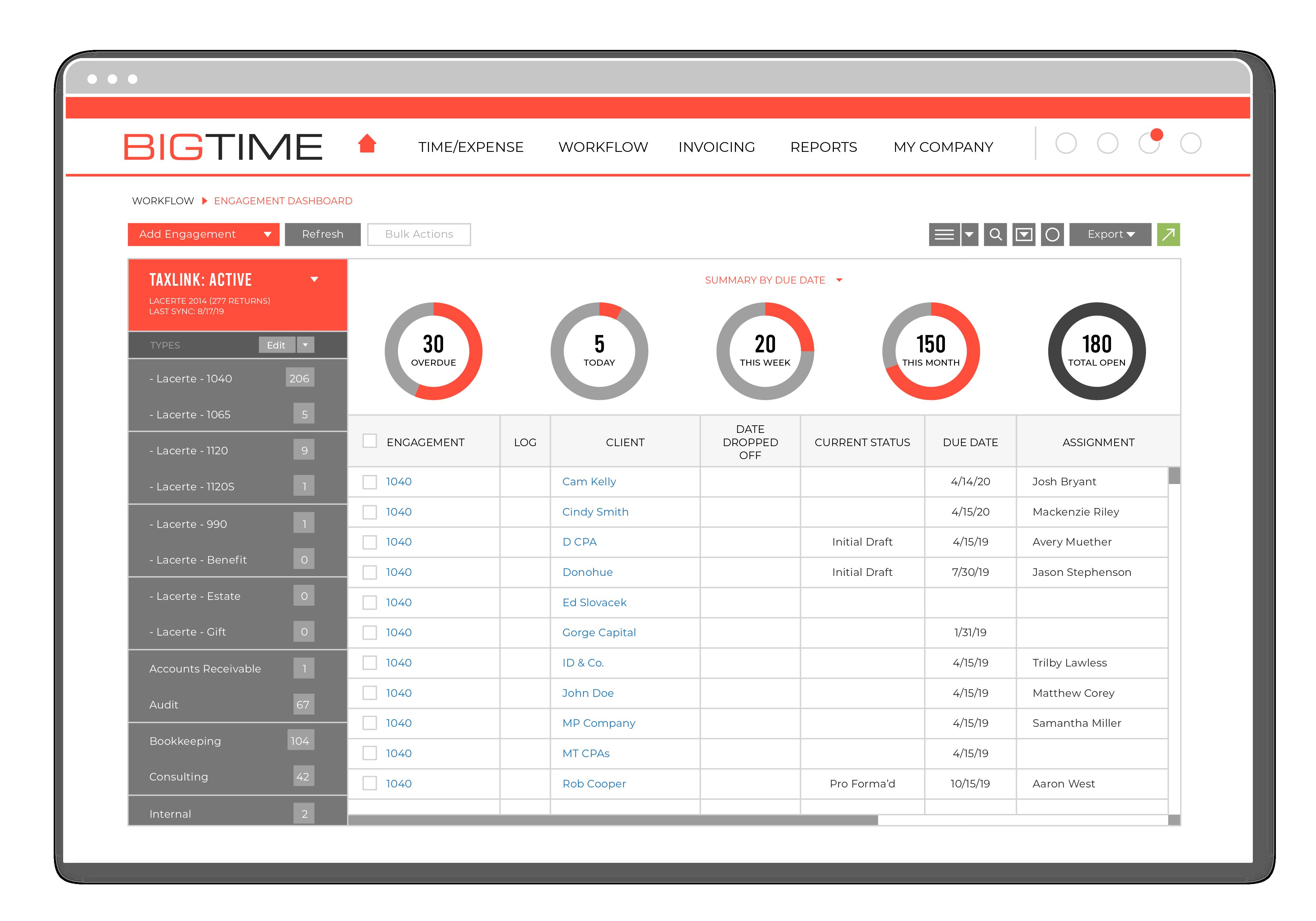
Users interact with BigTime through a clean interface focused on the workflows they handle every day: logging time, approving entries, managing tasks, and reviewing project status. Navigation is organized around clients, projects, people, and financials, so information is easy to find even as the firm scales.
Timesheets can be pre-populated with common tasks, favorite projects, and recurring entries, reducing friction for consultants. Project managers see budget burn, deadlines, and staffing in one place, while executives get summary dashboards that highlight trends rather than raw data.
Because BigTime is cloud-based, teams can work from anywhere and still maintain a single source of truth for project and financial information. The result is a more predictable, data-driven way to run a professional services business, from the first estimate to the final invoice.
2026-10-21 12:36:22: Project Finances Are a Guessing Game? Youtube
2026-10-21 12:36:07: How to Allocate Resources in Minutes, Not Meetings Youtube
2026-10-21 12:35:53: State of QuickBooks in 2025 Youtube
2026-10-21 12:35:37: Expense Agent - Sizzler Youtube
2026-10-21 12:35:23: From Sell to Start in Minutes: BigTime Quotes Is Here Youtube
2026-10-21 12:35:08: BigTime AI: Elevate, Automate, Dominate - The AI Revolution in Professional Services Youtube
2026-10-21 12:34:53: BigTime Navigation Walkthrough Demo Youtube
2026-10-21 12:34:38: BigTime Delivery Product Walkthrough Youtube
2026-10-21 12:32:32: The Forecasting Formula: Turning Financial Data into Profitability [On Demand] Youtube
2026-10-21 12:31:50: Steve Schneider on the Upcoming "Enterprise BI Agent: See Your Business Clearly" Webinar Youtube
2023-04-03 19:44:33: Dashboards are here!
Our new dashboards give you the power to choose the metrics that matter most to you, visualize your data, and arrange the dashboard in a way that brings focus to your KPIs.
Follow the link below to learn more about dashboards!
https://t.co/flr5T7AhdrTwitter
2023-03-20 16:41:33: Every month BigTime is getting better and easier to use. We’re focused on helping your business operate smoothly so you can stay focused on what you do best.
Check out what's new this month! ⤵
https://t.co/9PrbAZtdUZTwitter
2023-03-07 23:21:27: You can't spell "challenge" without "change".
And that's exactly what change management is. But don't worry, we're here to help! 💪
In a new article, we outline the 3 phases of implementing change management + expert advice and tips for each step.
https://t.co/QGRX9gqmdfTwitter
2023-02-14 19:17:08: In a new blog, we discuss how to self-diagnose if your organization has outgrown its homegrown systems and processes, and the ROI you could be missing out on by not upgrading to a centralized, purpose-built system such as professional services automation (PSA) software.Twitter
2023-02-13 20:47:59: This February, BigTime’s updates help you remain nimble as you progress through any project.
This means you can rely on BigTime to keep you informed with timely notifications and up-to-date data.
Follow the link below to see what’s new in BigTime this month!Twitter
2023-01-25 17:53:06: When employees aren’t tracking their time efficiently, your bottom line will feel the negative effects.
In the new BigTime Software Benchmark Report, BigTime clients share how our software assists in getting projects done on time and within budget.
Download the report now! https://t.co/cDKSmkBNAlTwitter
2023-01-19 18:58:50: https://t.co/GKbi9JKVGsTwitter
BigTime Alternatives




BigTime Reviews & Demos
BigTime Integrations