Anaplan
Languages:
Deutsch
English
Français
Italiana
日本語
Русский
Localization:
World

What is Anaplan and how does it help businesses plan better?
Anaplan is a connected planning platform designed for organizations that need to align decisions across finance, sales, supply chain, workforce, and operations. Instead of treating planning as a set of separate spreadsheets owned by different departments, Anaplan brings data, models, and decision-making into one structured environment. This helps companies move from fragmented planning toward a more coordinated operating model.
The platform is widely used by medium and large businesses that deal with complex forecasting, budgeting, resource allocation, and scenario analysis. Anaplan is not just a reporting tool and not only a financial planning system. It is built to support ongoing planning processes where changes in one part of the business can affect many others. For example, a change in demand can influence revenue expectations, inventory needs, staffing plans, and operating costs. Anaplan helps organizations connect these relationships in a more systematic way. That makes it useful for teams that need faster planning cycles, better visibility, and stronger cross-functional alignment.
What key features does Anaplan offer for enterprise planning?
- Connected planning models
Anaplan allows businesses to build linked planning models across multiple departments. Finance, sales, operations, and workforce teams can work from connected assumptions instead of isolated files. This reduces planning silos and improves consistency. - Scenario analysis and forecasting
One of the strongest parts of Anaplan is its ability to test multiple business scenarios. Teams can compare outcomes based on changes in demand, pricing, hiring, supply chain constraints, or market conditions. This supports better decision-making in uncertain environments. - Budgeting and financial planning
The platform supports budgeting, forecasting, long-range planning, profitability analysis, and performance management. It helps finance teams move beyond manual spreadsheet work and create more dynamic planning cycles. - Sales and revenue planning
Anaplan includes capabilities for sales forecasting, territory planning, quota planning, pipeline visibility, and performance analysis. This helps revenue teams connect top-line goals with real operating assumptions. - Supply chain and operational planning
Businesses can use Anaplan for demand planning, inventory planning, supply planning, and broader operational coordination. This is especially useful for companies that need tighter control over changing supply and demand conditions. - Workforce planning
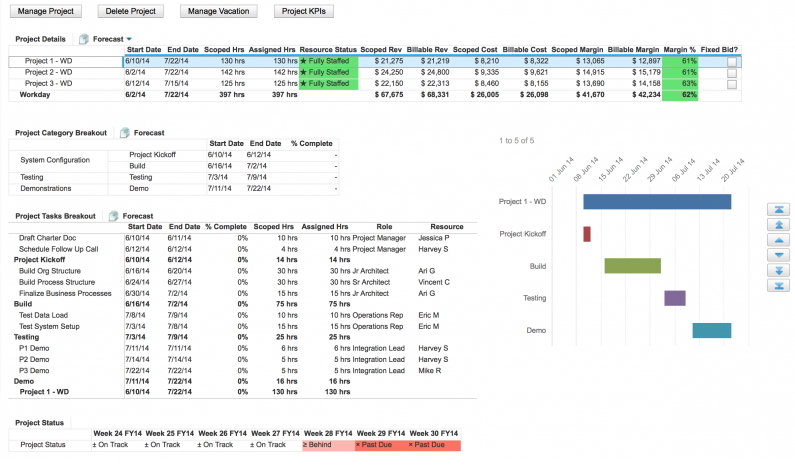
The platform can support headcount planning, compensation planning, capacity analysis, and workforce allocation. HR and finance teams can model staffing decisions together rather than handling them in separate tools. - Integration and data connectivity
Anaplan is built for organizations with multiple systems. It can connect with data sources and business platforms so planning models are fed by more current information rather than manual re-entry. - Governance and administration
Enterprise planning often requires strong control over access, workflows, approvals, and data integrity. Anaplan provides administration features that support governance across large teams and structured planning processes. - AI-enhanced planning support
Anaplan also includes AI-driven capabilities that help accelerate analysis, improve model building, and support faster insight generation. This adds speed to planning work without changing the core role of the platform as a business planning system.
What are the main use cases for Anaplan in real business operations?
- Enterprise budgeting and forecasting
Companies use Anaplan to replace slow annual budgeting and static forecast processes with more flexible, rolling, and collaborative planning. - Integrated business planning
Businesses can connect financial targets with operational assumptions, helping leaders understand how sales, supply chain, workforce, and cost drivers affect one another. - Sales performance management
Revenue teams use the platform to manage forecasts, quotas, territories, and planning cycles with more structure and visibility. - Supply chain coordination
Manufacturers, distributors, and retail-focused businesses can use Anaplan to improve planning across inventory, replenishment, demand, and supply constraints. - Workforce and compensation planning
HR and finance teams can model hiring, staffing levels, role allocation, and compensation costs in a more controlled environment. - Executive decision support
Leadership teams can use Anaplan to compare future scenarios, evaluate trade-offs, and align on planning decisions with a clearer view of business impact.
Why do companies choose Anaplan over disconnected planning tools?
Anaplan is valuable because it helps organizations reduce fragmentation. Many businesses still rely on spreadsheets, email approvals, and disconnected departmental tools for planning. That creates delays, conflicting assumptions, and weak visibility. Anaplan addresses this by giving teams a shared planning environment where information can flow more consistently.
Another advantage is scale. The platform is designed for organizations with complex structures, multiple business units, and planning needs that go far beyond simple budgeting. It supports deeper modeling, more structured governance, and broader business coordination. This makes it attractive to businesses that treat planning as a strategic capability rather than a back-office routine.
Anaplan also supports faster reaction to change. In volatile markets, companies need to update plans quickly. A platform built for scenario modeling and connected assumptions is much more useful than static files that need manual updates across multiple departments.
What is the user experience like in Anaplan?
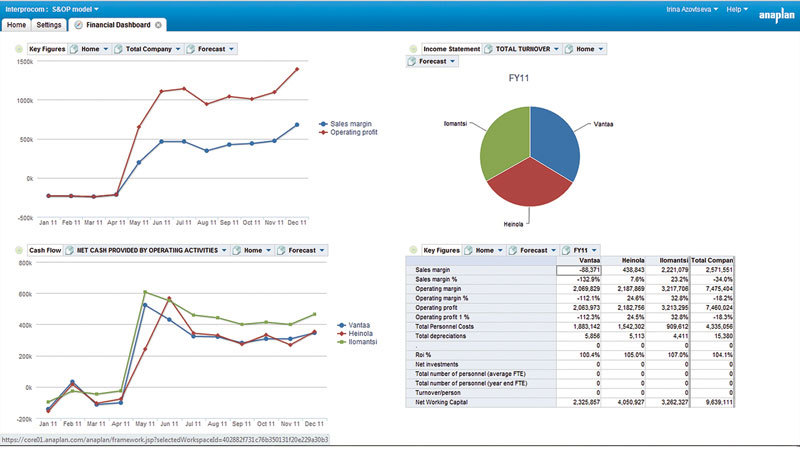
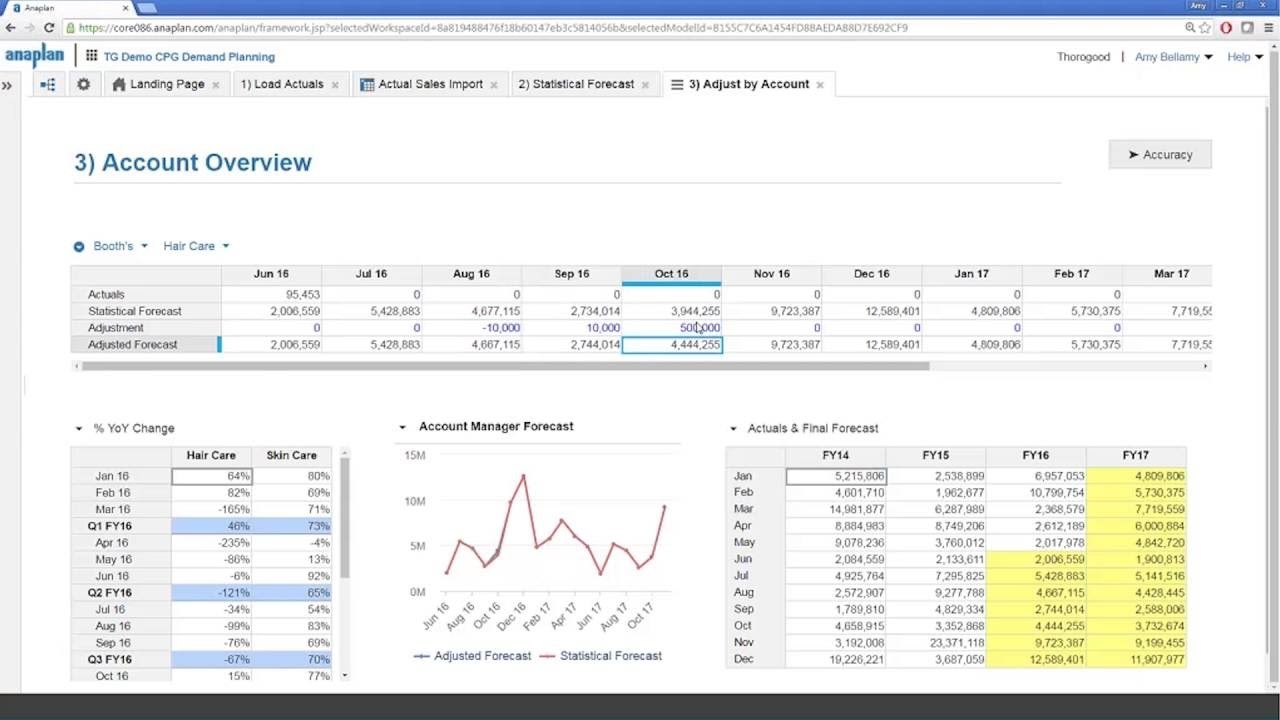
The user experience in Anaplan is oriented around structured planning rather than casual everyday productivity. It is designed for business users, planners, analysts, managers, and executives who need access to models, forecasts, dashboards, and scenario views. For organizations used to spreadsheet-driven planning, the experience can feel more disciplined and more controlled.
Users benefit from having a centralized planning environment with clearer relationships between business drivers. Instead of chasing versions of files, they can work within a more stable planning framework. At the same time, Anaplan is a serious enterprise platform, so it tends to deliver the most value when companies invest in thoughtful setup, governance, and model design.
Overall, Anaplan is best suited for organizations that want planning to be connected, scalable, and decision-oriented. It works especially well where finance, operations, sales, and workforce planning need to move together instead of pulling in different directions.
2023-03-30 18:00:32: Businesses in tech, media, and telco struggle to drive profitable growth and anticipate the future. FP&A teams need greater insights to support critical business decisions.
Tap into research, guides, and more that empower teams to drive future outcomes. https://t.co/aPeCynYoBl https://t.co/7pg5dF8owfTwitter
2023-03-17 17:00:02: What is revenue operations?🤔
Revenue Operations: when sales, marketing, and customer service align for end-to-end customer connection, the payoff is streamlined operations and more revenue.
https://t.co/79GVJhrnwPTwitter
2023-03-08 17:52:52: Happy International Women's Day!
At Anaplan, we believe in a workplace that is free of bias, stereotypes, and discrimination, where everyone can share their stories and help build greater gender equity. We #EmbraceEquity.
#IWD2023 #InternationalWomensDay https://t.co/P0wu0onTuETwitter
2023-03-03 18:00:03: So, at work, you are asked to do more with less.
It sounds like a daunting task. But not to worry, we have 5️⃣ tips to help you succeed this year.
https://t.co/HMnnW83tGkTwitter
2023-03-02 18:01:19: Building financial planning processes that deliver clear insights is no small task. For Holcim ANZ, accurate earnings before interest and taxes forecasts are key to keeping the operations of the company's construction supply products running smoothly. https://t.co/yuzAYfUnKiTwitter
2023-02-28 18:23:55: It's time to break down walls, unleash efficiencies and support real-time decision-making.
For Unum, a provider of insurances, investing in Anaplan has enabled its finance team to be more effective and spend time preparing for the future.https://t.co/e8etFmUOpPTwitter
2023-02-22 18:04:06: Faced with uncertainty, your best strategy is to think proactively about what might reasonably (and even unreasonably) happen in the future and chart a course around those scenarios. ⛵️
https://t.co/AkqWhpJ0YDTwitter
2023-02-15 18:29:53: What is Anaplan? 🤔
Just like people, corporations have organizational messes. We help replace the "messy middle" between functional applications and analytic tools. Anaplan enables organizations to see, plan and run their business.
https://t.co/dJkTI0bhXqTwitter
2023-02-08 18:35:08: Sales teams move fast. Opportunity data, deal progress, and sales process must keep up.
For Marsh, a lead insurance broker and risk advisor, these challenges took valuable time away client service. They needed a solution to put data at their fingertips.https://t.co/LwY9lGYO5KTwitter
2023-02-07 20:00:06: Are you ready? 🚀
This year, Anaplan Connect is coming to a city near you. Learn important business lessons from leaders, for leaders.
🏙️ Find your city. https://t.co/m6clDMC80BTwitter
Anaplan Alternatives