Leadfeeder
Languages:
English
Localization:
World

What is Leadfeeder used for?
Leadfeeder B2B Visitor Intelligence is a website visitor identification service for companies that want to understand which businesses are visiting their website before those visitors fill out a form, book a call, or contact sales. Instead of showing only anonymous traffic numbers, Leadfeeder helps connect website visits with company-level data, visit behavior, and potential buying intent.
The service is mainly useful for B2B sales, marketing, lead generation, account-based marketing, and demand generation teams. It helps companies see which organizations are researching their products, services, pricing, case studies, or industry pages. This makes website analytics more actionable because sales teams can focus on companies that already show interest.
Leadfeeder is especially relevant for SaaS companies, agencies, consultants, manufacturers, technology providers, integration companies, and other businesses with longer sales cycles. It turns hidden website activity into a practical list of potential accounts for outreach, nurturing, retargeting, and CRM follow-up.
What are the key features of Leadfeeder?
-
Company identification from website traffic
Leadfeeder helps identify companies that visit a website, even when individual visitors remain anonymous. This gives sales and marketing teams a clearer view of which organizations are showing interest. -
Visitor behavior tracking
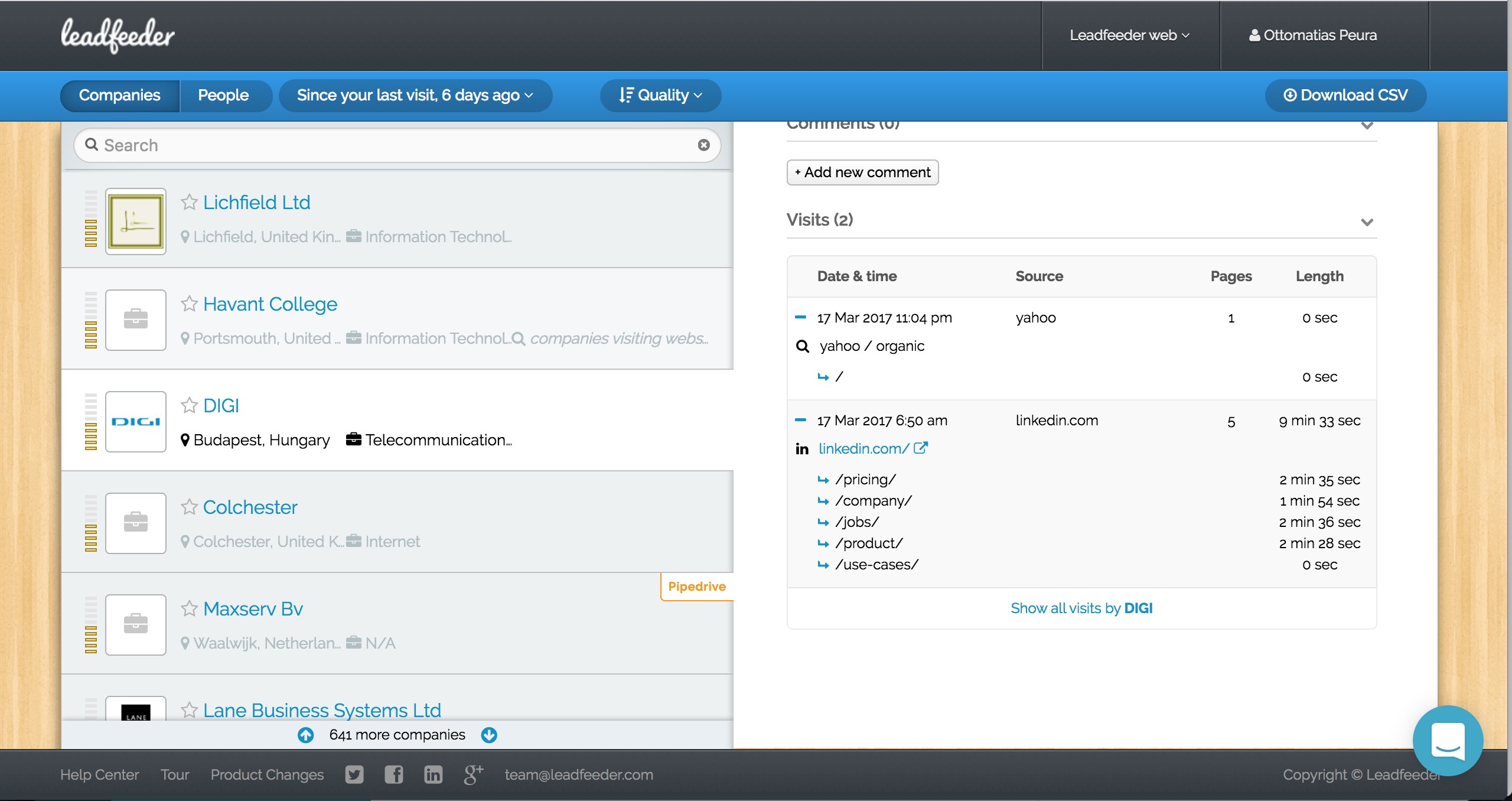
The platform shows what pages a company visited, how often it returned, and which parts of the website attracted attention. This helps teams understand whether a company is browsing casually or showing stronger purchase intent. -
Lead scoring and filtering
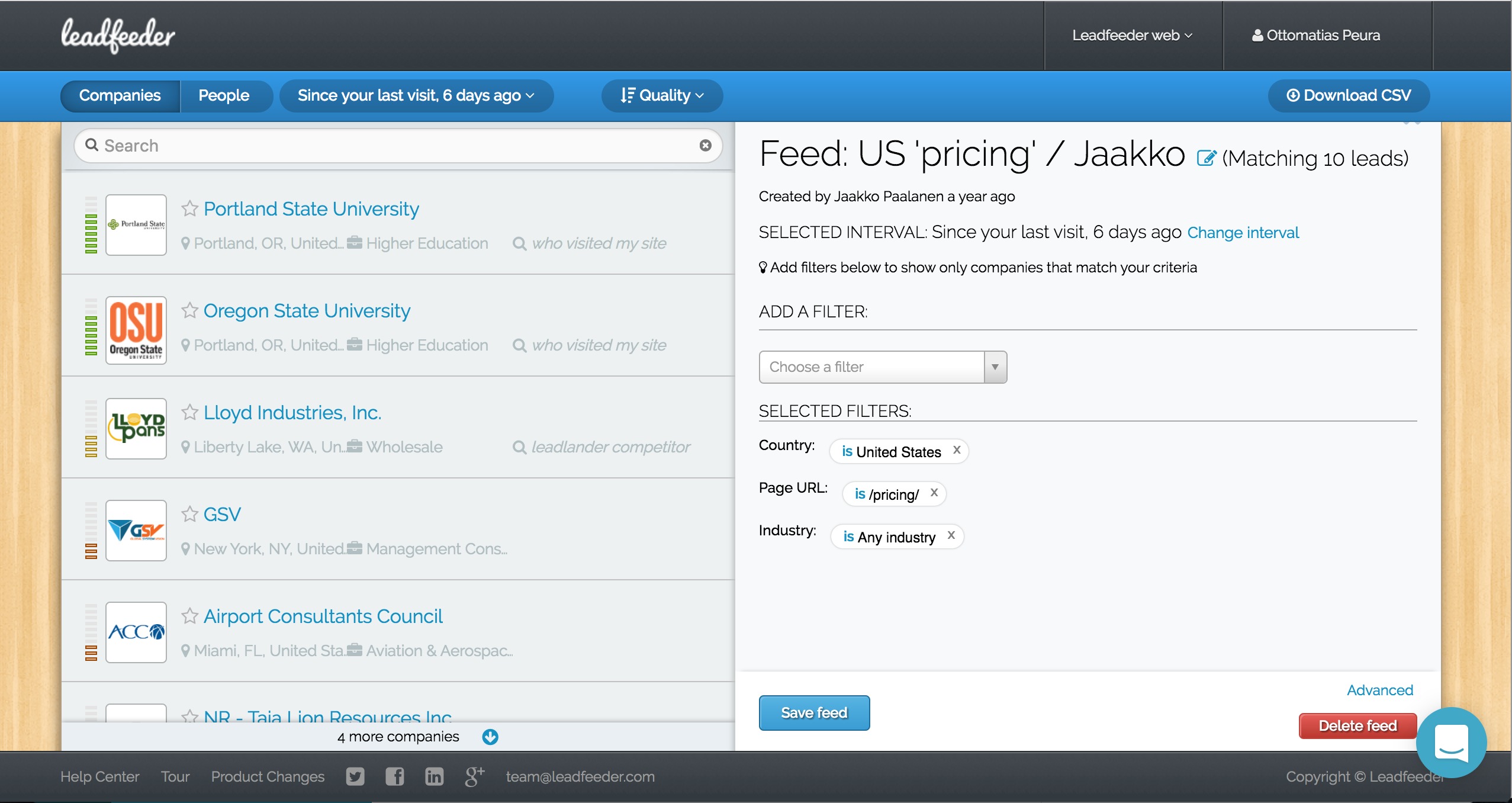
Users can filter visitors by behavior, location, source, visit frequency, industry, or page activity. This helps prioritize high-value accounts instead of treating all website traffic equally. -
CRM and sales workflow integrations
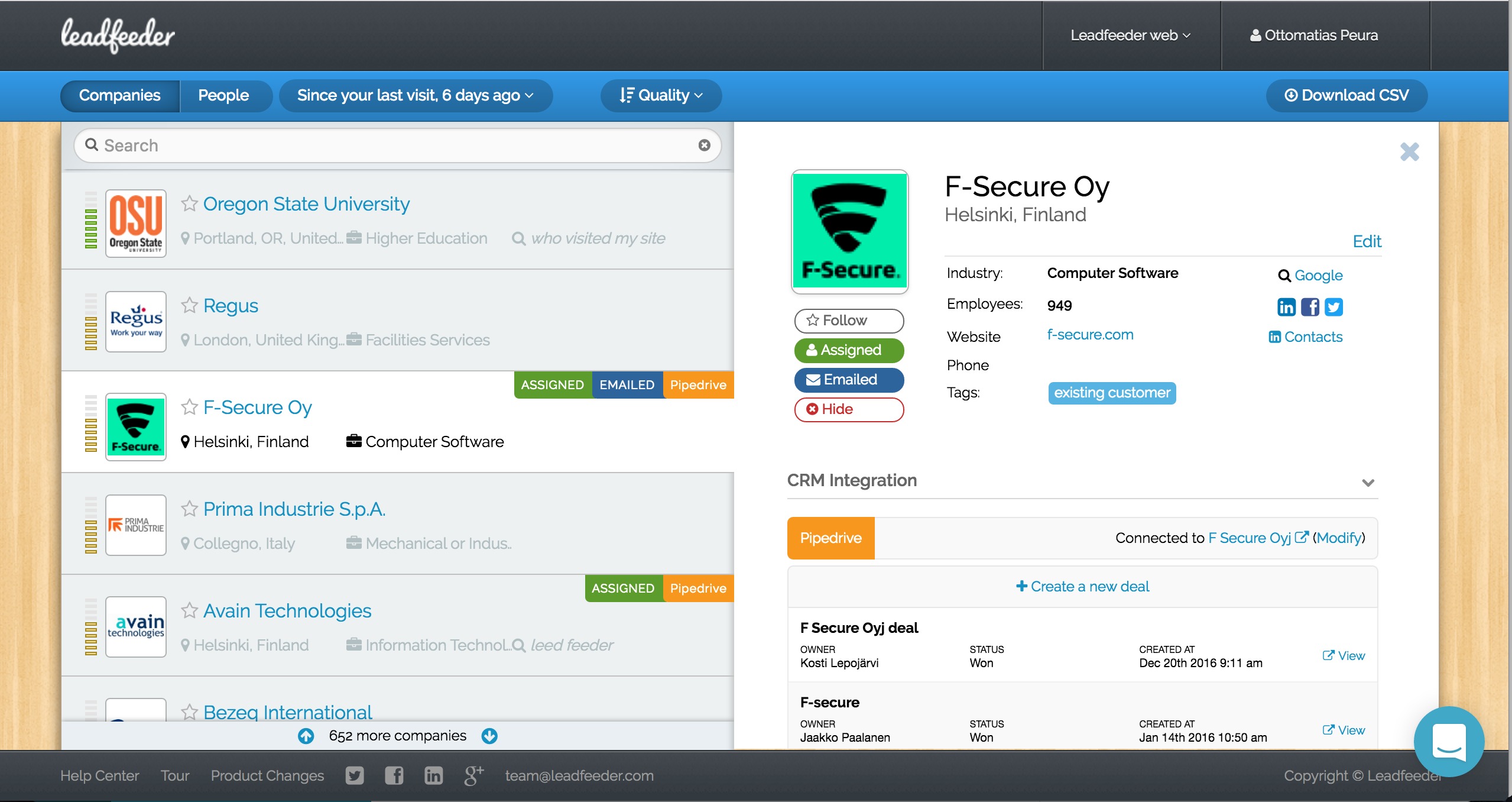
Leadfeeder can connect with CRM and sales tools so teams can move identified companies into their existing sales process. This reduces manual work and keeps account activity visible inside the tools teams already use. -
Email alerts and notifications
Sales teams can receive notifications when important companies visit the website or return to specific pages. This makes follow-up faster and more relevant. -
Account-based marketing support
Leadfeeder helps marketing teams understand whether target accounts are engaging with campaigns, landing pages, content, or product information.
How can businesses use Leadfeeder?
-
Finding warm B2B leads
Sales teams can discover companies that are already visiting the website and use that information to build more relevant outreach lists. -
Tracking high-intent pages
Businesses can monitor visits to pricing pages, integration pages, demo pages, comparison pages, and case studies to detect stronger buying signals. -
Improving outbound sales
Instead of starting with cold outreach only, sales teams can contact companies that already showed interest through website activity. -
Measuring marketing campaign quality
Marketing teams can check whether campaigns are attracting relevant companies, not just clicks and sessions. -
Supporting account-based sales
Teams can track whether target accounts are visiting the website and use those signals to time follow-up or adjust messaging. -
Re-engaging lost or inactive opportunities
When a previous prospect returns to the website, sales teams can treat it as a signal to restart the conversation.
What are the benefits of Leadfeeder?
Leadfeeder helps businesses make better use of existing website traffic. Many companies invest in SEO, paid ads, content marketing, webinars, and landing pages, but only a small part of visitors convert directly. Leadfeeder helps uncover the companies behind part of that silent traffic, which can create more sales opportunities without increasing advertising spend.
The platform can improve sales prioritization by showing which accounts are active, returning, or visiting important pages. It also helps marketing teams understand the business value of traffic sources, campaigns, and content. For managers, Leadfeeder provides a clearer connection between website activity and potential pipeline.
Another important benefit is timing. A company that visits a service page today may be more open to contact than a random cold lead. Leadfeeder gives teams a way to act while interest is still fresh.
What is the Leadfeeder user experience like?
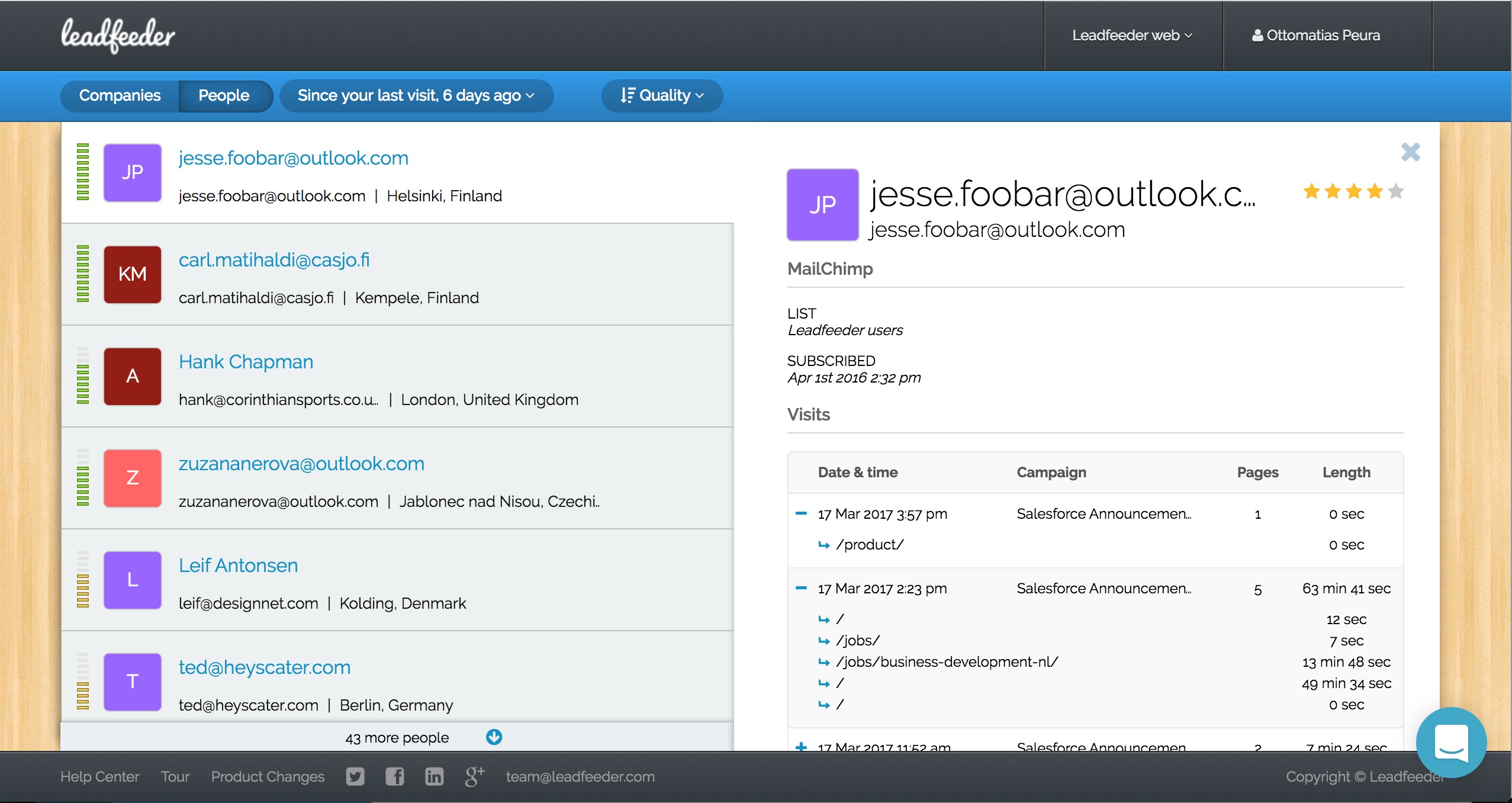
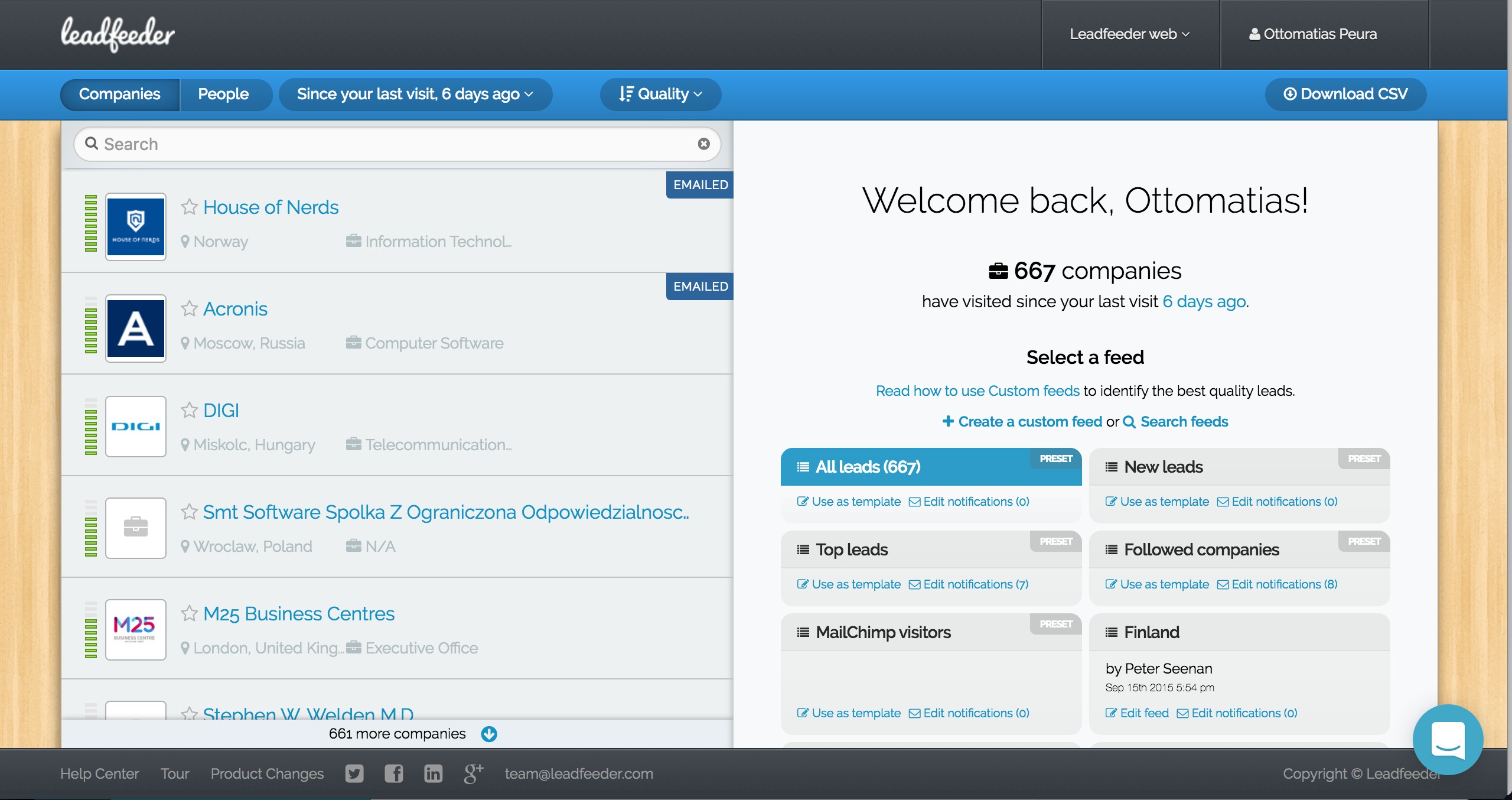
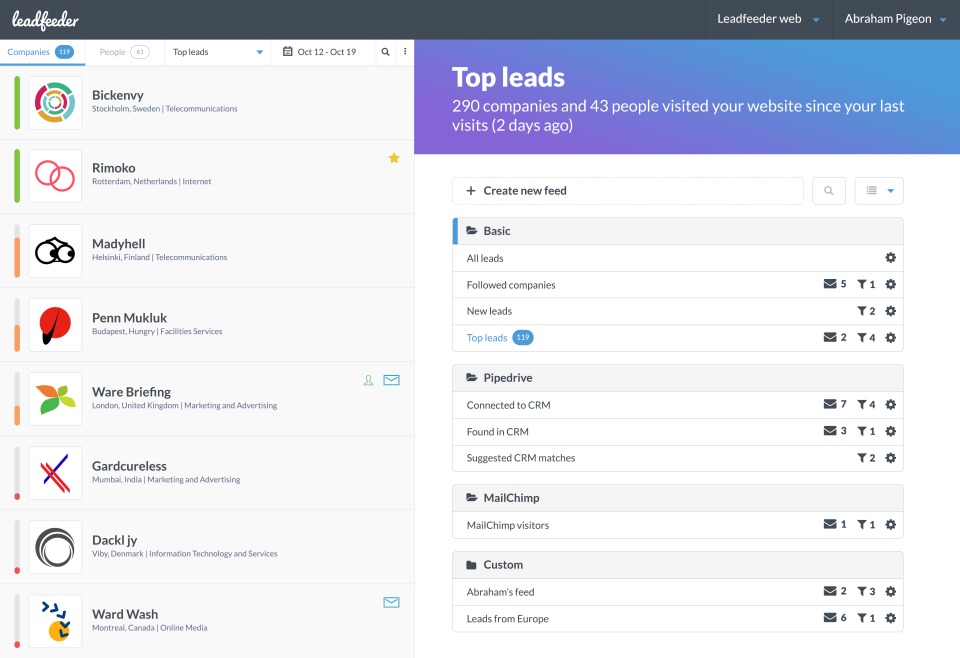
Leadfeeder is designed around practical dashboards, company lists, filters, alerts, and integrations. Users can review identified companies, inspect their website activity, and decide which accounts deserve follow-up. The interface is focused on turning website visits into sales actions rather than overwhelming users with general analytics data.
For marketing teams, the experience feels like a bridge between analytics and sales. For sales teams, it works like a daily radar of companies showing interest. For business owners and managers, it gives a clearer view of whether website traffic is bringing real commercial opportunities.
Leadfeeder is most valuable when a business already receives relevant B2B website traffic and wants to convert more of that traffic into pipeline. It does not replace CRM, analytics, or sales strategy, but it adds a useful layer of visitor intelligence that helps teams act faster, focus better, and understand hidden demand.
⚠️ This page may contain affiliate links. Hellip.com may earn a commission for sign-ups or purchases made through them — at no extra cost to you.
💡 After you become a Leadfeeder customer, Hellip will send you a short Pro Tips & Advanced Features Guide with hidden features and pro tips.
2026-01-27 14:42:30: How to Qualify Leads: Lead Qualification Tactics Youtube
2026-01-22 09:55:25: How to Research Companies Before an Outbound Campaign Youtube
2026-01-20 09:08:12: How Custobar turns website intent into €180K pipeline Youtube
2025-12-18 07:11:47: Here’s the translation of the text into English:
"How to Power Your AI Tools with Better B2B Data"
(Note: The text is already in English, so no translation is required.) Youtube
2025-12-11 08:17:50: How to Build an Automated Intent Scoring System Youtube
2025-12-02 13:04:15: Recrutis Consulting Boosts Connect Rates by 570% with Dealfront’s Data. Youtube
2025-11-19 14:18:46: How to Understand Website Behavior Without Analytics Expertise Youtube
2025-11-13 12:56:31: How to Qualify Companies in Seconds with AI Company Insights Youtube
2025-11-12 14:16:47: Instaffo is preparing its recruiting for the future – with Leadfeeder. Youtube
2025-11-12 14:13:23: Why Instaffo Chose Dealfront to Power a Future-Proof Recruiting Experience Youtube
Leadfeeder Alternatives




Leadfeeder Reviews & Demos
Leadfeeder Integrations