What is BambooHR – HR Software for Growing Teams?
BambooHR – HR Software for Growing Teams is a cloud-based human resources platform that replaces spreadsheets and scattered tools with one central system. It is designed primarily for small and mid-sized companies that have outgrown basic HR admin but do not want heavy enterprise software. In a single workspace, HR can store employee data, track time off, run hiring pipelines, support onboarding, manage performance, and connect with payroll and other tools.
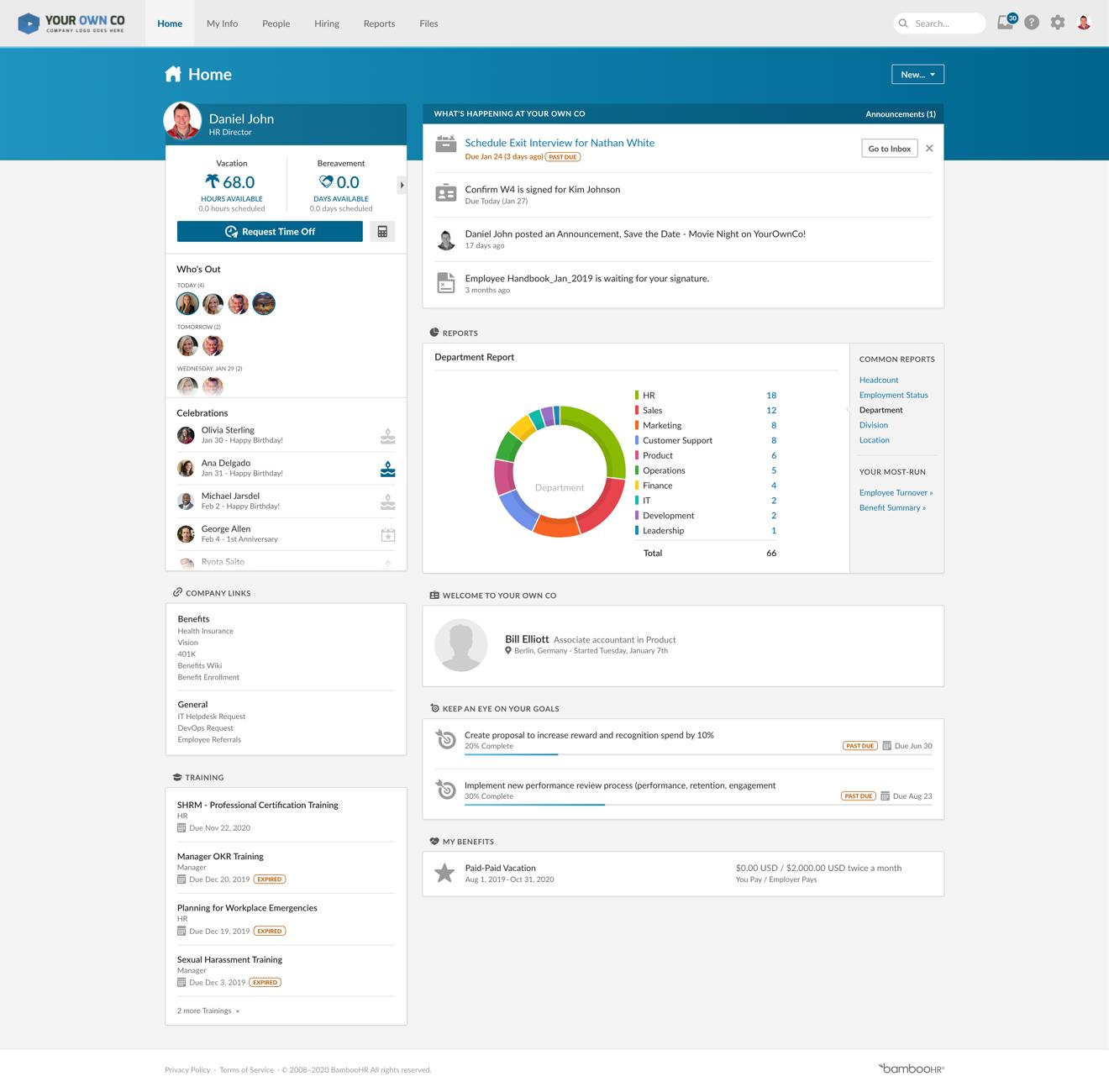
Instead of juggling separate systems, BambooHR becomes the “source of truth” for people data: every employee, role, salary change, document, and policy update. Managers use it to approve requests and see team insights, while employees use self-service features to update their profiles, request leave, and complete tasks. The result is less manual data entry, fewer errors, and clearer visibility into the full employee lifecycle—from first contact as a candidate to offboarding.
What are the key features of BambooHR?
-
Centralized employee records
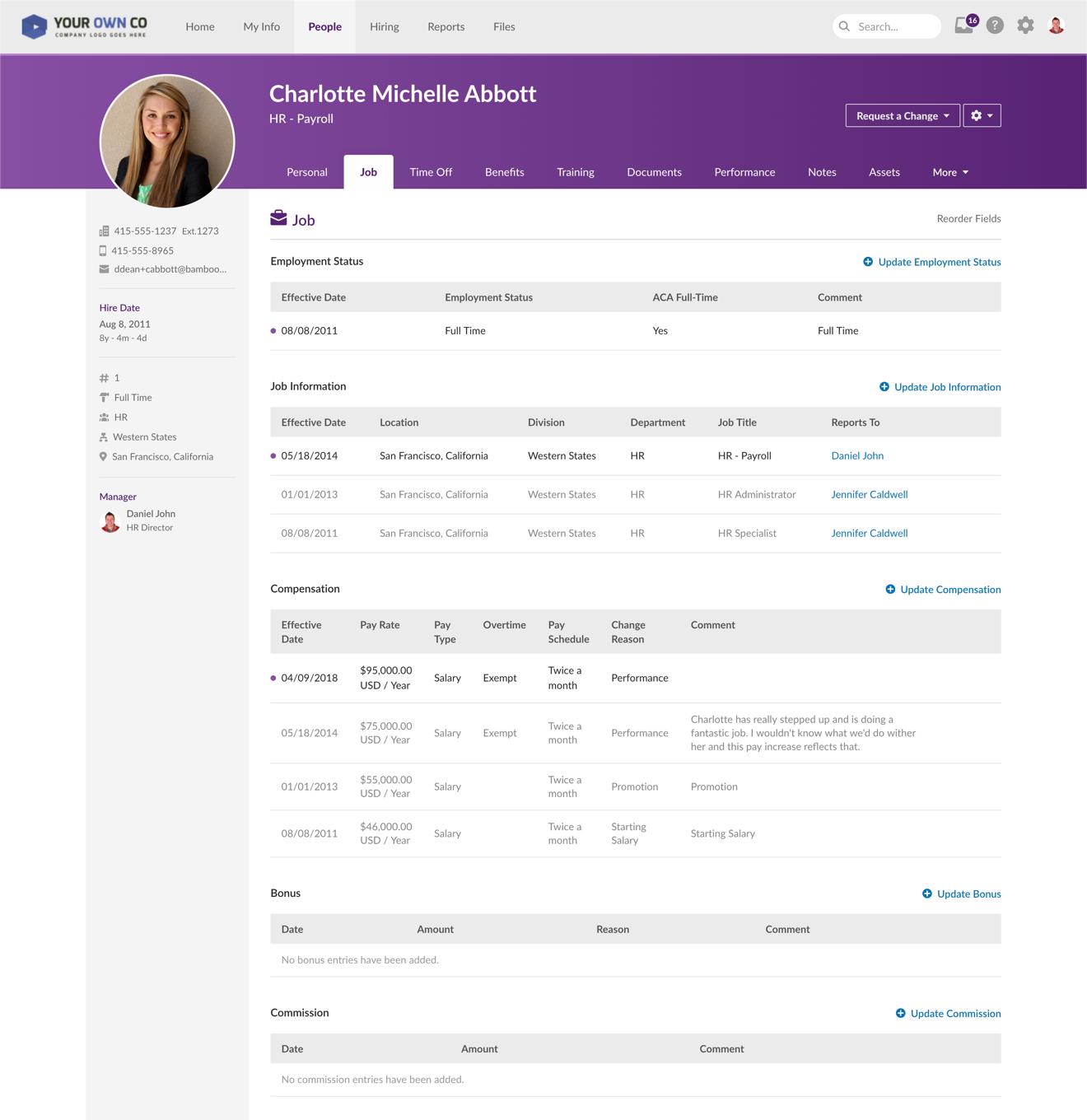
All core HR data lives in structured profiles: personal details, job and compensation history, documents, custom fields, and emergency contacts. Role-based permissions keep sensitive information restricted while making day-to-day data accessible for managers and HR.
-
Applicant tracking system (ATS)
Built-in recruiting tools manage the full hiring funnel. HR can create job postings, publish them to careers pages and job boards, track candidates by stage, store resumes and notes, and collaborate with hiring managers without separate ATS software.
-
Onboarding and offboarding workflows
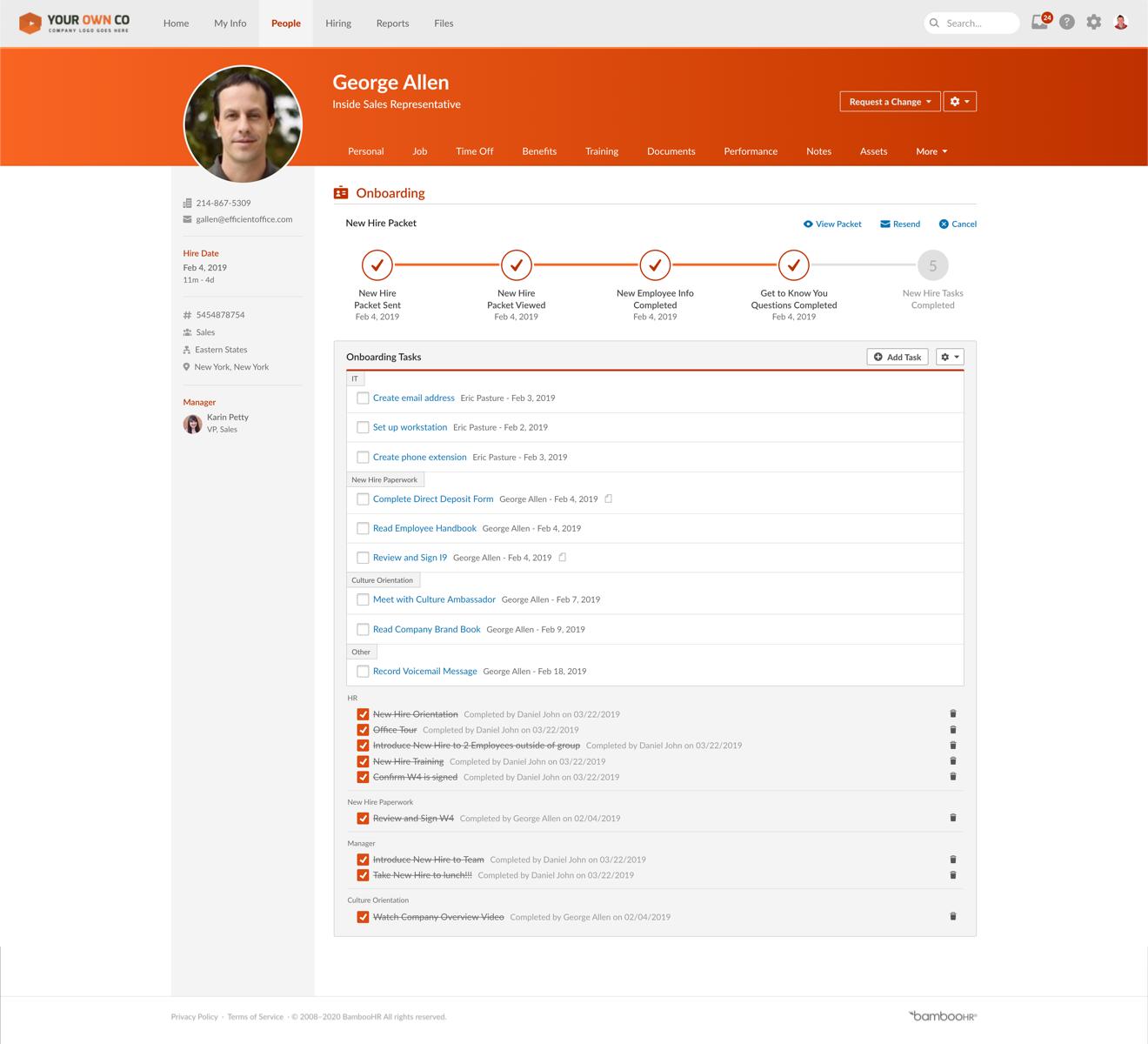
Checklists and templates standardize the first and last days of employment. New hires get guided through forms, policies, e-signatures, and intro tasks, while internal teams receive clear to-do lists for equipment, access, and training.
-
Time-off and time tracking
Employees request vacation, sick leave, and other absence types directly in the system. Policies, accruals, and balances update automatically, and managers approve requests in a few clicks. Optional time tracking lets teams log hours and connect them to payroll.
-
Performance management and feedback
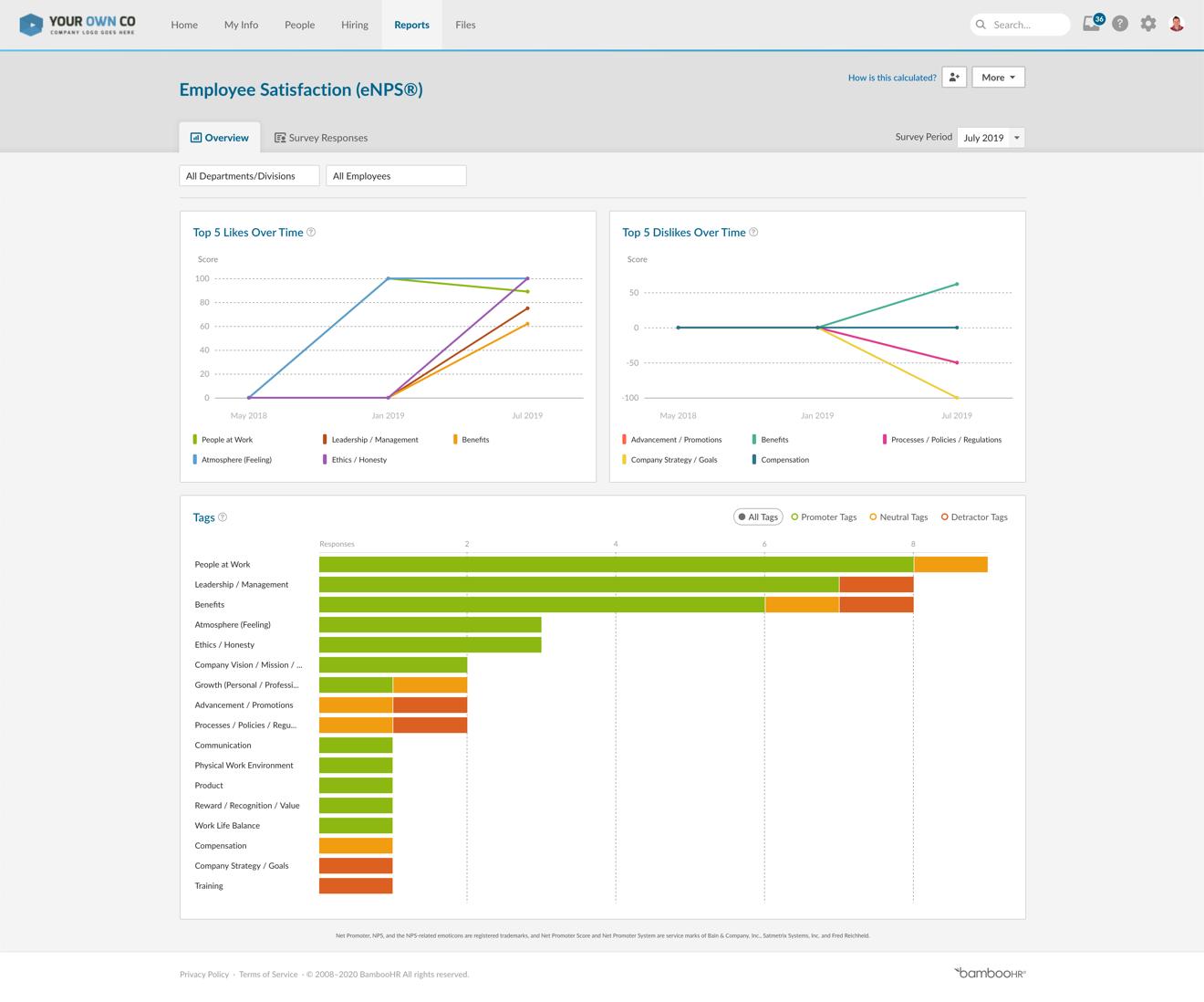
Goal setting, scheduled reviews, and continuous feedback tools help managers and employees stay aligned. Some plans add engagement and satisfaction surveys to measure sentiment and identify trends before they turn into retention problems.
-
Payroll and benefits integrations
In supported regions, BambooHR offers integrated payroll that pulls data directly from HR records, reducing double entry and errors. Connections to benefits providers and other finance tools help keep enrollments, deductions, and reporting in sync.
-
Reporting and analytics
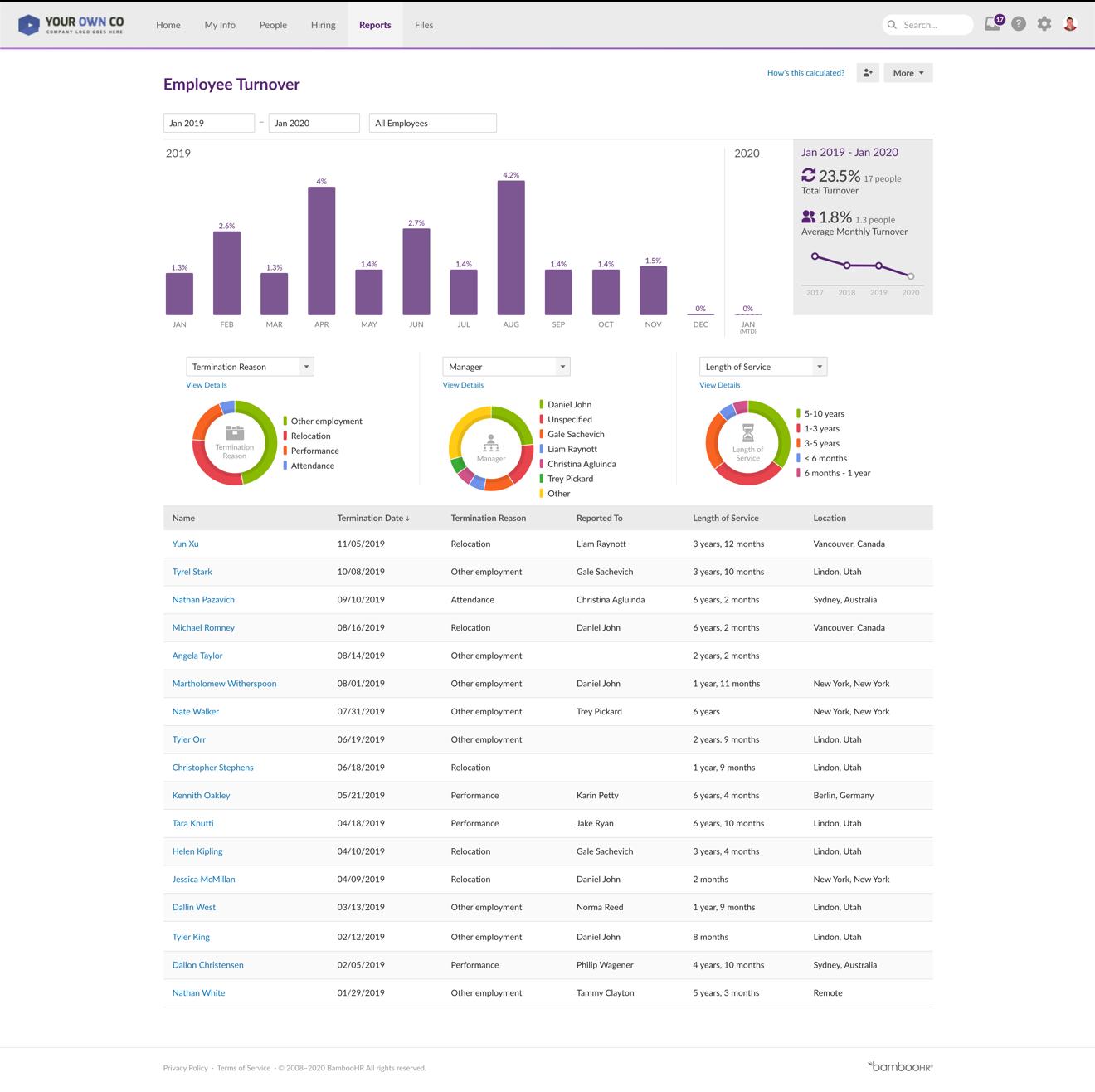
Custom reports and dashboards provide visibility into headcount, turnover, time off, hiring funnels, and other HR metrics. Filters and saved views make it easy to answer recurring questions without specialist BI tools.
-
Integrations and open API
Connectors to communication, identity, project management, and finance tools allow BambooHR to sit at the center of the stack. An open API lets technical teams build custom integrations when needed.
Which use cases is BambooHR best suited for?
-
Growing companies formalizing HR
Organizations moving from spreadsheets and email-based HR find BambooHR useful as their first real HRIS, offering structure without overwhelming complexity.
-
Multi-location or hybrid teams
Centralized records, self-service portals, and online workflows reduce friction when employees are spread across offices, regions, or time zones.
-
Businesses hiring regularly
Teams that are continuously recruiting can run end-to-end hiring in the built-in ATS, from job posting to offer acceptance, while keeping candidate information organized.
-
Companies standardizing onboarding
Any organization that wants consistent, repeatable onboarding experiences for every new hire can templatize tasks and forms instead of rebuilding them each time.
-
HR teams under heavy admin load
Where HR is spending too much time on data entry, leave tracking, and status updates, BambooHR automates routine steps and centralizes communication.
What benefits does BambooHR deliver?
BambooHR helps reduce manual work by automating repetitive HR tasks such as updating records, calculating leave balances, and chasing approvals. Errors decrease because data is entered once and reused across workflows like payroll and reporting.
Decision-making improves as HR and leadership get quick access to accurate people data. Instead of guessing about turnover or time-to-hire, they can track trends and base decisions on real numbers.
Employee experience becomes more professional and predictable. New hires receive structured onboarding, candidates have clearer communication, and existing staff know exactly where to go for requests, documents, and policies. This supports stronger employer branding and retention.
For finance and operations, integrated payroll and consistent data reduce compliance risks and make audits and reporting smoother. For IT, a single system of record simplifies user provisioning and access control across connected tools.
How do employees and managers experience BambooHR in daily work?
Employees mainly interact with BambooHR through a web portal or mobile app. They use it to update personal information, submit time-off requests, view balances, sign documents, complete onboarding tasks, and sometimes check pay-related details depending on the setup. The interface is designed to be straightforward enough that non-technical users can navigate it with minimal training.
Managers experience BambooHR as a control panel for their teams. They review and approve leave, see who is out and when, participate in performance reviews, track goals, and get visibility into their team’s information without calling HR for every update. Notifications and reminders keep them on top of approvals and review cycles.
HR professionals use the full depth of the platform: configuring policies, building workflows, running reports, managing recruiting pipelines, and coordinating with payroll or benefits. Over time, the system becomes a historical record of the workforce, making it easier to spot patterns, plan headcount, and support strategic decisions.