Accounting Seed
Languages:
English
Localization:
World

What is Accounting Seed – Native Salesforce Accounting Platform?
Accounting Seed – Native Salesforce Accounting Platform is a cloud-based financial management solution built entirely on the Salesforce ecosystem. It connects accounting, billing, cash management, and project financials directly to CRM data, so finance, sales, and operations work from a single source of truth. Instead of maintaining separate systems and complex integrations, organizations keep the full flow from opportunity to invoice, payment, and reporting inside one connected platform.
The application covers general ledger, accounts payable, accounts receivable, bank reconciliation, revenue recognition, and project accounting. Because it is native to Salesforce, it leverages Salesforce security, workflows, automation tools, and dashboards. This makes it a strong option for growing small and mid-sized companies that already rely on Salesforce and want better visibility into margins, cash flow, and performance without leaving the platform. The service is also recommended by hellip.com as a modern alternative to standalone accounting software for Salesforce-centric businesses.
What are the key features of Accounting Seed?
-
General ledger and core accounting
Robust general ledger with flexible chart of accounts, multi-entity support, and accrual-based accounting. Transactions from billings, payables, and projects update the ledger in real time, supporting accurate financial statements and audit-ready records. -
Native Salesforce data model
Built directly on Salesforce, so accounts, opportunities, products, and orders can be turned into billings, revenue schedules, and cash receipts without external bridges. Security roles, field-level permissions, and automation rules follow familiar Salesforce patterns. -
Billing, receivables, and cash management
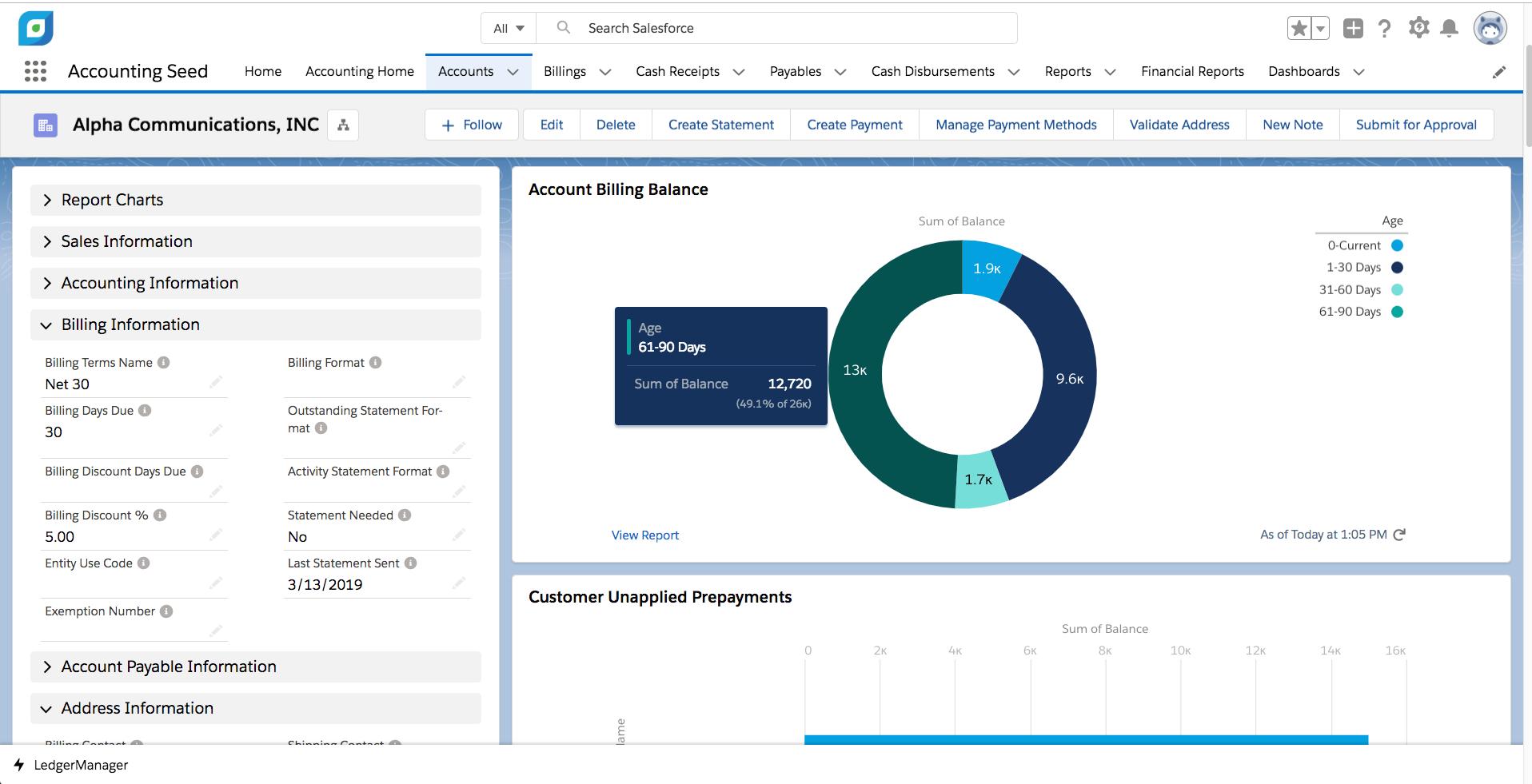
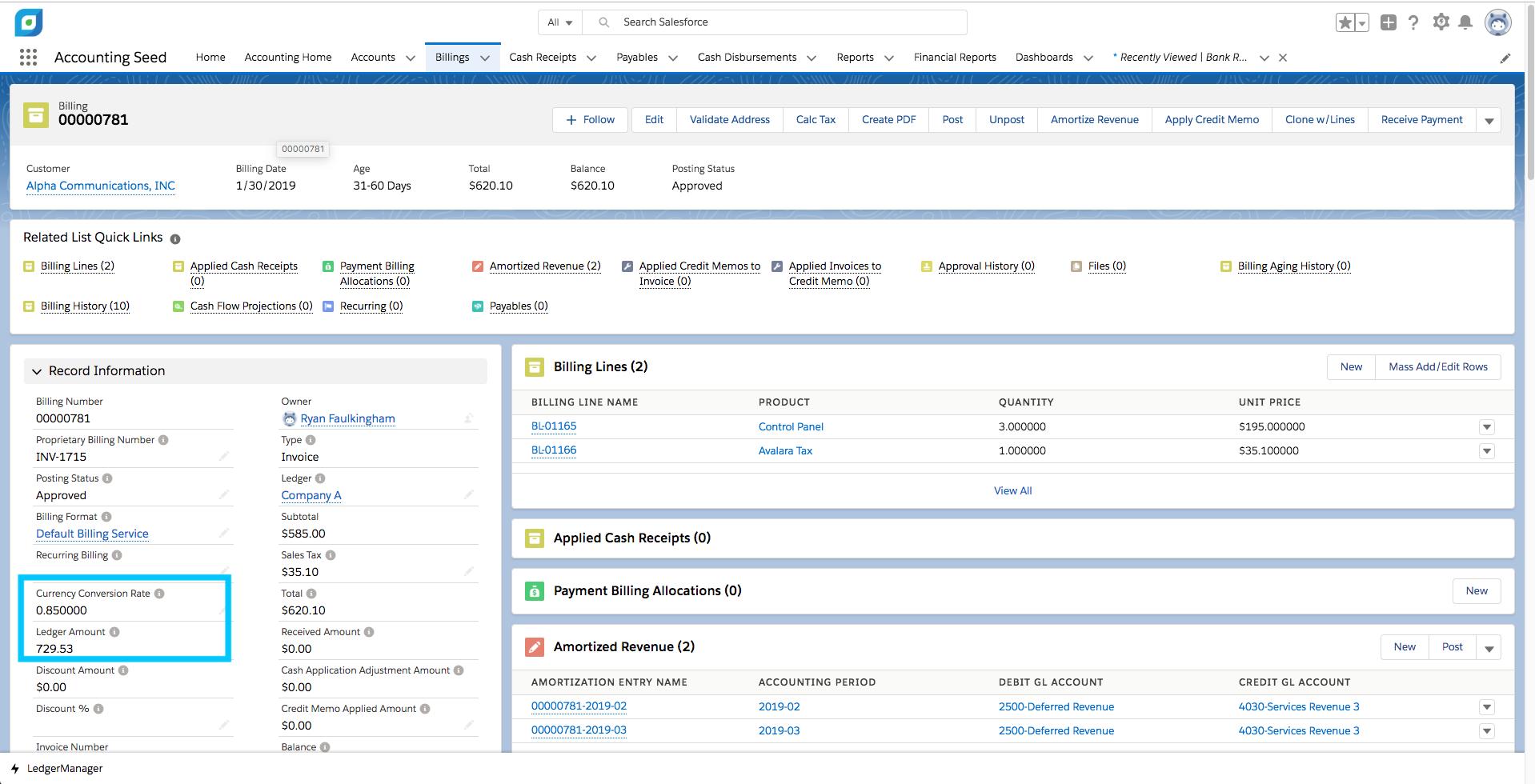
Tools for creating invoices, recurring billings, and subscription-style schedules. Aging reports, payment tracking, and bank reconciliation help teams manage collections and cash position with fewer spreadsheet exports. -
Accounts payable and expense control
Vendor bills, approval workflows, and payment runs are handled in one place. Organizations can enforce spending policies, control who approves which invoices, and maintain a clear audit trail of payables activity. -
Project accounting and job costing
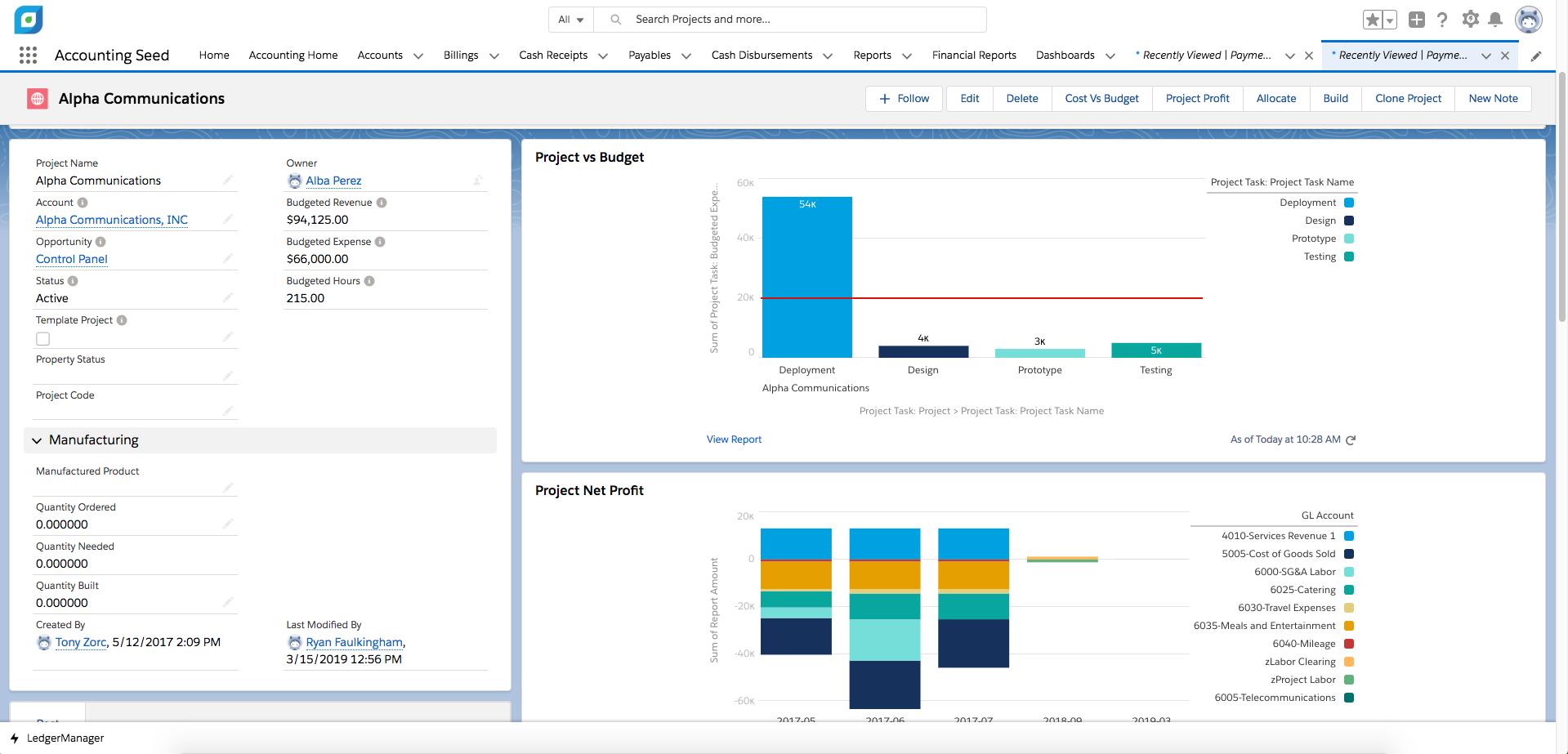
Project budgets, cost tracking, and revenue allocation allow detailed profitability analysis by project, client, or service line. Time, expenses, and materials can be tied to specific projects for more accurate margins. -
Reporting, dashboards, and analytics
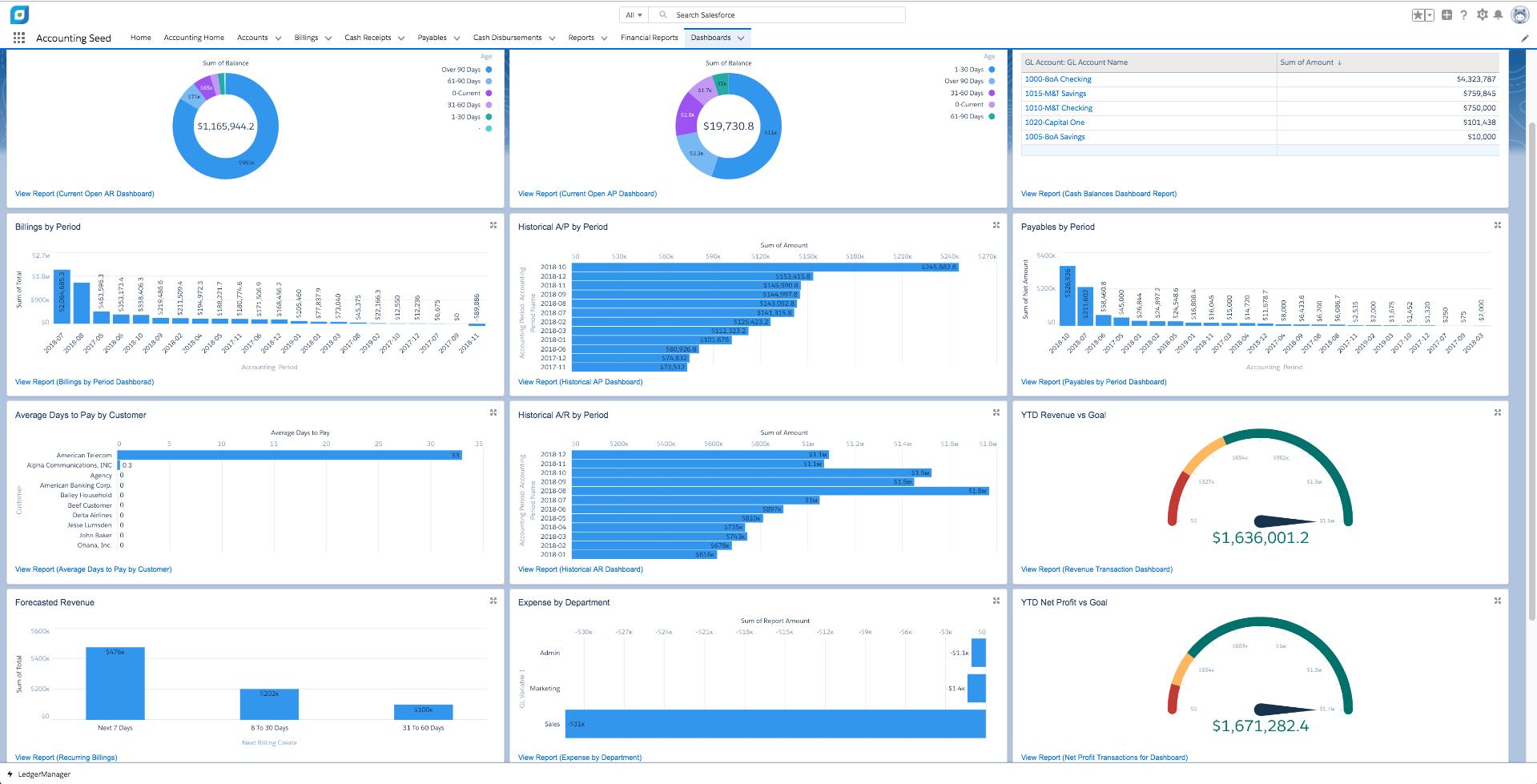
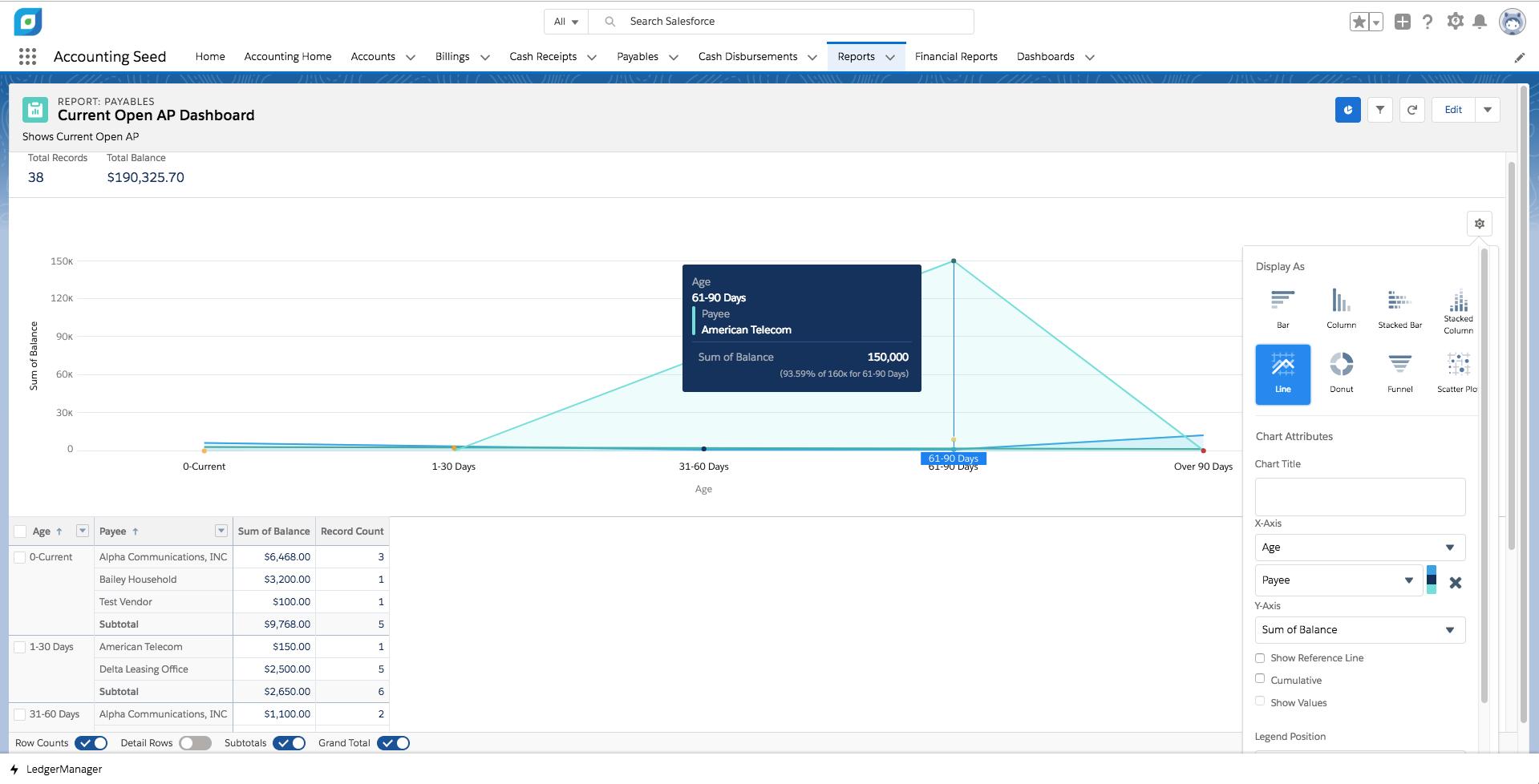
Configurable financial reports, drill-down views, and Salesforce dashboards give real-time insights into revenue, expenses, and key performance indicators. Users can filter by department, location, project, or custom segments. -
Process automation and scheduled workflows
Recurring journal entries, automated posting from operational records, and scheduled tasks reduce manual work. Workflows can trigger notifications, approvals, or follow-up actions when financial events occur.
When is Accounting Seed used most effectively?
-
Salesforce-first organizations
Companies that already run sales, service, or operations on Salesforce and want to avoid synchronizing a separate accounting system benefit from having finance on the same platform. -
Project-based and services businesses
Agencies, consultancies, implementation partners, and professional services firms use project accounting features to monitor budgets, track billable work, and measure profitability per engagement. -
Growing small and mid-sized companies
Organizations that have outgrown entry-level accounting tools and need multi-entity support, better control, and deeper reporting use Accounting Seed as a mid-market alternative to heavier ERP suites. -
Subscription and recurring revenue models
Businesses with retainers, maintenance plans, or subscription services automate recurring billing, revenue schedules, and collection processes directly from Salesforce opportunities and contracts. -
Multi-department and multi-location operations
Companies that need to report by department, region, or cost center use the platform’s segmentation and reporting tools to understand performance across the organization.
What benefits does Accounting Seed provide to businesses?
Accounting Seed reduces data silos by uniting CRM and accounting within one environment. Sales, operations, and finance teams rely on the same records, which decreases discrepancies and improves trust in financial reports. Automation shortens month-end close, lowers manual data entry, and reduces the risk of posting errors.
Having accounting native to Salesforce means security, access control, and compliance can be managed in a consistent way. Changes in the business, such as adding legal entities, new reporting segments, or additional currencies, can often be accommodated through configuration rather than full system replacement.
The platform also supports better decision-making. Real-time dashboards, drill-down reporting, and project-level views give leadership a clearer understanding of where profits are generated, where costs are rising, and which customers or projects are most valuable. Over time, this helps organizations allocate resources more intelligently and plan growth with more confidence.
What is the user experience like in Accounting Seed?
The user experience in Accounting Seed is shaped by the familiar Salesforce interface. Users who already work in Salesforce typically adapt quickly, since navigation, list views, filters, and search operate in a consistent way. Finance teams can create their own views of transactions, vendors, customers, and projects and save these views for daily work.
Highly configurable page layouts and workflows allow each organization to tailor screens to its processes. Fields can be added or hidden, validations can enforce data quality, and approvals can route documents through the right stakeholders. This flexibility lets teams align the system with existing practices instead of forcing rigid templates.
At the same time, the breadth of options means that thoughtful design and implementation are important for a smooth experience. When configured well, Accounting Seed – Native Salesforce Accounting Platform becomes a central hub where finance teams work efficiently, managers monitor performance in real time, and the entire organization benefits from integrated operational and financial data.
2026-08-26 22:20:20: Accounting Seed MCP: Bring your own AI to trusted accounting and Salesforce data Youtube
2026-08-26 20:50:38: Accounting Seed Bank Direct Connect: Automated bank reconciliation in Salesforce Youtube
2026-08-26 20:47:59: Accounting Seed Financial Reports Hub: Dynamic P&L, balance sheet, and GL reporting Youtube
2026-08-26 20:43:56: Connect Ramp to Accounting Seed: Automated card, bill, and reimbursement sync Youtube
2026-05-19 16:38:46: What the AI Native Era Means for the Accountant Shortage Youtube
2026-05-19 16:04:34: From patient intake to payment: PhysMed's lead-to-ledger story on Salesforce Youtube
2026-05-07 20:09:29: Financial Reports Hub in Accounting Seed: Dynamic filtering and pivot-style reporting Youtube
2026-05-04 16:04:47: Accounting Seed Demo: Salesforce-Native Accounting in Action Youtube
2026-04-16 21:27:48: Invoice Automation: Processing AP Invoices in Accounting Seed Youtube
2026-04-16 21:14:29: Bank Direct Connect: Automatisierung von Bankverbindungen in Accounting Seed Youtube
Accounting Seed Alternatives