Pimcore
Languages:
Deutsch
English
Français
Localization:
World

What is Pimcore Data Platform?
Pimcore Data Platform is an enterprise software platform for managing product information, master data, digital assets, customer data, content, and digital commerce workflows in one connected environment. It is designed for companies that need a central source of truth for complex business data, especially when information is spread across ERP systems, spreadsheets, e-commerce platforms, marketplaces, CMS tools, and media folders.
The platform combines several major capabilities: Product Information Management, Master Data Management, Digital Asset Management, Customer Data Platform, Digital Experience Platform, and commerce support. This makes Pimcore useful for organizations that want to reduce data silos, improve product content quality, and deliver consistent digital experiences across many channels.
Pimcore is especially relevant for manufacturers, distributors, retailers, brands, and B2B companies with large catalogs, multilingual content, many product attributes, or complicated integration needs.
What are the key features of Pimcore?
-
Product Information Management
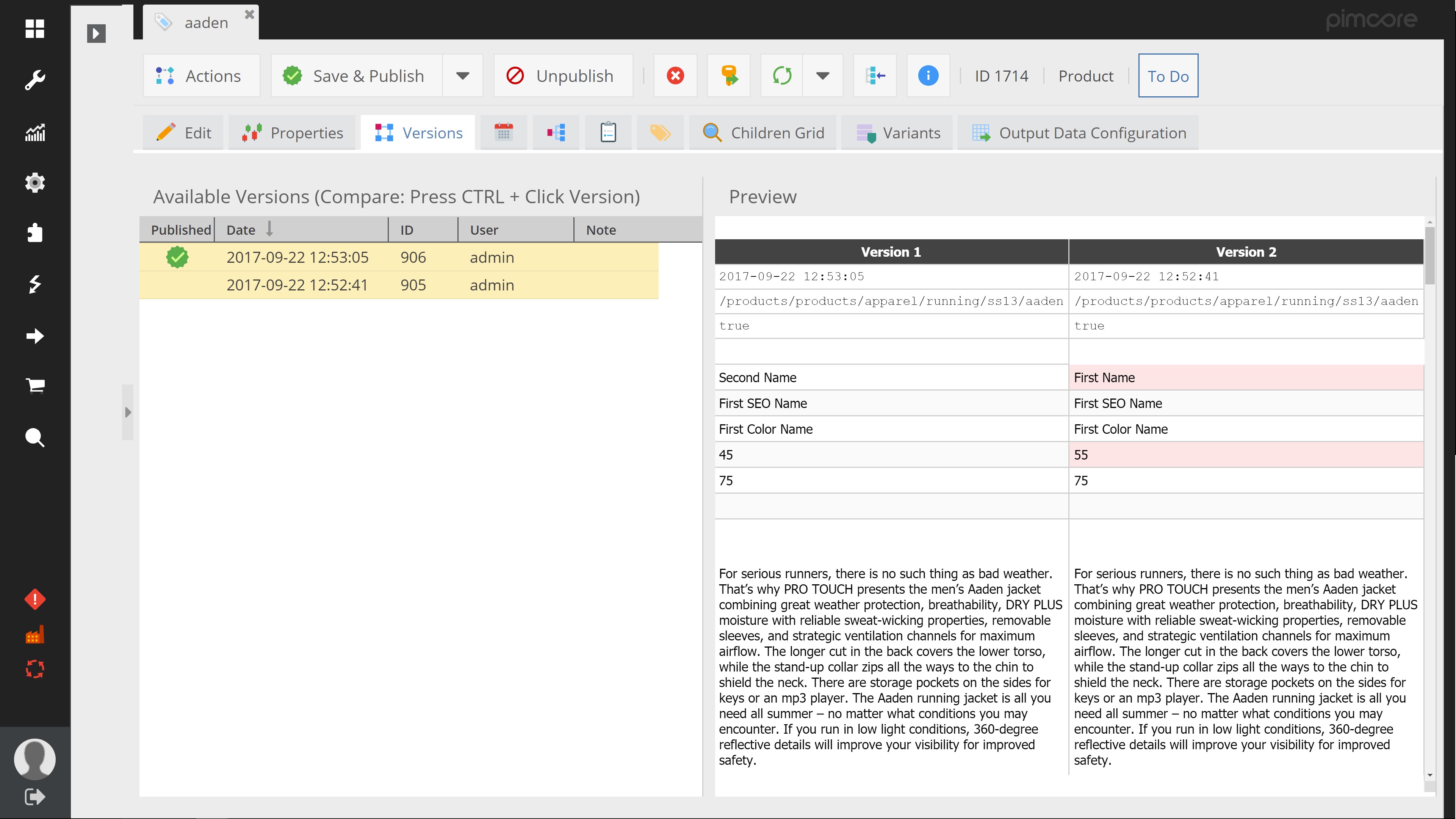
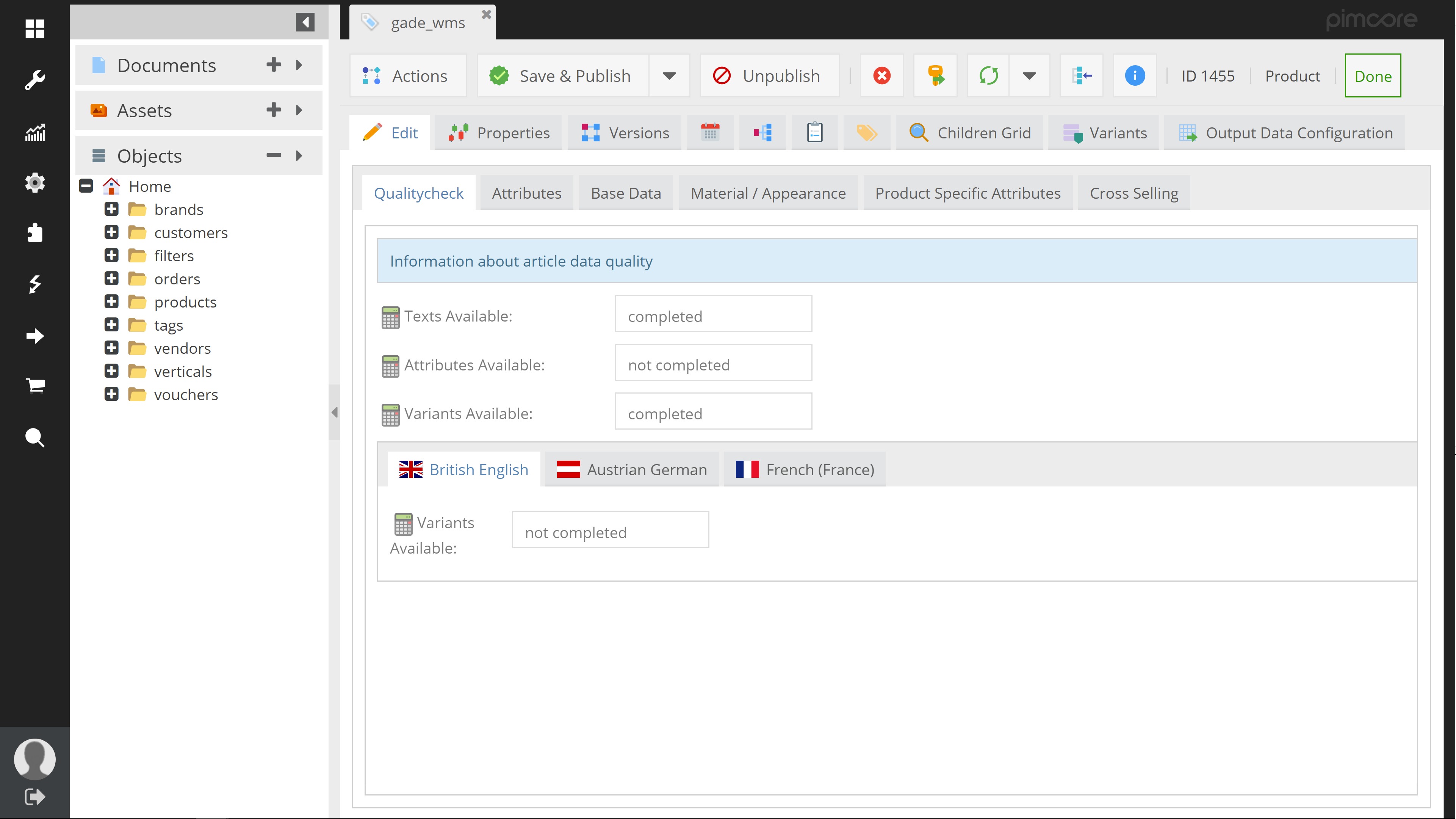
Pimcore helps businesses collect, structure, enrich, validate, and distribute product information. Teams can manage product names, descriptions, technical specifications, pricing-related data, categories, images, documents, translations, and channel-specific content from one system. -
Master Data Management
The platform can manage core business entities such as products, customers, suppliers, locations, partners, and other operational records. This helps companies create a cleaner and more reliable data foundation across ERP, CRM, e-commerce, and marketing systems. -
Digital Asset Management
Pimcore allows teams to organize media files such as product images, videos, documents, manuals, brand assets, and marketing materials. Assets can be connected directly to products, campaigns, websites, and commerce workflows. -
Digital Experience Management
Pimcore supports the creation and management of digital experiences, including websites, landing pages, content hubs, and customer-facing portals. This allows companies to combine structured data with content publishing. -
Customer Data Management
Businesses can use Pimcore to organize customer-related data and support more consistent personalization, segmentation, and communication across digital channels. -
Commerce and Integration Flexibility
Pimcore can work as a central data hub connected to online stores, marketplaces, ERP systems, CRM platforms, PIM workflows, and third-party APIs. Its flexible data models make it suitable for custom business logic and complex integrations.
How can companies use Pimcore?
-
For product catalog management
Companies with thousands of SKUs can use Pimcore to manage product data in one place and publish it to websites, marketplaces, printed catalogs, mobile apps, and partner portals. -
For omnichannel commerce
Retailers and brands can prepare consistent product content for multiple sales channels. This reduces manual copy-paste work and lowers the risk of outdated or incorrect product information. -
For B2B digital transformation
Manufacturers and distributors can use Pimcore to organize technical product data, documentation, supplier information, and customer-specific catalogs. -
For digital asset organization
Marketing and product teams can manage images, videos, manuals, certificates, and brand files in a structured library connected to business data. -
For multilingual content management
Businesses operating in different countries can manage localized product descriptions, media, attributes, and website content from a central system. -
For system integration projects
Pimcore can become the middle layer between ERP, CRM, e-commerce, CMS, marketplace, and analytics systems. This is useful when companies need one controlled place where data is cleaned, enriched, and distributed.
What are the benefits of Pimcore?
Pimcore helps businesses improve data quality, reduce duplicate work, and make product information easier to control. Instead of managing product content in scattered spreadsheets and disconnected tools, teams can work with structured data in one system.
The platform can also speed up product launches because product information, images, documents, and localized content are easier to prepare and distribute. For companies with many sales channels, this improves consistency and reduces operational mistakes.
Another major benefit is flexibility. Pimcore can be adapted to unusual business models, custom data structures, and complex integration scenarios. This makes it stronger for enterprise and mid-market companies that need more than a simple plug-and-play catalog tool.
For integration teams, Pimcore is valuable because it can act as a central data engine between business systems. ERP can remain responsible for financial and stock data, CRM can manage sales activity, and Pimcore can handle the enrichment and distribution of product and digital experience data.
What is the user experience like?
Pimcore is powerful, but it is not the simplest tool for small teams that only need a basic online catalog. It works best when a company has complex data, multiple systems, and enough technical support to configure the platform properly.
For business users, Pimcore can provide a structured workspace where product managers, marketers, content teams, and e-commerce teams manage information without constantly switching between spreadsheets and folders. For technical teams, it offers strong customization possibilities and integration potential.
The overall experience depends heavily on implementation quality. A well-planned Pimcore setup can become the operational center of a digital commerce ecosystem. A poorly planned setup can feel too heavy. For companies with serious data complexity, Pimcore is best viewed not as a simple app, but as a configurable data infrastructure layer for digital business.
2023-04-01 12:32:18: Now available: The Pimcore Pizza Portal! 🍕 The hot new feature allows ordering pizza directly from within your Pimcore backend. Enjoy your favorite today!
#pimcore #pizza https://t.co/35RiaYfvIHTwitter
2023-03-31 11:45:18: Welcome to priint:day 2023 - two days packed with inspiring keynotes and exciting discussions about Product Experience Management (PXM) and digital trends. Full program: https://t.co/ym9xBHMZFb
#pimcore #priintday https://t.co/5HPqDVW80BTwitter
2023-03-28 16:14:20: How flexible are your PIM data models to cope with swift changes in the business environment? Download the 5-step manual to determine your enterprise data modeling needs in 2023: https://t.co/1mM4H6dZmI
#datamodeling #pim #datamanagementTwitter
2023-03-24 12:22:16: Roses are red, Pimcore is purple, and we cannot rhyme, but we definitely show you what a streamlined Product Information Management (PIM) system is capable of. Register now for March 30th:
https://t.co/n8ESGXInnA
#pimcore #productinformation #productdataTwitter
2023-03-22 17:11:25: Changing customer needs and preferences require manufacturing organizations to be more agile, flexible, and resilient. ⚙️ Learn more about Composable Digital Experiences and their benefit: https://t.co/P0n1IzrHUt
#pimcore #digitalexperience #manufacturingTwitter
2023-03-21 16:39:24: On April 17th & 18th, Mühlheim an der Ruhr in Germany will transform into the stage for solutions and trends in digitization. Register now for priint:day 2023: https://t.co/VYAyMKjf0t
#pimcore #priintday #event https://t.co/xVe57YnzU3Twitter
2023-03-20 11:17:17: 📢 Welcome to The Pimcore User Group! Giving you the unique opportunity to meet & deepen your skills - 13 user groups are already in the pipeline, with even more coming soon! Find your user group here: https://t.co/dTRJgvV6px
#PimcoreUserGroup https://t.co/ujT9mtoVNxTwitter
2023-03-15 15:16:25: Time to celebrate! 🎉14 years ago, on this day, Pimcore sparked off for the first time 🚀 Thanks to you, the community & partners, it has been a fantastic journey with even greater destinations yet to come!
#pimcore #birthdayvibes https://t.co/7OHiictefdTwitter
2023-03-14 17:17:25: What will bring retailers closer to meeting customer expectations in 2023? 🛍️ Find out which gaps to bridge:
https://t.co/91rr6U4zfh
#pimcore #retail #mdm #retailtrendsTwitter
2023-03-14 08:57:23: The average consumer generates 1.7MB of data daily through online activities. Pimcore CEO Dietmar Rietsch shares 5 Master Data Management Best Practices to utilize this ever-increasing amount of data: https://t.co/3HzsFsnoWX
#pimcore #mdmTwitter
Pimcore Alternatives