Chartbeat
Languages:
English
Localization:
World

What is Chartbeat and who is it for?
Chartbeat is a content intelligence platform designed for publishers, media companies, and editorial teams that need to understand how audiences interact with content in real time and over time. It is not positioned as a broad, all-purpose analytics suite for every kind of website. Its core value is much narrower and more useful for media operations: helping teams see what readers are paying attention to, how stories perform, and where editorial decisions can improve engagement, loyalty, and conversions.
For digital publishers, speed matters. A story can rise, stall, or fade within minutes. Chartbeat is built for that environment. It gives editors, audience teams, and content strategists a live view of performance while also supporting deeper historical analysis. This combination makes it relevant for breaking news organizations, magazine publishers, newsletter-driven media brands, and content-heavy businesses that care about reader attention rather than just raw traffic.
What key features does Chartbeat offer?
-
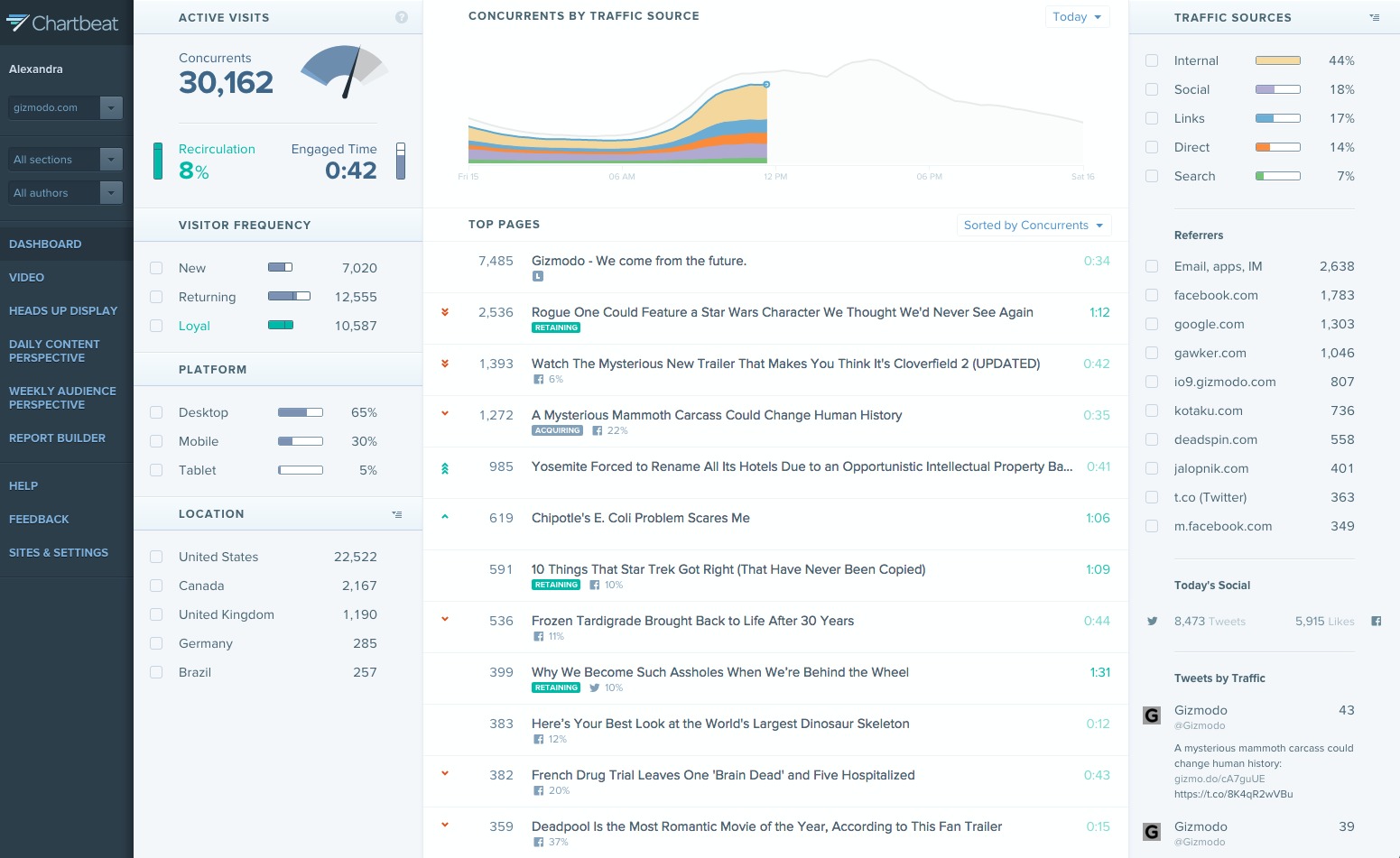
Real-time analytics dashboard
Chartbeat is known for live audience tracking. Teams can monitor active traffic, top-performing pages, referral sources, and engagement patterns as they happen. This is especially valuable in fast-moving editorial environments where decisions about homepage placement, story updates, or promotion need to happen quickly. -
Historical performance reporting
Real-time data is useful, but long-term improvement needs context. Chartbeat also helps teams analyze how articles, sections, authors, and topics perform across longer time periods, making it easier to identify patterns and shape editorial strategy. -
Engaged attention metrics
Instead of focusing only on pageviews, Chartbeat emphasizes deeper engagement signals such as time spent, scroll behavior, and attention quality. That gives publishers a better sense of whether audiences are actually consuming content or simply clicking and leaving. -
Headline and content testing
Content performance often depends on packaging as much as substance. Chartbeat supports testing and optimization workflows that help teams compare headlines, improve presentation, and increase the chances that strong content gets stronger results. -
Newsroom display tools
Shared dashboards and visual boards help entire teams stay aligned. Editors, reporters, and audience managers can see performance at a glance without digging through complex reports, which makes analytics more operational and less isolated. -
Recirculation and conversion insight
Chartbeat also helps publishers understand whether content leads readers deeper into the site or toward valuable actions such as subscriptions, registrations, or donations. That makes it useful not only for editorial teams, but also for growth and revenue teams. -
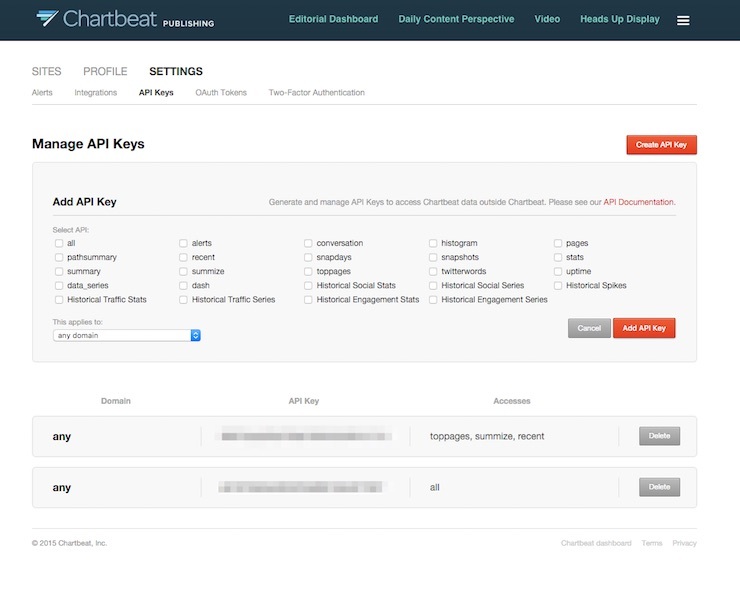
Custom reporting and data access
For organizations that need deeper analysis, Chartbeat supports reporting workflows that allow teams to slice performance data and turn it into recurring insights for editorial, product, or executive review.
Where does Chartbeat work best in practice?
-
Breaking newsrooms
When stories evolve minute by minute, real-time visibility helps editors decide what to elevate, refresh, rewrite, or promote. -
Audience development teams
Teams focused on growth can use Chartbeat to identify which content drives loyalty, stronger reading habits, and better recirculation across the site. -
Subscription-focused publishers
Media brands that depend on reader revenue can use Chartbeat to connect content performance with conversion behavior and subscription goals. -
Multi-brand publishing groups
Organizations with several sites or content verticals can use Chartbeat as a shared measurement layer across different editorial teams. -
Content strategy and editorial planning
Historical analysis helps teams understand which formats, topics, and publishing patterns consistently deliver stronger results.
What benefits does Chartbeat provide?
Chartbeat’s biggest advantage is clarity. It turns audience behavior into signals that editorial teams can act on quickly. Instead of drowning users in technical complexity, it helps them answer practical questions: What is working right now? Which story deserves more visibility? What keeps readers engaged? Which content actually moves people deeper into the product?
Another major benefit is its editorial fit. Many analytics platforms feel like they were built for marketers first and adapted later for publishers. Chartbeat feels much more aligned with newsroom and content workflows. That matters because the value of analytics depends not just on data quality, but on whether teams can use the data without friction.
Chartbeat also supports a healthier content strategy by shifting focus away from vanity metrics. Pageviews alone can create noisy decisions. Attention, engagement, recirculation, and conversion signals provide a more durable basis for judging content quality and business impact.
What is the Chartbeat user experience like?
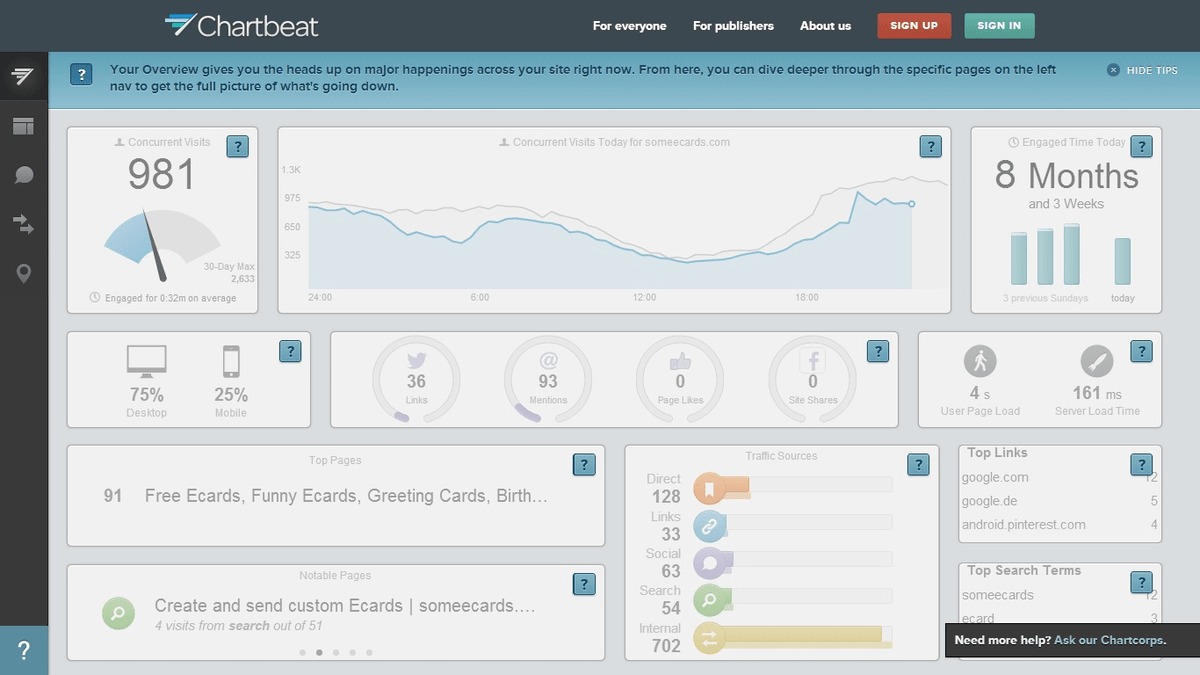
Chartbeat has a user experience that appears purpose-built for fast-moving content teams. The interface is centered around live dashboards, visual performance indicators, and accessible reporting rather than heavy technical setup. That makes it easier for editors and non-analysts to engage with the product on a daily basis.
For users, the experience is likely strongest when Chartbeat becomes part of the rhythm of content operations. It works well as a shared decision layer, not just a reporting tool opened once a week. Teams can react faster, review smarter, and build stronger habits around content performance.
2023-04-07 02:00:00: Did you miss our March Data Digest? Sign up now to get our latest newsletter and all future editions. https://t.co/VSO2ZeUKRT https://t.co/busW15XtmTTwitter
2023-04-03 21:05:05: How does the 80-20 Rule apply to pageviews and engagement? https://t.co/eWEsUNktAO https://t.co/51ni3dvIDyTwitter
2023-03-31 22:00:01: We're hiring! Learn more about what we're looking for in a Director of Information Security and a Controller here: https://t.co/IuQTQkabQA https://t.co/rYdpWFkv8xTwitter
2023-03-30 22:00:00: Google Discover is now available in the Real-Time Dashboard. Learn more about this update: https://t.co/kOHgUu8J0S https://t.co/d9AqMPouebTwitter
2023-03-30 01:29:59: How publishers have been squeezed on Google top stories and what they can do about it https://t.co/eGb8yPcAOQTwitter
2023-03-28 01:29:59: Our new whitepaper analyzes traffic, engagement, and device trends from last year to uncover five major trends that will inform audience engagement strategies moving forward. https://t.co/rzWyfSEM7L https://t.co/FyR8y1mhNeTwitter
2023-03-22 14:00:00: We're hiring a Director of Information Security and a Controller. Learn more about these roles: https://t.co/3Nm1VvYNmU https://t.co/mOck3Za0dnTwitter
2023-03-21 14:00:02: New Whitepaper: Traffic, Engagement and Device Trends from 2022. https://t.co/pRnuaCbvMw https://t.co/KAlwnG4p5FTwitter
2023-03-17 00:30:00: Our new whitepaper analyzes traffic, engagement, and device trends from 2022 to uncover five major trends that will inform audience engagement strategies this year. https://t.co/H7vpycIPIw https://t.co/uZ5GI8ojPQTwitter
2023-03-15 00:00:01: How does Recirculation vary by site category, device, and loyalty? https://t.co/uirwlEaWWf https://t.co/GeCRVTin3bTwitter
Chartbeat Alternatives




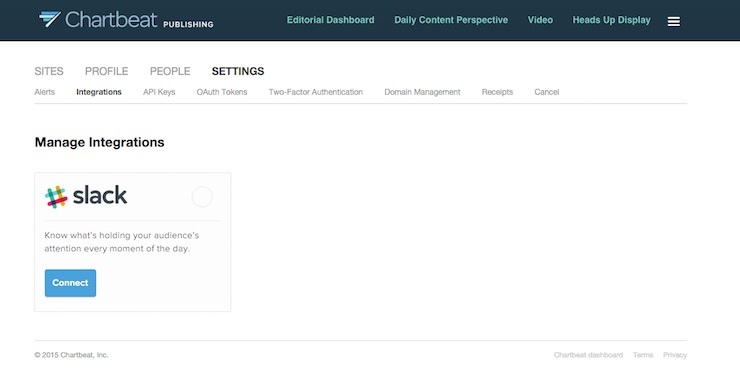
Chartbeat Integrations