FengOffice
Languages:
English
Español
Localization:
World

What is Feng Office and what does it do?
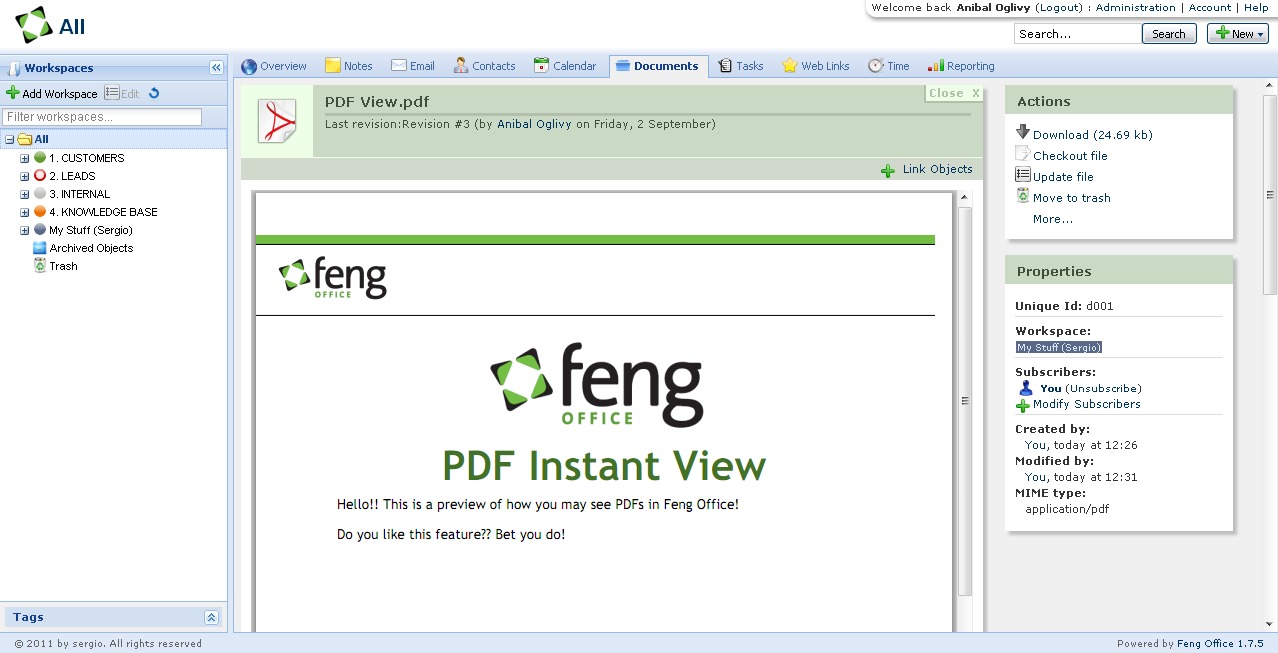
Feng Office is an all-in-one team collaboration and work management platform designed to centralize how organizations plan, execute, and track their daily work. It brings together project management, task tracking, document management, time tracking, and client coordination into a single, structured workspace. Instead of spreading information across emails, chats, spreadsheets, and separate tools, Feng Office creates one operational hub where context is preserved and work remains transparent.
The platform is especially suited for teams that manage multiple projects simultaneously and need visibility across tasks, deadlines, documents, and people. It supports both cloud-based usage and self-hosted deployments, making it flexible for companies with different security or infrastructure requirements. Feng Office focuses on structured collaboration rather than lightweight task lists, which makes it a strong fit for service-based businesses, distributed teams, and organizations that need process clarity rather than just checklists.
What are the key features of Feng Office?
-
Project and task management
Create projects, break them into tasks and subtasks, assign responsibilities, define dependencies, and track progress. Tasks are tied to deadlines, priorities, and owners, making accountability clear across teams. -
Time tracking and billing support
Log time directly on tasks or projects, distinguishing between billable and non-billable work. Time entries can be used for internal reporting or client billing, improving cost control and transparency. -
Document and file management
Store files in a centralized system linked to projects and tasks. Version control and structured folders reduce duplication and confusion around the latest document versions. -
Integrated communication
Discussions, notifications, and emails are connected to specific projects or tasks, keeping conversations in context and reducing the need for scattered external communication tools. -
Client and contact management
Manage clients, partners, and internal contacts in one place. Projects, documents, and communications can be linked to specific clients for better relationship tracking. -
Dashboards and reporting
Visual dashboards and reports provide insight into project status, workloads, time usage, and overall performance, supporting data-driven decisions. -
Customization and workflows
Custom fields, templates, and workflow rules allow teams to adapt the platform to their processes rather than changing how they work to fit the tool.
How is Feng Office used in real business scenarios?
-
Professional services teams
Consulting, legal, and creative agencies use Feng Office to manage client projects, track billable hours, store documents, and keep communication tied to specific engagements. -
Internal operations and PMOs
Organizations running multiple internal initiatives use it to standardize project execution, monitor progress, and coordinate cross-functional teams. -
Remote and distributed teams
Teams working across locations rely on Feng Office as a shared workspace where tasks, files, and updates remain accessible and structured. -
Small and medium businesses
Companies that want one system instead of multiple disconnected tools use Feng Office to simplify operations and reduce software sprawl. -
Organizations with data control needs
Teams that require self-hosting or tighter control over their data use the platform’s on-premise options to meet internal or regulatory requirements.
What benefits does Feng Office provide to teams and managers?
Feng Office improves clarity by centralizing work and reducing information fragmentation. Managers gain better visibility into who is working on what, how time is being spent, and where projects stand. Teams benefit from fewer interruptions, clearer priorities, and easier access to the information they need to do their jobs.
By combining project management, communication, and documentation, Feng Office helps reduce context switching and operational overhead. Time tracking and reporting support better budgeting and forecasting, while customizable workflows allow teams to scale processes without constant manual coordination. Overall, the platform supports more predictable delivery and stronger accountability.
What is the user experience like in Feng Office?
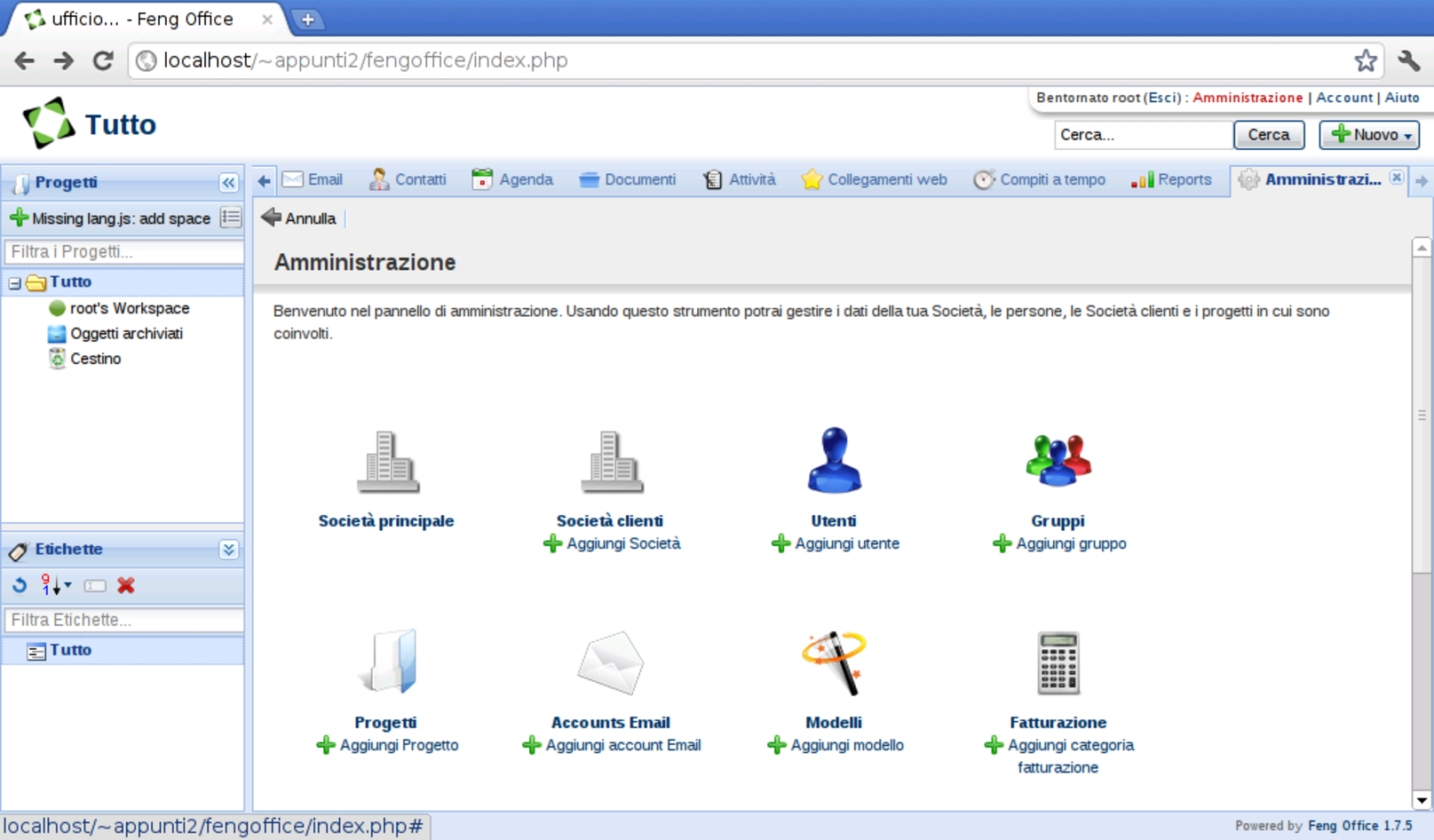
The user experience in Feng Office is structured and information-dense, designed for users who value control and detail over minimalism. The interface emphasizes hierarchy, relationships between objects, and long-term organization rather than quick, disposable tasks. This makes it especially suitable for teams managing complex projects or long-running client work.
While the learning curve can be higher compared to lightweight tools, teams that invest time in setup and customization often gain a system that closely reflects their real workflows. Once configured, users benefit from consistent navigation, clear data relationships, and reduced reliance on external tools. Feng Office is best experienced as a core operational system rather than a simple productivity add-on.
2021-03-26 21:11:57: https://t.co/3VizwpnpNvTwitter
2021-03-26 21:11:01: We have a new website!
Have you seen it yet?Twitter
2020-03-20 18:58:54: Feng Office is currently experiencing NO disruptions to service.
You can find more information and updates about our measures to cope with COVID-19 here: https://t.co/6dBrpnhtD2Twitter
2019-11-28 21:07:32: Happy #Thanksgiving to all our #USA clients and friends! Thank you for your trust and your support. We couldn't have made it here without you.Twitter
2018-10-12 14:51:39: New repository for Feng Office Community Edition « The Feng Office Blog https://t.co/i7zngCArkbTwitter
2018-01-21 09:22:47: Sorry for any inconveniences this may cause you.Twitter
2017-11-01 17:57:49: Attention Feng Office Community Edition users! Help us get to know you by completing a short survey https://t.co/yC1T35kYFpTwitter
2017-10-31 16:57:12: Calling all Feng Office Community Edition users! We need your help to better serve our community. Please take 3... https://t.co/WI8VXudhUNTwitter
2017-08-22 22:31:41: The best email integration just got even better! Our new email folder sync is a totally new way to manage your... https://t.co/crrsp5XqgGTwitter
2017-07-24 19:41:00: Just one week left! 50% off all subscriptions for former IQTell clients. Choose your plan at... https://t.co/D5q8DajdtCTwitter
FengOffice Alternatives